中文 | English
🔗 查看議程
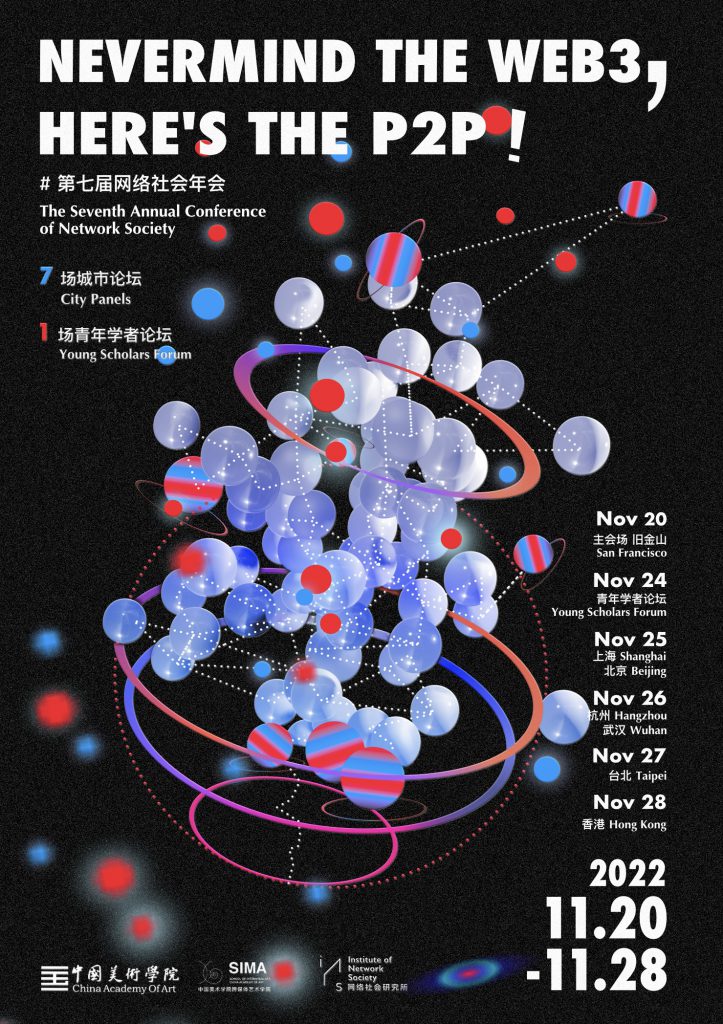
- 主辦單位:中國美術學院 跨媒體藝術學院 網絡社會研究所
- 總召集人:黃孫權
- 學術委員會:高世名、閔罕、姚大鈞、黃孫權、陳界仁、劉懌斯、周蓬岸
- 城市論壇召集人:Hannah Shen、 Homin Luo、 劉懌斯、新時線媒體藝術中心(畢昕、曹佳敏)、葉甫納、bAn成品(鄭葉穎、朱顏、袁孟如、任柄霖)、子傑、Bruce、Tony、李佳霖、張子木、劉磊
- 場地支持:Internet Archive、平行所、新時線媒體藝術中心、派對朋友的飛船
- 工作團隊:崔雨、房梓、張述軒、宋健驊、楊弘毅、湯睿澐、鄭葉穎、張鐸瀚、孫彬發、朱顏、蔡澤銳、徐雨姍、湯秋語、袁孟如、邊子晟、王思雲、馬雅、張鈺彬、任柄霖
- 視覺設計:崔雨、鄭葉穎
🔴 引言
文 / 黃孫權 教授
網絡社會研究所召集舉辦的六屆 網絡社會年會 包括”網絡化的力量“(2016),“與列斐伏爾前行:算法時代的都市論與日常生活批判”(2017),“智慧都市網絡”(2018),“網民21:超越個人賬戶”(2019),“實踐智慧之網”(2020)和”時刻互惠:合作生活的瞬間“(2021)。六年裡,網絡社會年會彙集了全球專家學者和行動者,形成獨特的批判與行動的學術生態網絡。一直以來,每屆都有指向性的實踐智慧思考,非是抽象普遍化卻常常失去行動與關愛的理論交談。
第七屆網絡社會年會以”Never Mind the Web3, Here’s the P2P”為題,企圖重訪信息技術史上最有社會性的技術啟發——P2P(Peer to peer)。這挑釁的命題,源於我們對Web3發展與通證化萬物(tokenized everything)發展的關心。P2P 是一種網絡技術和網絡拓撲結構,至今已發展出賽博空間中各種興趣社群;著作權和學術生產的共享精神及其倫理的複雜辯論;合作經濟的形態等等。如今,Web3 正以先進姿態將技術金融連結上個人價值,同時也將六零年代的”接通,調諧,脫離”(Turn on, tune in, drop out)這種自我精神啟蒙和反體制的姿態,進化成高強度自由主義式的個體投資動力:全下(all in)和從大公司跳槽(drop out)。在近 60 年的信息技術發展歷史裡,人們使用個人電腦與網絡,是為了溝通、連結,獨立而能彼此合作,演變至今卻讓人們對技術需求高於對彼此需求,信任程式碼治理而非社會協調。如 MIT 科技社會教授 Sherry Turkle 所說:人們離機器越近,人們離彼此就越遠,科技讓人們在一起孤獨(alone together)。P2P 採取的技術策略、倫理及其聯邦化(federalization)的理想與 Web3 的“去中心化”(decentralization)藍圖顯然不同。P2P 是小社群廣連結,輕量級的共產;而 Web3 則希望一切都能貨幣化(是的,這是最終目的),因此昂貴複雜,層層依賴,失敗率更高,更耗能。相較於個體隱藏在匿名與安全背後永不斷線、持續分心,被化為物或者一串哈希數值的近似物的狀態,可供彼此瀏覽、暫停和即時取用;我們更關心個體間的關係,人們如何聚集,群體間的交流如何產生。
更重要的是,當前的web3議程似乎缺乏對於從世紀交替以來自由軟體、獨立媒體運動、政府開放資料,數字民主化城市、參與式預算、創意公眾授權(creative commons)等豐富的經驗的傳承,如果少了民主數字技術運動曾帶來社會變革的成果與願景,社會將成為新技術自身的進化,替代了人類對於社會文化發展的構想。對維訥(Norbert Wiener,1894-1964)控制論有意思的質詢並非針對他本人,而是人如機器這個機械與生物的類比論,信息傳遞與回饋要解決的震顛難題,卻怪異成為控制社會的立法政體,導致了技術發展論者一心想著機器能夠成為什麼,而非機器能為人類做什麼。這難道不正是對今天Web3發展的質問?
回顧歷史上P2P技術文化所產生廣泛效用與意義,例如1999年Napster創立後,當時美國大學校園的網絡流量有70─90%是使用P2P的。2000年反全球化運動高峰之際,獨立媒體的全球網絡節點與參與原則,其透過RSS技術將全球120個城市站點彙整到西雅圖站點,以”民眾─城市─全球”的形式由下而上地打造的人民新聞通訊社成為了草根化流動空間的典範。這是Web2時代我們非常熟悉的場景。如今Web3展示是翻新的舊技術,修辭性地將去中心與自由交易包裝成政治─社會─文化發展的最終答案,真的如此嗎?以音樂產業為例,音樂創作者的確因為P2P或者串流服務收入大減,但每年唱片公司仍透過串流服務賺取大比財富,每年約142億美元的收入,在Spotify聽一首歌,音樂人仍只有不到一美分的酬勞。將創作者的作品價值綁定是答案,透過區塊鏈、加密貨幣、NFT來販售,還是應追究音樂發行與唱片公司與音樂人收益分配的問題?一本書或文章,要透過Writing NFTs來保存販售,還是應該讓世界有更多的公共圖書館?去中心化自治組織(DAO)若真心期望改變目前的政治經濟結構,那反托拉斯法不是更有效?Web3的前途能繞開電信基礎設施正壟斷掌握於全球少數國家與企業之嗎?一切為了更快速自由交換“交換能力”的技術想像,不就是資本主義的核心運作原則嗎?
這些問題恐怕都沒有立即的答案。這是本屆年會通過青年學者發表,七個城市論壇組織,召集各領域的主題演講者,共同探尋P2P技術社會性內涵所構成的豐富社群文化的原因。福柯(Michel Foucault)在“不同空間的正文與脈絡”(Texts/Contexts Of Other Spaces)的結語處留下了一句箴言:若文明中無船,則夢幻枯竭,間諜活動取代探險,而警察取代海盜。未來,我們要以程序取代社會協商與衝突,以財產證明取代公共財嗎?
🔴 關於城市論壇
計算機脫離純粹計算的功能,成為增益人們智慧,相互溝通與跨學科合作,始於六零年代,就在幾乎五英里半的圓圈範圍之內,美國加州舊金山中半島區域上,有史丹佛研究院的 Douglas Engelbart 主導的人類知識增益研究中心(Augmented Human Intellect Research Center, AHIRC);John McCarthy 主導的人工智能實驗室(Stanford Artificial Intelligence Laboratory, SAIL);Kepler書店上的人民電腦公司、搞出第一臺個人電腦的全錄研究中心(PARC, Palo Alto Research Center),還有CIA主導的迷幻藥實驗,Steward Brand的全球概覽(Whole Earth Catalog)總部與網路。這區域形成的特殊技術-文化,如死之華樂隊 (The Grateful Dead)所代表的:學生運動、反戰、迷幻藥、心靈解放;嬉皮應如是。幾十萬青年邁向鄉村邊境,形成新公社派,與政治上的新左分道揚鑣,後者關係政治改革,前者關係技術如何使個人意識自由,希望離開體制、對抗軍工赴合體的掌控(雖然與之共享同樣的技術進步之意識型態)。總之,雖然有歷史與政治的偶然,但說城市氣質(city ethos)塑造了至今為止的電腦與網絡文化不為過。
六零年代發展個人電腦與連結彼此的夢想逐漸實現,計算機及信息網絡成為人們思考、溝通、表現以及社交行動的“共同世界”。至此,一切凝固和不可穿越的都透明瞭彷彿在沒有摩擦力的世界中運轉。技術的發明,與其技術的傳遞適用是有時間差的。亦即,做為空間(space)與抽象統一的技術,需經過地方(place)與社群的翻譯才能落地。從技術史的觀點而來看,十九世紀的電力與蒸氣機,二十世紀的信息論與計算機並非由中心無損傳遞至每個地方,而是被城市的政權、社會與文化重新格式化的。每一項技術實踐都受到城市精神的重構。
籌組城市論壇,是田野也是詢問,是年會主題P2P的社會擴展論述:當代的科技藝術常顯示普遍化和技術表演的傾向,而非技術要服務對象(因而是特定的,地方的)之關切。如果城市氣質為一個社會的代表性精神,被生活在這個城市的人普遍承認的一套價值觀和視角,那全球化下的國家可能越來越千篇一律,但城市會同時成為反全球化基地,以及將文化重新同質化的機制。城市如何影響了當代的科技藝術家們?身處不同城市地方的科技藝術家又在作品與社會實驗上表達了什麼樣的差異特性?且讓七個城市裡的組織者與藝術家們、設定自身關切主題,表述城市作為多物種花園的可能。
🔴 主題演講嘉賓
本屆年會為分佈式的會議,全球線上線下在七個城市同時開展。邀請了學者、藝術家、策展人、黑客、法律教授等不同領域的11位主題講者與會,他們是:
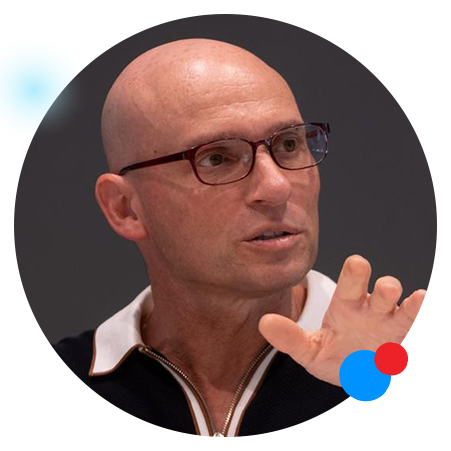
👈 丹尼爾·羅斯(Daniel Ross)
丹尼爾·羅斯於2002年在莫納什大學獲得博士學位,論文主題關於馬丁·海德格爾。他是《暴力的民主》(Violent Democracy)(劍橋大學出版社,2004年)和《心理政治過敏症:邁向元宇宙學的步驟》(Psychopolitical Anaphylaxis: Steps Towards a Metacosmics)(開放人文出版社,2021年)的作者。他翻譯了貝爾納·斯蒂格勒的十數本書,最近的一本是由斯蒂格勒和互聯國集體(Internation Collective)創作和編輯的集體作品,名為《分岔:別無選擇》(Bifurcate。There Is No Alternative)(開放人文出版社,2021年)。他也是獲獎影片《伊斯特河》(The Ister,2004年)的共同導演。
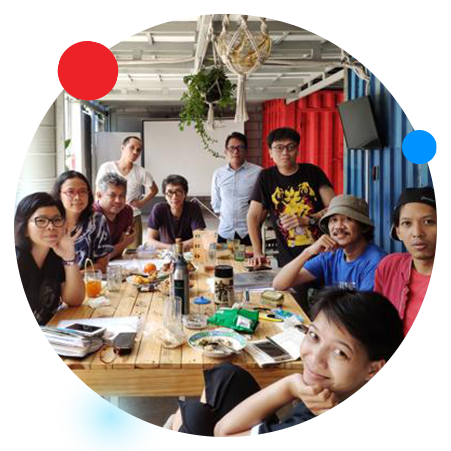
👈 法裡德·拉昆(Farid Rakun) & 朱莉婭·薩里塞(Julia Sarisetiati)
法裡德·拉昆(Farid Rakun)起初接受建築學學術訓練,獲有印度尼西亞大學(Universitas Indonesia)建築學學士和克蘭布魯克藝術學院(Cranbrook Academy of Art)建築學碩士學位,但他也擁有多重身份,這取決於誰在和他打交道。拉昆是印尼藝術團體ruangrupa的成員之一,曾於2016年與團體成員共同策劃荷蘭國際當代藝術展覽SONSBEEK:TRANSaction,並作為2022年第十五屆卡塞爾文獻展策展團隊成員之一提供藝術指導。
朱莉婭·薩里塞蒂(Julia Sarisetiati)畢業於特里薩克蒂大學(Trisakti University)藝術與設計學院攝影專業。她在印尼教育知識共享平臺“藝校”(Gudskul)上教授一門名為“集體可持續性”的課程。她的藝術實踐大部分集中關注印尼移民勞工的可持續性和生態系統問題。近期參展項目包括:印度尼西亞雅加達雙年展”SIASAT”(2013);哥本哈根“黑客城市現實系列”(Hacking Urban Reality Series, 2016);第11屆韓國光州雙年展(2016);西貢工廠當代藝術空間“我們在一起”(We’re in this together, 2018);日惹藝術與社會研究所“被編排的知識”(Choreographed Knowledges, 2019)。2017年,她策劃了媒體藝術節OK.Video,並在此展出了以”pangan”(食物)為主題的作品,將想法發展成基於實驗室的研究項目,以展示和探索經濟和社會的可持續性。她還作為策展人參與了歌德學院“迴歸:東南亞和東亞的移民敘事”策展項目。
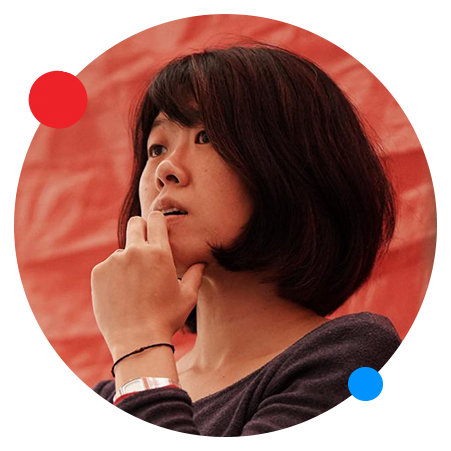
👈 陳芯宜
影像工作者。作品橫跨電影、紀錄片、VR與電視影集。常聚焦在人生存的處境與信仰,藉此探尋生命的本質。以魔幻寫實的手法、細膩的敘事,突顯現實的荒謬,建立獨特的影像語言。重要作品有VR360《無法離開的人》,獲得第七十九屆威尼斯電影節沉浸式內容單元的最佳體驗大獎。其他包含了劇集《四樓的天堂》、VR360《留給未來的殘影》、紀錄片《恍惚與凝視的練習》、《大帳篷-想像力的避難所》、《行者》、劇情片《我叫阿銘啦》、《流浪神狗人》等。曾獲柏林影展、金馬獎、臺北電影節、臺灣國際紀錄片影展、釜山影展等三十多個影展競賽入圍或獲獎肯定。

👈 蓋瑞.布倫特(Garry Brents)
蓋瑞.布倫特1987年生於加州,現居美國得克薩斯州,是眾多黑金屬音樂計劃(Cara Nair/Gonemage/Homeskin等)的主腦,也是目前黑金屬音樂社群中anti-NSBM(即“反-法西斯主義黑金屬”)浪潮中的積極成員。在他的個人計劃Gonemage和雙人樂隊Cara Neir中,Garry Brants將芯片音樂與黑金屬音樂瘋狂地融合在一起,並在錄製中使用老舊的遊戲設備,製造出混沌又夢幻的聲景。
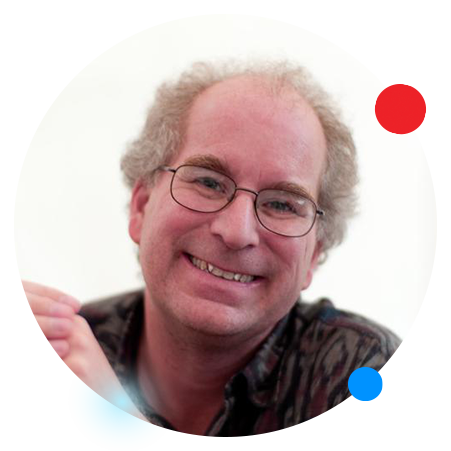
👈 布魯斯特·卡利(Brewster Kahle)
布魯斯特·卡利是美國數字圖書館員、電腦工程師和諮詢科技企業家,是Alexa Internet和網際網絡檔案館的創始人。2012年入選網際網絡名人堂,此外也是美國文理科學院院士、美國國家工程院成員、電子前沿基金會(EFF)、公共知識、網絡記憶基金會等組織的董事會成員。
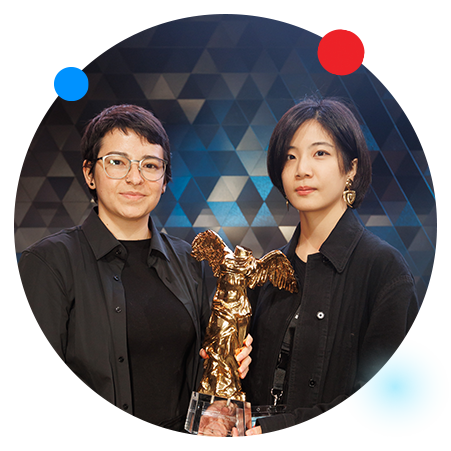
👈 徐容 & 娜塔莉婭.裡韋拉 (Natalia Rivera)
徐容,目前在柏林的研究生和新媒體藝術家。她試圖將跨領域的知識與藝術研究相結合,創造異質性的相遇。在她的創作過程中,她以多重視角回應當下的社會形勢,並利用隱喻的物件創造出思辨場景。她最近的作品主要專注於在微生命政治和加密罪惡感。
娜塔莉婭.裡韋拉,哥倫比亞新媒體藝術家,目前正在探索數位技術作為互助跨生命主體的可能性。在不確定性/酷兒知識創造的背景下,通過波哥大的「Mutante實驗室」和「Suratómica 全球創作網絡-藝術和科學」,他們的過程是非學科性的、開放的、集體的、協作的和社群的。
她們兩位合作的作品《Bi0film.net》獲得 2022 林茲電子藝術節「互動藝術類」金尼卡最大獎(Golden Nica)。

👈 劉昕(Livid)
劉昕(Livid)是一個設計師和程序員,劉昕是創意工作者社區V2EX.com的創建者。V2EX是一個由新手、開發者和設計師組成的在線社區,這個社區的目標是建立一個討論技術細節的良好場所——當人們為什麼和如何去建造其他事物。

👈 Mai Ishikawa Sutton
Mai Ishikawa Sutton是一位組織者、促進者、編輯和作家,她是關於數字公地的在線雜誌COMPOST的聯合創始人和編輯,也是Commons Network的數字共享研究員。
她的工作位於技術和團結經濟(solidarity economy)的交叉點;自2019年春季以來,她一直參與互聯網檔案館(Internet Archive)的工作,圍繞去中心化網絡(DWeb)組織對話、資源和活動的工作,她也是DWeb原則的原始管理人之一。
中文|English
🔗 AGENDA
🔵 10 keynote speakers, groups of organizers from 7 cities, 40 artists, and 18 young scholars enrolled. A dialogue between the city ethos and the communities.
- Organizer:China Academy of Art (CAA), School of Intermedia Art (SIMA), Institute of Network Society (INS)
- Convenor:Professor Huang Sunquan
- Academic Committee:Gao Shiming, Min Han, Yao Dajun, Huang Sunquan, Chen Chieh-jen, Yisi Liu, Zhou Peng-an
- City Forum Organizers:Yisi Liu, Homin Luo, Bi Xin, Cao Jiamin, Ye Funa, bAn, Zijie, Bruce, Tony, Li Jialin, Zimu Zhang
- Venue:China Academy of Art, Internet Archive, Parallel Institute,Chronus Art Center
- Team:Cyu, Fang Zi, Zhang Shuxuan, Song Jianhua, Yang Hongyi, Tang Ruiyun, Zheng Yeying, Zhang Dohan, Sun Binfa, Zhu Yan, Cai Zerui, Xu Yushan, Tang Qiuyu, Yuan Mengru, Bian Zicheng, Wang Siyun, Mara Ma, Zhang Yubin, Ren Binglin
- Visual Design:Cyu, Zheng Yeying
🔵 INTRO
Professor Huang Sunquan
For the 6 years, the former 6 Annual Conferences of Network Society, “Forces of Reticulation”(2016), “Another Walk with Lefebvre: Critique of Urbanism and Everyday Life in the Algorithmic Age”(2017), “Intelligent Urban Fabric”(2018), “Netizen 21: Beyond Personal Account”(2019), “The Web of Phronesis”(2020), and “Instantly Reciprocal:The Moments for Cooperative Life”(2021) has formed a unique academic network of worldwide experts on Network sociological studies.
The Seventh Annual Conferences of Network Society, “Nevermind the Web3, Here’s the P2P” is going to critically look back at the P2P(Peer to Peer), one of the most inspiring social technology throughout Tech history. This provocative proposition stems from our criticism of the development of Web3 that is tokenizing everything.
Today, Web3 is taking a progressive stance in linking technological finance to personal values, while evolving the self enlightenment and anti-establishment gesture of the 1960s of “turn on, tune in, drop out” into a high-intensity libertarian drive for individual investment: “all in” and “drop out (from large companies)”. Turn to P2P, a network technology and network topology, has so far developed various communities of interest in cyberspace; the spirit of sharing of copyright and academic production and its ethical and complex debates; the shape of the collaborative economy, etc. In the past 60-year tech history, people used personal computers and networks to communicate, to independently connect, however, today’s technologies have made people interested in technology more than in communities, trusting in code more than in social coordination. As Sherry Turkle, a Professor of the Society of Technology at MIT, indicates: the closer people get to the machines, the further they get from each other, and the technology makes people alone together.
The technical strategy, the ethics and the ideals of federalization adopted by P2P are clearly different from Web3’s blueprint of decentralization. P2P creates small and light-weight communities, while some Web3 projects are monetizing (yes, this is an ultimate goal), getting increasingly expensive, complex, and technology-dependent, with high failure rates and more energy consumption. We are not willing to see the individuals hiding behind anonymity and security, never disconnected, constantly distracted, reduced to objects or a string of hash values that can be browsed, paused, and instantly accessed by each other. Instead, we care about the relationships between individuals, especially how people gather together and communicate as groups.
Moreover, it is noticeable that some ongoing Web3 project has neglected the rich legacy of social movements including free software, Indymedia, open government data, digital democracy cities, participatory budgeting, creative commons, etc. Without the vision brought about by the democratic digital technology movement, there could be only evolutions of new technologies rather of society or culture. Since then, to criticize Norbert Wiener‘s cybernetics is to criticize today’s Web 3. In Wiener’s cybernetics, the analogy between man as machine and creature, where the shocking dilemma of information transmission and feedback to be solved has strangely made technological development theorists keep talking about what machines can be, rather than what machines can do for people.
At an earlier time, the sense of community the P2P generated was absolutely broad. In 1999, when Napster was found, 70-90% of network traffic on US university campuses was P2P. Around the year 2000, when the anti-globalization movement was on the rise, the Seattle Indymedia site integrated nodes from 120 cities through RSS technology, creating the News Agency of the People. It has been widely recognized as a symbolistic case of grassrooted space of flows, being built from the bottom up in the form of People-City-Global”. Web2 netizens are very familiar with this scenario, While Web3 netizens refurbishes old technologies, rhetorically packaging decentralisation and free trade as the ultimate answer to political-social-cultural development. Should we all in this game? The Seventh Annual Conference of Network Society tries to gather people who cares about the issues, to critically and creatively review the rich community culture constituted by the P2P thtough seven City Panels and one Young Scholar Forum.
In the conclusion of Texts/Contexts Of “Other Spaces”, Michel Foucault says: “In civilizations without boats, dreams dry up, espionage takes the place of adventure, and the police take the place of pirates.” Now, its time for us to question in the future where negotiation and conflict are being replaced with the procedure and public property with proof of individual property.
🔵 CITY PANELS
From the 1960s onwards, computers were no longer purely computational functions. It became a tool for acknowledging, communicating, and collaborating across disciplines.
Within a circle of almost five and a half miles, the Mid-Peninsula region of San Francisco, California, is home to the Augmented Human Intellect Research Center (AHIRC), headed by Douglas Engelbart of the Stanford Research Institute; the Artificial Intelligence Laboratory (SAIL), headed by John McCarthy; the People’s Computer Corporation (PCC) on the Kepler‘s Book; the Palo Alto Research Center (PARC), which created the first personal computer; the CIA-led psychedelic experiment, and the company’s global headquarters and network, Brand’s Whole Earth Catalog. The techno-culture developed in this area, as represented by bands like The Grateful Dead, included student movements, anti-war, psychedelic, spiritual liberation, hippie, etc. At the time, hundreds of thousands of young people marched to the rural frontier, forming a new communitarian faction that parted ways with the political New Left. When the New Left concerned with political reform, the young people concerned with freeing the individuals through technologies, to keep away with the establishments and fight the grip of the military-industrial complex (to some extents, they all believed in Technological Optimism). Accordingly, it is not too much to say that city ethos has shaped computer and Internet culture.
In the 1960s, the dream of developing personal computers and connecting each other came to fruition. The information networks brought by computers became a “common world” in which people thought, communicated, expressed themselves and acted socially. Everything frozen and impenetrable was then “transparent” as if a frictionless world.
There is a time lag between the invention of technology and the application of its transmission. Technology, as a unity of space and abstraction, is realized through the ‘translation’ of place and community. According to the mainstream tech-history, electricity and steam engines in the nineteenth century, and informatics and computers in the twentieth century were not transmitted from the centre to each place fluently, but were reformatted by the regime, society and culture of the places. Each technological practice was reconfigured by the “ethos” of the city.
The City Panels at the Seventh Annual Conference of Network Society are both fieldworks and questions about socially extended discourse on the conference theme. Today’s technological art is becoming increasingly homogeneous. Artists demonstrate new technologies a lot, paying little attention to who, especially the places, the technologies are made for. We believe that the ethos of cities are sets of values universally recognized by their inhabitants. When nations are becoming increasingly global, cities could become bases of counter-globalization, through constructing local cultural identities. Since then, We are curious about the way the city ethos works, especially about how they effect technological art maker based in different places. Therefore, the city panels invited curators and artists from seven cities, to set their own themes of concern, and express the possibilities of cities as “multi-species gardens”
🔵PANELISTS
👈 DANIEL ROSS
Daniel Ross obtained his doctorate from Monash University in 2002 with a thesis on Martin Heidegger. He is the author of Violent Democracy (Cambridge University Press, 2004) and Psychopolitical Anaphylaxis: Steps Towards a Metacosmics (Open Humanities Press, 2021). He has translated a dozen books by Bernard Stiegler, most recently the collective work composed and edited by Stiegler and the Internation Collective, entitled Bifurcate: There Is No Alternative (Open Humanities Press, 2021). He is also the co-director of the prize-winning film The Ister(2004).
👈 FARID RAKUN & JULIA SARISETIATI
Trained as an architect (B.Arch from Universitas Indonesia and M.Arch from Cranbrook Academy of Art), farid rakun wears different hats dependent on who is asking. He is a part of the artists’ collective ruangrupa with whom he co-curated TRANSaction: Sonsbeek 2016 in Arnhem NL and provided a collective Artistic Direction for documenta fifteen (Kassel, 2022).
Julia Sarisetiati graduated from the photography major of Arts and Design Faculty Trisakti University. In Gudskul she teaches a subject titled “Collective Sustainability”. A big part of her artistic practice focuses on Indonesian migrant workforces sustainability and ecosystem.Some of her recent exhibitions includes “SIASAT” Jakarta Biennale Indonesia (2013) “Hacking Urban Reality Series” Copenhagen (2016) 11th Gwangju Biennale Korea (2016) “We’re in this together” The Factory Contemporary Art Space Saigon (2018) and “Choreographed Knowledges” Cemeti Institute for Art and Society Yogyakarta (2019). In 2017 she curated the media art festival OK.Video where she exhibited works on the theme of “pangan” (food) developing ideas into laboratory-based research projects to demonstrate and explore economic and social sustainability. As a curator she also took part in “RETURNS: Migration Narratives in Southeast and East Asia” with the Goethe Institute.
👈 SINGING CHEN
Singing CHEN’s work encompasses fiction, documentary and VR films and has received numerous festival accolades. Her debut Bundled* **(2000) competed at Vancouver and God, Man, Dog (2007) screened at Berlinale, VIFF, HK, Busan and elsewhere. Chen’s documentaries detail artistic practice and the environment. Through VR technology she explores space and movement. Afterimage for Tomorrow (2018) was exhibited at the NewImage Festival. Her latest VR experience The Man Who Couldn’t Leave*** (2022) won Venice Immersive Best Experience at 79th Venice International Film Festival. Chen’s collective work is marked by a deep empathy for disenfranchised characters and a strong sense of social justice.
👈 GARRY BRENTS
Garry Brents was born in California in 1987 and now lives in Texas, USA. He is the mastermind of numerous black metal projects (Cara Nair/Gonemage/Homeskin, etc.) and is an active member of the current anti-NSBM (“anti-National Socialist black metal”) wave of the black metal community. In his solo project Gonemage and the duo Cara Neir, Garry Brants fuses chip music with black metal in a frenzied way and uses old gaming equipment in his recordings to create chaotic yet dreamy soundscapes.
👈 BREWSTER KAHLE
Brewster Lurton Kahle born October 21, 1960, is an American digital librarian, a computer engineer, Internet entrepreneur, and advocate of universal access to all knowledge. Kahle founded the Internet Archive and Alexa Internet. In 2012, he was inducted into the Internet Hall of Fame.
Jung Hsu, researcher and new media artist based in Berlin. She attempts to combine interdisciplinary knowledge with artistic research to create heterogeneous encounters. In her process, she responds to the current social situation with multiple perspectives and uses metaphorical objects to create a speculative scenario. Her recent work has focused on micro-biopolitics and crypto-guilt.
Natalia Rivera, artist of emergent-media currently exploring the possibilities of digital technologies as inter living-entities mutual aid media. In the context of indeterminate/queer knowledge creation, their processes are indisciplinary, open, collective, collaborative and communitarian, through the Mutante laboratory (Bogotá) and the global Suratómica Network for creation – art and science.
Their collaboration ‘Bi0film.net’ won the Golden Nica Award in the ‘Interactive Art’ category at the 2022 Linz Festival of Electronic Arts.
👈 Xin Liu(Livid)
Xin Liu (Livid) is a designer and programmer, and the creator of V2EX.com, a community of creative workers. V2EX is an online community of start-ups, designers, developers and creative people, and the goal of this community is to create a great place to discuss technical details – why and how people build other things.
website|Twitter|Recent Podcast|keynote related
👈 Mai Ishikawa Sutton
Mai Ishikawa Sutton is an organizer, facilitator, editor, and writer who is the co-founder and editor of COMPOST, an online magazine about the digital commons, and a Digital Commons Fellow at Commons Network.
Her work sits at the intersection of technology and solidarity economy; since spring 2019, she has been involved with the Internet Archive’s work on organizing conversations, resources, and events around the Decentralized Web (DWeb), and she is one of the original stewards of the DWeb principles.
website|Twitter|Recent Interview
議程 AGENDA(GMT+8:00)
🔗 Bilibili Livestream|🔗 Youtube Livestream
城市論壇 CITY PANELS
2022/11/20-28
👈 手機用戶請左右滑動查看完整表格|for phone users,swipe left & right to see the whole table 👉
| 時間 TIME/DATE | 與會嘉賓 PANELISTS | 線下參會 VENUE | SLIDO | |
|---|---|---|---|---|
| 11/20 08:00 – 11:30 | 舊金山論壇|人民的技術 SAN FRANCISCO|PEOPLE’S TECHNOLOGY ZOOM: 845 2389 7496 🔍 查看詳細議程 DETAILED AGENDA | Jung Hsu & Natalia Rivera、Garry Brents、Livid、Mai Ishikawa Sutton、Brewster Kahle | / | 👋 我要提問 I HAVE SOMETHING TO SAY! |
| 11/25 14:00-17:00 | 上海論壇|乾溼關係:信任、情感、交易與諸眾 SHANG HAI|Wet and Dry Relationships: Trust, Affection, Trade and the Multitude ZOOM:893 0945 6031 🔍 查看詳細議程 DETAILED AGENDA | 佩恩恩、金鋒 & 石青、殷艾雯、施蕊妮、郭城、孫羽茜、姚翔、33EMYBW PEI En-en、JIN Feng & SHI Qing、YIN Aiwen、SHI Ruini、GUO Cheng、SUN Yuxi、YAO Xiang、33EMYBW | 👉 上海市 普陀區 莫干山路50號 18號樓 101 | 👋 我要提問 I HAVE SOMETHING TO SAY! |
| 11/25 19:30-23:40 | 北京論壇|在中心談“去中心”——忙碌的北京如何安心? BEI JING|Talking about decentralization at the center:How to be reassurance in the hectic of Beijing ZOOM: 858 0714 2179 🔍 查看詳細議程 DETAILED AGENDA | 李洋化夢、宋軼、豌豆黃小組、孫曉星、周姜杉、傅豐元 LI Yang、SONG Yi、/p1:s/、SUN Xiaoxing、ZHOU Jiangshan、FU Fengyuan | / | 👋 我要提問 I HAVE SOMETHING TO SAY! |
| 11/26 09:00-13:00 | 杭州論壇|愛慾技術與社群:夢杭州 HANG ZHOU|PHILIA, DESIRE, TECH AND COMMUNITY: AN OTHER HANGZHOU ZOOM: 812 8023 5421 🔍 詳細議程 DETAILED AGENDA | Daniel Ross、Faid Rakun&Julia Sarisetiati、程然、蔡宇瀟、潘子申&顧文甲、武子楊、俞同舟、吳珏輝、袁園 Daniel Ross、Faid Rakun&Julia Sarisetiati、CHENG Ran、CAI Yuxiao、PAN Zishen & GU Wenjia、WU Ziyang、YU Tongzhou、WU Juehui、YUAN Yuan | 👉 浙江省杭州市西湖區轉塘街道象山藝術公社32幢 平行所工作坊 | 👋 我要提問 I HAVE SOMETHING TO SAY! |
| 11/26 14:00-17:30 | 武漢論壇|在網絡上如何問鄰居借鹽:Web3 時代的全球化技術和本地實踐 WU HAN|BORROWING SALT FROM NETWORK NEIGHBORS: GLOBAL TECHNOLOGIES AND LOCAL PRACTICES IN THE WEB 3 ZOOM: 821 4304 6021 🔍 查看詳細議程 DETAILED AGENDA | 胡鵬程、覃島、Tony、Bruce、Weiwei(徐子薇)、子傑、jojo、周蓬岸 HU Pengcheng、QIN Dao、Tony、Bruce、Weiwei、Zi Jie、jojo、ZHOU Peng-an | 👉 湖北省 武漢市 漢陽區鸚鵡大道364號 武漢PFS(派對朋友的飛船) 👉浙江省杭州市西湖區轉塘街道象山藝術公社32幢 平行所工作坊 | 👋 我要提問 I HAVE SOMETHING TO SAY! |
| 11/27 16:00-21:40 | 臺北論壇|臺北再繪 TAI PEI|Taipei, Remapping ZOOM: 829 3786 6468 🔍 查看詳細議程 DETAILED AGENDA | 陳芯宜 、張碩尹、吳其育 、李紫彤 、致穎 、王柏偉 、徐詩雨 、黃孫權 、鄭慧華 、羅悅全 Singing Chen、Ting Tong Chang、 Wu Chi-Yu、Lee Tzu Tung、Musquiqui Chihying、Po-Wei Wang、Shih-yu Hsu、 Huang Sun Quan、 Amy Cheng、Jeph Lo | / | 👋 我要提問 I HAVE SOMETHING TO SAY! |
| 11/28 19:00-22:00 | 香港論壇|徐徐入底流:圍繞P2P的微型自治藝術實踐與詢問 HONG KONG|INSTELLING AN UNDERTOW: MICRO-AUTONOMOUS ART PRACTICES AND INQUIRIES AROUND P2P ZOOM: 850 6792 3634 🔍 查看詳細議程 DETAILED AGENDA | 黎肖嫻,孫詠怡,展銷場,楊靜,Kwan Q Li Linda Chiu-han Lai, Winnie Soon, Display Distribute, Yang Jing, Kwan Q Li | / | 👋 我要提問 I HAVE SOMETHING TO SAY! |
🔗 青年學者論壇 YOUNG SCHOLARS FORUM
2022/11/24 09:30-18:00 (GMT+8:00)
地點:👉 浙江省杭州市西湖區轉塘街道象山藝術公社 32幢 平行所工作坊 |VENUE:👉 NO.32, XIANGSHAN ART COMMUNE, XIHU DISTRICT, HANGZHOU, ZHEJIANG, PRC.
👋 線上互動提 |👋 I HAVE SOMETHING TO SAY!
| 時間 TIME | 議題 TOPIC | 報告主題 TITLE | 報告人 SPEAKER |
|---|---|---|---|
| 09:30-09:45 | 簽到和開場 OPENING | ||
| 09:45-10:00 | 去中心化自治組織 DAO & 點對點社群 P2P Community | 藝術家運營的去中心化自治組織:一場重構藝術神話範式的實驗 | 張瑞麒 |
| 10:00-10:15 | 去中心化自治組織 DAO & 點對點社群 P2P Community | DAO與“江湖”:從地下社會角度研究DAO的組織形態 | 易浩天&顧紫翬 |
| 10:15-10:30 | 去中心化自治組織 DAO & 點對點社群 P2P Community | The Democracy Trap of DAO: Are we really heading for the future we expect? | 賴欣然 |
| 10:30-10:45 | 去中心化自治組織 DAO & 點對點社群 P2P Community | 志願計算項目中生成藝術的維繫功能——以 SETI@home 和 Electric Sheep 為例 | 湯睿澐 |
| 10:45-11:05 | Q&A | ||
| 11:05-11:15 | 中場休息 BREAK | ||
| 11:15-11:30 | 技術何以至此 Alt-Tech | 出走的技術:從軍事實驗室到媒體實驗室的技術流變 | 袁孟如 |
| 11:30-11:45 | 技術何以至此 Alt-Tech | 電子遊戲的發展與黑客文化 | 任柄霖 |
| 11:45-12:00 | 技術何以至此 Alt-Tech | VR 技術變遷下社會關係的瓦解:從 viewmaster 到 HMD | 鄭葉穎 |
| 12:00-12:15 | 技術何以至此 Alt-Tech | 情書算法的悲觀主義 | 張鐸瀚 |
| 12:15-12:30 | 技術何以至此 Alt-Tech | 打孔卡、攝影術、數據庫:一個媒介主題的簡明史 | 林燦文 |
| 12:30-13:00 | Q&A | ||
| 13:00-14:00 | 中場休息 BREAK | ||
| 14:00-14:15 | 網絡亞文化和社群 Subculture and Counterculture | 偶像破壞者的共識——A—SOUL粉絲社群的反“飯圈化”實踐觀 | 陳天琪 |
| 14:15-14:30 | 網絡亞文化和社群 Subculture and Counterculture | “亞比”之死 :後亞文化網絡中的資本繁衍與美學歧路 | 曹佳慧 |
| 14:30-14:45 | 網絡亞文化和社群 Subculture and Counterculture | 作為模像的亞文化——從一場“亞文化考試”談起 | 羊喘兒(YANG Qinhua) |
| 14:45-15:00 | 網絡亞文化和社群 Subculture and Counterculture | Audiovisual藝術及它在俱樂部中的棲居: 清潔與解放 | 胡丁予 |
| 15:00-15:15 | 網絡亞文化和社群 Subculture and Counterculture | 數字遊民:主體重建與社會在場——以大理“瓦貓之夏WEB3街(gai)會”為例 | 孫哲&李欣禹 |
| 15:15-15:45 | Q&A | ||
| 15:45-15:55 | 中場休息 BREAK | ||
| 15:55-16:10 | 技術有性別嗎?Gendered Technology | 文化技術的性別:織物作為一種認識論與存在模式 | 徐露 |
| 16:10-16:25 | 技術有性別嗎?Gendered Technology | 後真相之眼:視覺人工智能構建的可能圖景中的偏見 | 黃韻璇 |
| 16:25-16:40 | 技術有性別嗎?Gendered Technology | “擁抱”異化:技術、去自然化與後人類主體性 | 汪嫣然 |
| 16:40-16:55 | 技術有性別嗎?Gendered Technology | 虛擬化身的憂鬱——以“安麗”項目為例 | 段馨 |
| 16:55-17:25 | Q&A | ||
| 17:25-18:00 | FAREWELL |
👈 返回|GO BACK
本體論維度 / Ontological Dimensions