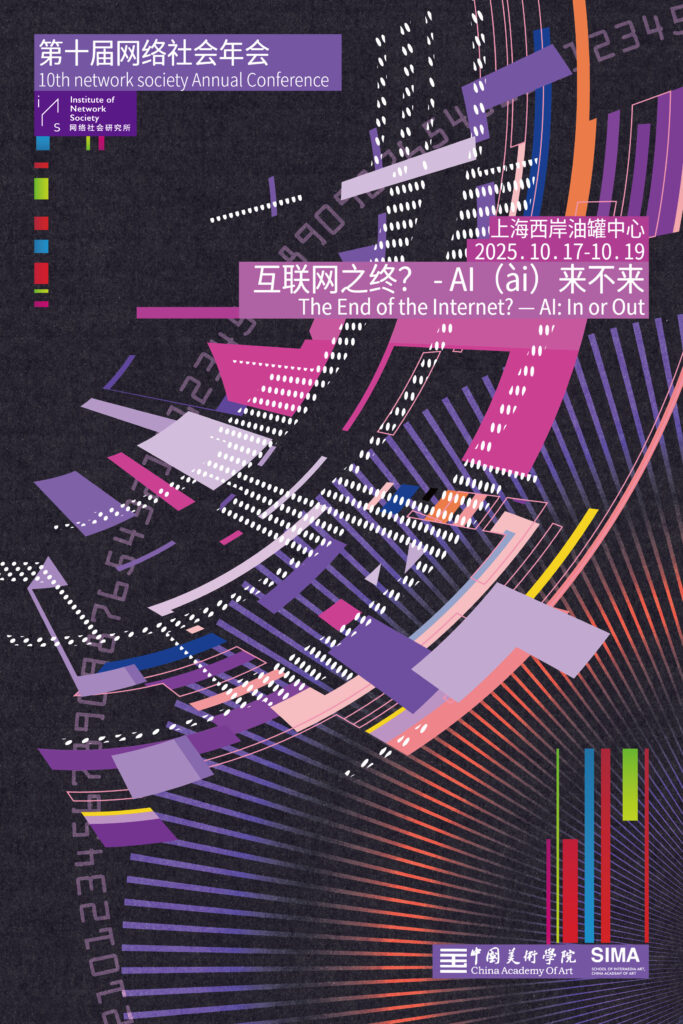
第十屆網絡社會年會
互聯網之終?AI(ài)來不來
主辦單位
中國美術學院(CAA)
跨媒體藝術學院(SIMA)
網絡社會研究所(INS)
總召集人
黃孫權
學術委員會
李凱生、閔罕、黃孫權、陳界仁、劉懌斯、周蓬岸
引言 / 黃孫權教授
第十屆年會“互聯網之終?”——並非末世廣告,而是對秩序更替的審問:當超連結的公共技藝(引用、互操作、透明可查)成為提示的自然語言界面(大型數據庫、系統預設、代理決定)取代,我們是否正在跨越一條無形卻決定性的界線?“AI之內/之外”亦非是末日派與榮景派(doomer/bloomer)的歷史終結意識形態,這是我們已經太熟悉的資本主義運作的模式的廣告詞,如今,各社交平臺擁有私數據(由個人數據構成的公司資產),使之成為不聯網;現在AI治理的問題更隱諱,歷史上所有人類的一切,人文藝術智力的結晶都將含括在內,將在未經公共授權、未標明出處與回饋機制的條件下,被編纂為一種可租用、可封裝、可套利的“模型資本”。此外,誰以及什麼樣的資料得以被納入模型的語言、資料與評測;誰與什麼樣的數據被排除在算力、標準與分潤之外。這就是我們十年來反覆追問的“協議”問題,亦即網絡社會學式的“公共性”的關鍵。早期的網際世界以開放協議維繫——HTTP、SMTP、RSS、ActivityPub……大家約定欄位、格式與互通性,稱之為“互聯”:我可以接得上你,你也能接得上我,規則公開、可審、可替換。如今的節點悄悄移位:我們面對的是模型界面——API條款、系統提示、對齊策略、內容篩檢與評測束縛——它們同樣扮演“協議”的角色,但多半是黑箱、可變、且由少數供應者單方推進。於是,此轉變就從開放協議的“互聯”(inter-operability),過渡到模型界面的“互導”(inter-guidance)。
由巨型AI公司引領的互導,實是“一般人工智能”(馬克思意義上的)的剝削與極大利潤化利用,由此,當工作就是提示(when work is prompt),這可能是人類文明發展中最危險的轉折:人類共同的知識存量被清理過濾成“大語言模型”,語言這一社會關係的織機被改造成提詞器的界面,工藝、判斷與美學訓練被壓縮為一行行可計費通證費用的指令。危險不在於機器更聰明,而在於一般智能(general intellect)被公司化地圈佔為產權,隱藏了掘礦─資本─勞力的廣泛社會過程,並以黑箱評測與基建壟斷獲取梯度地租。當“工作就是提示”,我們若不重寫規則,就等於把作者性、公共性與未來的分配權,一併交付給系統預設值:瀏覽分析判斷被替換為“召喚”、手藝與編碼被簡化為“提示”、作者性被稀釋為“參數”。
在網絡社會年會邁向十週年之際,我們面對的不僅只是資本─技術的複合權力,與文化─技術的社會構造,我們更面臨算法主權、語料主權、各民族國家在全球範圍上的基礎設施上資源鬥爭。也許沒有比這個時刻接近馬克思在《大綱》中論述的了,馬克思說:“固定資本的發展表明,普遍的社會知識已成為直接的生產力。”他又說:“固定資本乃資本之為資本的最相稱形態。”這不就是人工智能?人工智能難道不是資本主義的夢中情人?
十年之際,不是讓我們忘記之前的問題,去更新解決方案,相反的是在延續的長戰場中,找到互聯網後期喪失的理想與實踐可能,這恰恰好能夠使我們面對看似不一樣型態,確有著更為精細省力的剝削型態。
回顧網絡社會研究所將把十年累積的系列研究(如 SparkLink/Archverse/合作社式模型與算力、城市論壇、青年學者論壇與hackathon),本屆年會除了主題演講外,另外展出文化與技術三部曲的研究資料與影像播放,以及青年學者論壇。
時間
2025年10月17-19日
地點
UFO未知終端上海西岸油罐藝術公園一號罐
(上海市徐彙區龍騰大道2398號)
直播地址
👉 B站直播鏈接👇
線下報名
請點擊鏈接或掃碼填寫信息完成註冊報名,可優先於現場簽到獲取同傳設備與座位保留(現場同傳設備領取需抵押身份證件)
活動議程
| 10月17日 | ||
|---|---|---|
| 時間 (UTC+8) | 活動內容 | |
| 上午 | 青年學者論壇 | |
| 9:00 | 入場 | |
| 9:20-9:30 | 青年學者論壇 開幕致詞:劉懌斯 | |
| 9:30-10:30 | 自組論壇|情感提詞器 主持評論人:劉懌斯 發表人: 朱韻|我的“愛人”:中國乙女遊戲研究的學術圖景(2019—2025) 陳蘇元|與AI談戀愛:AI產品“愛”的商業構建、文本馴化與親密關係實踐——以“Replika”為例 鄭葉穎|無形/限之愛:通用對話型AI重織人類關係之網 葉雲鶴|從“肉身相遇”至“數據匹配”:論Blued的技術中介對中國Z世代男同性戀親密關係的建構 (中國美術學院 網絡社會研究所) | |
| 10:30-11:10 | 自組論壇|被挾持的未來與替代想象的(不)可能:科技右翼、風險資本與反民主的幽靈 主持評論人:蔣斐然 發表人: 金博文|風險資本的政治工程:科技右翼如何驅動美國國家公司化進程 楊啟晨|黑暗啟蒙、敵基督者與技術彌賽亞:美國科技右翼如何構建當代神學敘事? 秦川|人文藝術實驗室在技術治理背景下的譜系觀察,藝術學校的批判位置 (中國美術學院 當代藝術與社會思想研究所) | |
| 11:20-12:20 | 創意講談 主持評論:周蓬岸 發言嘉賓:羅霄 演講主題:當生成成為日常:AI 時代的流變、協議與遺忘 | |
| 10月18日 | ||
| 時間 (UTC+8) | 活動內容 | |
| 上午 | 主旨論壇一 | |
| 9:00-9:30 | 第十屆網絡社會年會 開幕致辭 跨媒體藝術學院副院長 閔罕 網絡社會研究所所長 會議總召 黃孫權教授 | |
| 9:30-10:30 | 板塊一 靜默編輯 發言嘉賓:迪倫·雷比林(Dylan Reibling) 演講主題: 追問基礎設施:平臺、預測與提示詞 | |
| 10:30-10:45 | 茶歇 | |
| 10:45-11:45 | 板塊三 AI 基建志 發言嘉賓:喬安娜·莫爾(Joana Moll) 演講主題:內在的界面 | |
| 11:45-12:45 | 板塊一 靜默編輯 對談嘉賓:斯科特·摩爾(Scott Moore)、博格娜·科尼爾( Bogna Konior) 對談主題: 機器決策並非最終:質疑“靜默的編輯者” | |
| 下午 | 主旨論壇二 | |
| 14:00-15:00 | 板塊四 當作品就是提示 發言嘉賓:尼克·蒙特福特(Nick Montfort) 演講主題: 編碼、點擊與提示:生成藝術的方式 | |
| 15:00-16:00 | 板塊四 當作品就是提示 發言嘉賓:費利克斯·斯塔爾德(Felix Stalder) 演講主題: 數字文化、生成式人工智能與藝術 | |
| 16:00-16:15 | 茶歇 | |
| 16:15-17:15 | 板塊二 梯度地租 演講主題: 傑克·斯蒂爾戈(Jack Stilgoe) 演講主題: 讓人工智能迴歸現實 | |
| 晚上 | 18:30-20:30 | 作品放映討論會: 《互聯網的終結》(*The End of the the Internet*, 2025),迪倫·雷比林(Dylan Reibling) |
| 20:30-10:00 | Live Coding 開放式聲音現場 Boyang GUAN|崔涵|周蓬岸 | |
| 10月19日 | ||
| 上午 | 主旨論壇三 | |
| 9:30-10:30 | 板塊二 梯度地租 演講主題:詹姆斯·斯坦霍夫(James Steinhoff) 演講主題: 提示工程與(非)決定論的政治經濟學 | |
| 10:30-11:30 | 板塊三 AI 基建志 發言嘉賓:路淼 演講主題: 熱帶地區的數據中心:西非的熱量管理、中國科技與能源政治 | |
| 下午 | 青年學者論壇 | |
| 1:00-2:30 | 青年學者論壇|Panel 1 靜默編輯 主持評論人:黃孫權 發表人: 丁凡、袁金玉、張婧妮(同濟大學 藝術與傳媒學院)|靜默編輯的公共理性再建構:交往理性視角下的隱性權力機制批判研究 黃越敏(華東師範大學)、郭都末(英國皇家藝術學院)|無限深的鏡子:語言符號在後互聯網時代的內循環 趙佳菁(中國美術學院 網絡社會研究所)|異端批註:越獄提示的鬥爭 李洋梓(南開大學 社會學系)|從集體共鳴到算法響應:生成式AI對同人酷兒敘事與可見性政治的重塑 何樂其、Max Loeffler(上海紐大) |對齊的暴力:如何停止擔憂並愛上靈異軟件 盧曼曼(山東大學 新聞傳播學院)|從“超級傀儡”到“賽博超級傀儡”:虛擬影響者在智能廣告中的權力操控與倫理審視(線上) | |
| 2:30-3:30 | 青年學者論壇|Panel 2 梯度地租 主持評論人:黃孫權 發表人: 仝昭祥(中國美術學院 網絡社會研究所)|人工/智能的地理不均衡:數據標註員的勞動過程 許可(中國美術學院 網絡社會研究所)|數字流水線上的母親:中國縣域數據標註女工的母職困境 滑惜子(上海紐約大學 交互媒體藝術)|寄生於系統之間:模型間的協議美學作為創作方法 王少瑋(奧斯陸大學 人文學院媒介與傳播系)|提示即投注:短劇投流中的語義金融與流量的第四價值形式(線上) | |
| 3:30-3:45 | 茶歇 | |
| 3:45-4:15 | 青年學者論壇|Panel 3 Al基建志 主持評論人:潘霽 發表人: 牟浩傑(復旦大學 新聞學院)|“綠色”反對“全景”:城市基礎設施的摩擦與政治 張徐姍(清華大學 社會學系)|循線而行:數據中心的替代性解剖學 | |
| 4:15-6:30 | 青年學者論壇|Panel 4 當作品就是提示 主持評論人:黃孫權 劉懌斯 潘霽 發表人: 姜奕竹(中國美術學院 網絡社會研究所)|想象的機器:AI生成藝術的美學與算法權力批判 孫景赫(中國美術學院 跨媒體藝術研究)|界面、反饋與決策暴力:電子遊戲與戰爭的同構邏輯 嚴慧(獨立研究員、算法工程師)|算法重塑的作者性:AI藝術創作中主體身份的技術建構與權力轉移 任玄奇、吳於楓(天津美術學院 跨媒體藝術)|從弱影像到提示詞:AIGC時代夢核美學的算法收編與作者性危機 林檎(寧波諾丁漢大學 音樂傳播與音樂戲劇)|算法之外:AI歌姬從生產到表演的文化表達 姚麗金(中國美術學院 美麗中國研究院)|判斷作為基礎設施:檔案展勞動中的人機協作 唐蘭、王芷子(西安美術學院 跨媒體藝術系)、石藝佳(西安交通大學 藝術教育中心)|從行動者視角出發:重構AI生成藝術中的作者性、在場性與靈韻 金秋雨(東京藝術大學大學院 國際芸術創造研究科)|提示機制與觀眾記憶:當代語境下個體經驗的轉變(線上) 劉磊(羅德島設計學院 全球藝術與文化)|助燃劑:“設計師之選:諾曼·提格 — 即興合奏”與人工智能藝術與設計的機構化(線上) | |
| 19:30-21:00 | 黃孫權:“文化與技術一部曲:舊金山 | 個人計算機與反文化”影片放映討論會 |
主題演講嘉賓
(按演講順序排列)

迪倫·雷比林
Dylan Reibling
講者簡介: 迪倫·雷布林(Dylan Reibling)是一位加拿大電影導演,他的作品關注技術、政治與文化的交匯。他的首部長片紀錄片《互聯網的終結》(The End of the Internet, 2025)在哥本哈根國際紀錄片節(CPH:DOX)參賽首映,並在BAFICI、慕尼黑紀錄片節(DokFest Munich)及其他國際影展放映。影片探討了去中心化運動以及數字基礎設施如何塑造社會、政治和經濟生活。雷布林曾與維斯媒體(VICE) 合作製作備受好評的系列紀錄片網絡戰爭(Cyberwar),並在北美和歐洲的各大影展與機構展示作品。他目前正在開發關於數字未來、技術前沿與政治思想的新項目。
演講主題: 追問基礎設施:平臺、預測與提示詞
摘要:基礎設施讓什麼成為可能——又讓什麼變得不可能?
本次主旨演講探討基礎設施——無論是網絡協議、平臺,還是預測算法——如何塑造政治、社會與文化生活。導演迪倫·雷布林(Dylan Reibling)在製作紀錄長片《互聯網的終結》(The End of the Internet, 2025)期間,與技術專家、社會行動者及不同社群的交流中,梳理了分佈式系統從冷戰時期的起源到當下平臺主導的歷史軌跡,揭示了自由理想與商業現實之間的張力。
早期的去中心化網絡願景曾許諾韌性與非等級化的交流,這些理想與上世紀七十年代的反主流文化運動互相呼應。然而,萬維網的商業化進程重新集中了控制權,使平臺成為數字體驗的主要中介,並在算法篩選、監控與商業化過程中生成了新的限制形式。
人工智能則帶來了進一步的轉變:早期的文本性基礎設施強調溯源、處理與規訓,而當代系統則依賴“提示”(prompt)與“預測”(prediction)。大型語言模型並非在推理,而是在根據過往數據生成概率性的延續,這引發了關於知識、想象力與規模極限的諸多疑問。
主旨演講提出,對基礎設施的批判性審視意味著揭示技術系統內部被構築的“能供性”(affordances),因為這些能供性正塑造著我們的世界。若我們不加審視地接受技術所提供的無縫體驗,就有可能放棄那些需要關懷、討論與集體投入的制度與價值。因此,基礎設施必須被視為不僅僅是技術的底層結構,更是決定我們所能想象與構建的未來的關鍵因素。

喬安娜·莫爾
Joana Moll
講者簡介: 她是一位常駐巴塞羅那和柏林的藝術家與研究者。她的作品批判性地審視技術資本主義敘事如何塑造機器、人類及生態系統的“字母化”過程,聚焦於數據的物質性、監控,以及通過數字媒體對公民社會的軍事化。她的項目曾在全球多個重要場域展出,包括威尼斯雙年展(Venice Biennale)、奧地利電子藝術節(Ars Electronica)、卡爾斯魯厄藝術與媒體中心(ZKM),並被《紐約時報》(The New York Times)、《金融時報》(The Financial Times)等媒體報道。她共同創立了位於巴塞羅那的批判性界面政治研究小組(Critical Interface Politics Research Group),並曾與莫茲拉基金會(Mozilla Foundation)合作。目前,她擔任科隆媒體藝術學院(KHM)網絡學教授,同時也是巴塞羅那設計與工程學院的訪問講師。
演講主題: 內在的界面
摘要: 2012年,一段廣為流傳的視頻中,一個一歲大的孩子試圖在紙質雜誌上進行“滑動”“捏合”“放大”的手勢操作——當圖像沒有任何反應時,她顯得十分沮喪。視頻的結尾,家長說了一句意味深長的話:“史蒂夫·喬布斯已經在她的操作系統裡寫入了代碼。”本次演講以這一瞬間為切入點,探討科技如何將自身銘刻進我們的身體、姿態與想象之中,並揭示在數據提取時代,藝術實踐如何揭露那些潛藏在技術、意識形態、物質性與資本之間的無形糾纏。

斯科特·摩爾
Scott Moore
講者簡介: Scott Moore 是 Public Works 的創始人,該機構是一家開源生態基金,專注於支持藝術家與創意技術實踐者。除了個體創作者之外,Public Works 還支持了多個項目,包括 Fuser、Gitcoin、Metalabel 與 Spline。Moore 同時擔任舊金山非營利文化機構 Gray Area 的活躍顧問。業餘時間,他亦參與多個“外制度性”(extitutional)學術團體的合作研究,其中包括 Metagov,主要探討網絡化的人類協作問題。

博格娜·科尼爾
Bogna Konior
講者簡介: Bogna Konior 是一位學者與作家,其研究領域聚焦於新興技術。她現任紐約大學上海分校(NYU Shanghai)媒體理論助理教授,同時在人工智能與文化研究中心(Artificial Intelligence & Culture Research Center)以及互動媒體藝術系(Interactive Media Arts Department)工作。
她著有《互聯網的黑暗森林理論》(Dark Forest Theory of the Internet),該書將於 2025 年由 Polity Press 的 “Theory Redux” 叢書系列出版。
她與 Benjamin Bratton 及 Anna Greenspan 共同擔任《機器決策並非最終:人工智能的中國史與未來》(Machine Decision is Not Final: China and the History and Future of Artificial Intelligence)一書的聯合編輯,該書將於 2025 年由 Urbanomic 出版,並由麻省理工學院出版社(MIT Press)發行。
對談主題: 機器決策並非最終:質疑“靜默的編輯者”(Fireside Chat)
摘要:我們今日所閱讀的內容,越來越多地由那些不可見的編輯所塑造——即所謂的“靜默編輯者”(quiet editor):隱藏在提示式界面背後的系統提示(system prompts)、安全過濾器(safety filters)與檢索管線(retrieval pipelines)。它們決定了誰能被看見、哪些語氣被允許、哪些語境被抹除。它們以“可信度”的外觀取代可驗證的來源,以“合成的權威”取代腳註。
“靜默的編輯者”在超越人類監督的規模與速度中運作,每秒做出成千上萬次編輯性決策,判斷何者可被視為合理、可信,甚至可言說。然而,在用戶看來,這些決策卻呈現為自然的、中立的、乃至不可避免的——一種無需上訴的機器裁決。
本場與 Bogna Konior 的對談將探討在此條件下,質疑與爭辯的可能性與意義,尤其聚焦於她的“互聯網黑暗森林理論”(Dark Forest Theory of the Internet)。討論將延伸至當“公共理性”的基礎設施變得專有且不透明時的後果,以及當人工智能系統能生成無限、乃至相互矛盾的證據時,會出現何種新的現實。
在一個溝通本身充滿風險的世界裡,編輯究竟是暴力,還是關懷?

尼克·蒙特福特
Nick Montfort
講者簡介: 尼克·蒙特福特(Nick Montfort)的創作成果包括十部由計算機生成的著作(由七家出版社出版)、合作項目《刪除主義者》與《海與雀之間》,以及五十餘項獨立數字藝術項目。其最新詩集《全為勝利》全部由三個字母的單詞構成。他在MIT出版社出版的著作包括《未來》及兩部合編文集:《新媒體讀本》與《輸出:計算機生成文本選集(1953-2023)》。蒙特福特現任麻省理工學院教授,同時擔任卑爾根大學數字敘事中心首席研究員,並主導名為“修辭實驗室”的創新工作室。他常年居住在紐約市。
演講主題: 編碼、點擊與提示:生成藝術的方式
摘要: 自可編程的通用計算機誕生之初,藝術家們就開始嘗試用它來創作藝術,並發展出多種方法。其中,編寫計算機程序(coding)無疑是最早讓計算機“生成藝術”的方式。起初,這種編程直接基於特定處理器的指令集進行;不久之後,更高層次的編程語言出現,使藝術家與程序員能夠以更易於理解的方式進行創作。計算機發明後僅二十年間,創新者們就已開發出專門用於藝術創作的平臺與工具。例如,在創意文本生成領域,約瑟夫·魏岑鮑姆(Joseph Weizenbaum)因開發出計算機角色“DOCTOR”而聞名——這是歷史上第一個聊天機器人。然而,他在20世紀60年代的作品 ELIZA 不僅僅是創造了一個角色,而是一個可用於構建不同對話系統的通用平臺。同一時期,馬克斯·馬修斯(Max Matthews) 開發了通用合成器系統 MUSIC,而艾文·薩瑟蘭(Ivan Sutherland) 的 Sketchpad 則首次實現了矢量繪圖功能,成為圖形用戶界面的先驅。
如今,除了晦澀的底層編程(彙編語言與低級編碼)、更易上手的高級語言編程,以及從超文本系統到照片編輯、三維建模等各類藝術創作工具之外,一種全新的計算機交互方式——生成式人工智能(Generative AI) 正在迅速興起。藝術家不再需要編寫針對處理器指令集的代碼,也無需構建複雜的面向對象程序,甚至不必通過鼠標點擊完成創作,而是可以通過輸入提示詞(prompt)來觀察系統的生成結果。儘管我會對此次最新發展的具體細節發表一些看法,但我論述的核心觀點是:新的計算藝術方式並不會取代舊的方式。如今,歐洲的演示場景(demoscene) 社群中仍有創作者使用極低層的編程語言來製作實時動畫;一些藝術家依然親自編寫程序來處理圖像,而非依賴Photoshop的現成功能。儘管創作平臺與工具層出不窮,現場編程(live coding) 的藝術家往往會自己搭建平臺——就像音樂家發明自己的樂器一樣。在現場編程表演中,代碼的編寫與修改通常會實時投影並公開展示,使得透明性甚至某種意義上的編程教育成為表演的一部分。因此,真正值得思考的問題不是:當提示詞寫作取代其他方式時我們該怎麼辦?而是:當生成式人工智能成為計算機藝術生態的一員時,這一新的藝術生態將呈現出怎樣的面貌?
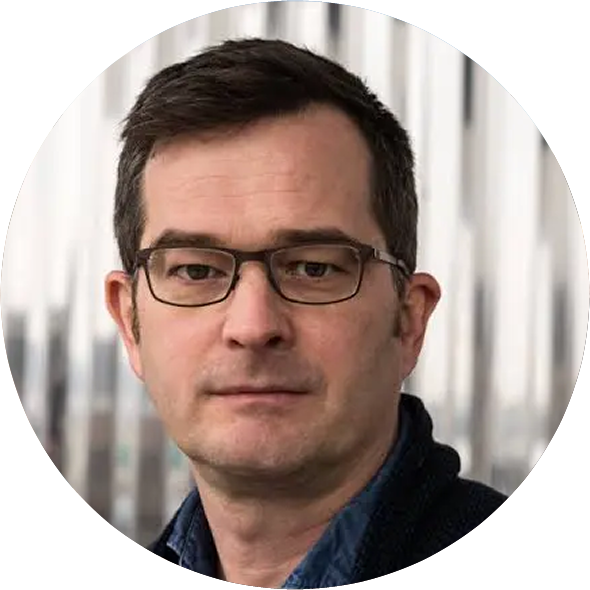
費利克斯·斯塔爾德
Felix Stalder
講者簡介: 費利克斯·斯塔爾德(Felix Stalder)現任蘇黎世藝術大學教授,執教於美術學院“藝術與人工研究”專業。他的研究聚焦於文化、政治與技術動態的交匯點,尤其關注基於共同體的新型生產模式、版權制度、數據化進程、人工智能以及主體性轉型等領域。
除了學術工作外,他還是一位活躍的文化實踐者,長期擔任批判性網絡文化重要平臺“網時代”的協調人——從早期的郵件列表到如今在聯邦宇宙中的節點。他是維也納世界信息研究所與技術政治工作組的核心成員。其學術成果豐碩,重要著作包括:《數字團結》(2014年)、《數字狀況》(2016年、2018年、2023年)、《共同體的美學》(2021年)、《數字無意識》(2021年)、《從共同體到NFT》(2022年)以及《具身數據實踐中的當代性》(2025年)。更多信息可訪問:http://felix.openflows.com/
演講主題: 數字文化、生成式人工智能與藝術
摘要: 如果我們把“文化”理解為社會用以組織意義、並據此引導行動的所有活動之總和,那麼生成式人工智能正在對數字語境下的文化帶來一種深刻的轉變。
最初,數字文化由三種過程的互動所塑造:指涉性(referentiality)——意義源於事物之間的關聯;共同性(communality)——意義在群體中被協商形成;以及算法性(algorithmicity)——意義通過自動化的選擇過程而生成。
然而,大型語言模型(LLMs)及其他類型的生成式人工智能並不依循這些路徑。它們所生成的內容看似具有文化意義,實則只是通過對大量變量的相關性計算得出的結果,並不依賴外部的指涉、邏輯或語義。由此,這類系統無法生成用以“指導行動的意義”,而是生成“行動”來引導意義。用語言學的術語來說,語言的功能從“表義”(signification)轉向了“行動”(action)。借用唐納德·麥肯齊(Donald McKenzie)的話,這些模型不是照相機,而是引擎。
隨著這種轉變,生成式AI在藝術領域最有趣的探索,是將其用作激發創作能動性的工具,而把意義的詮釋權明確留給人類——如同精心設計的留白。

傑克·斯蒂爾戈
Jack Stilgoe
講者簡介: 傑克·斯蒂爾戈(Jack Stilgoe)現任倫敦大學學院科學技術學教授,致力於新興技術治理研究。他擔任英國研究與創新署(UKRI)“負責任人工智能”領導團隊成員(官網:www.rai.ac.uk),曾主持經濟與社會研究理事會(ESRC)“無人駕駛未來”項目(2019-2022)。作為常受關注的媒體評論專家,他同時擔任英國政府人工智能、自動駕駛汽車等新興技術領域的政策顧問。
演講主題: 讓人工智能迴歸現實
摘要: 隨著人工智能浪潮的推進,關於其利弊的討論顯得愈發弔詭:益處常被描繪成烏托邦式的理想圖景,風險則被渲染為關乎人類存亡的威脅。我們需要摒棄“AI例外論”,將其視為一種“尋常技術”(Narayanan and Kapoor 2025),並汲取以往新興技術發展的經驗教訓。本次演講將基於針對公眾與人工智能研究者的最新調查結果,提出一個觀點:我們正處於建立更具建設性討論的契機之中。

詹姆斯·斯坦霍夫
James Steinhoff
講者簡介: 詹姆斯·斯坦霍夫(James Steinhoff)博士現任都柏林大學信息與傳播研究學院助理教授,他深耕於人工智能、數據與數字媒體的政治經濟學領域,是該領域頗具影響力的學者。其專著《自動化與自主性:人工智能產業中的勞動、資本與機器》(帕爾格雷夫出版社,2021年)及合著《非人的力量:人工智能與資本主義的未來》(普魯託出版社,2019年)已成為該領域重要文獻。
演講主題: 提示工程與(非)決定論的政治經濟學
摘要: 本次演講提出,可以將“提示”(prompting)的政治經濟學理解為決定論與偶然性之間的博弈。資本作為一個系統,其內在邏輯總是在竭力消除運營過程中的偶然性以促進價值增殖——即便個體資本間的競爭又在不斷催生新的偶然因素。提示詞技術本質上是概率性算法,然而它作為接口所服務的AI,卻已成為資本主義技術狂熱的核心載體。本次演講將探討提示詞為何具有概率性特徵,並評估近期學界嘗試在大型語言模型LLMs中“消除”偶然性的潛在影響。這種非決定性的消除在技術上看似可行,但其代價在於——它引入了一個新的計算維度,從而重塑人工智能的政治經濟學格局。
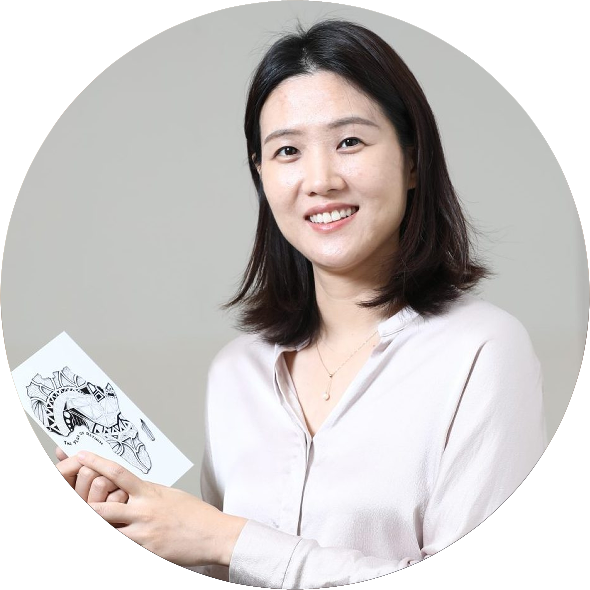
路淼
講者簡介: 路淼博士是香港嶺南大學文化研究系的助理教授。她的研究興趣包括基礎設施研究、科學與技術研究以及中非研究。她的英文專著將於2025年秋季由美國伊利諾伊大學出版社出版。她的論文發表在Information, Communication & Society, New Media & Society, and Science, Technology & Human Values等多個英文刊物上。
演講主題: 熱帶地區的數據中心:西非的熱量管理、中國科技與能源政治
摘要: 近年來AI與雲計算的火熱引發了數據中心在全球的建設熱潮。不同於以往數據中心選址對溫帶的偏向,中國在熱帶地區的擴張表明全球雲基礎設施的的地理分佈與物質性都在變動之中。雖然華為在非洲已經躍升為一個重要的數據中心提供商,但卻面臨著熱管理的棘手問題。在加納,華為承建的國家數據中心最近引入了太陽能以期降低能耗與碳排放。本文基於2023至2025年的採訪與田野調查來解釋加納雲基礎設施的熱政治。通過“熱帶物質性”這一理論框架,本文將分析一系列國家與企業的行動者如何管理、協商數據中心的物質性。經驗層面,本文揭示了綠色能源的矛盾性以及全球雲的地理分佈變化。理論層面,本文探究了熱帶如何幫助我們理解國家、自然與基礎設施之間的複雜互動。
創意演講嘉賓
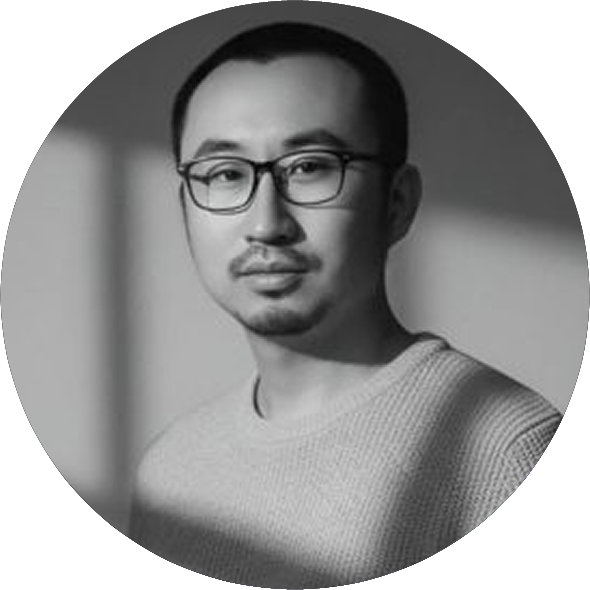
羅霄
講者簡介:羅霄,算法工程師,數字藝術家。實驗編程創始人,從事交互媒體、人工智能、生成藝術的創作與教學。同濟大學建築城規學院AI與藝術創研中心實踐導師,AI藝術創新聯盟AIAIA常務理事。畢業於北京航空航天大學,電子信息工程與軟件工程專業背景。曾就職於騰訊ISUX和網易遊戲。2005年起從事遊戲開發與新媒體藝術類項目,2020年引入AI技術重構創作範式。個人作品於中國、英國、日本、南非、意大利等地展出。
演講主題:當生成成為日常:AI 時代的流變、協議與遺忘
摘要:生成走入日常,如何避免數字藝術作品淪為可複製的提示組合?本講座以實踐者視角,從經典生成藝術的”規則”導向,轉向生成式AI時期的”流變”。系統講解三種方法:以結構保持確保形體與語義不走樣,以因果約束明確可發生範圍,以時間性塑形鍛造節律與質感;通過可復演的生成鏈路,探討AI時代的創作者在創作與展示中如何保留作者性、來源與過程。
工作團隊
會議總召:黃孫權
執行策劃:王婧潔
會務統籌:鄭葉穎、王安琪、曾夢蕊
工作組:周蓬岸、丁樂、曾夢蕊、井俱進、田沛松、王安琪、李夢書
導播與影像:井俱進、李藝欣、李易揚、趙佳菁、李程錦
視覺文宣:李夢書、丁樂、鄭葉穎
聲音:Boyang GUAN
動效:Shir- Shiko[](https://codimd.caa-ins.org/zNaFvlYpRhWsebRL7VF8pA?view#%E4%BC%9A%E8%AE%AE%E8%AE%AE%E7%A8%8B%EF%BC%88%E8%8B%B1%E6%96%87%E7%89%88%EF%BC%89
English / 中文
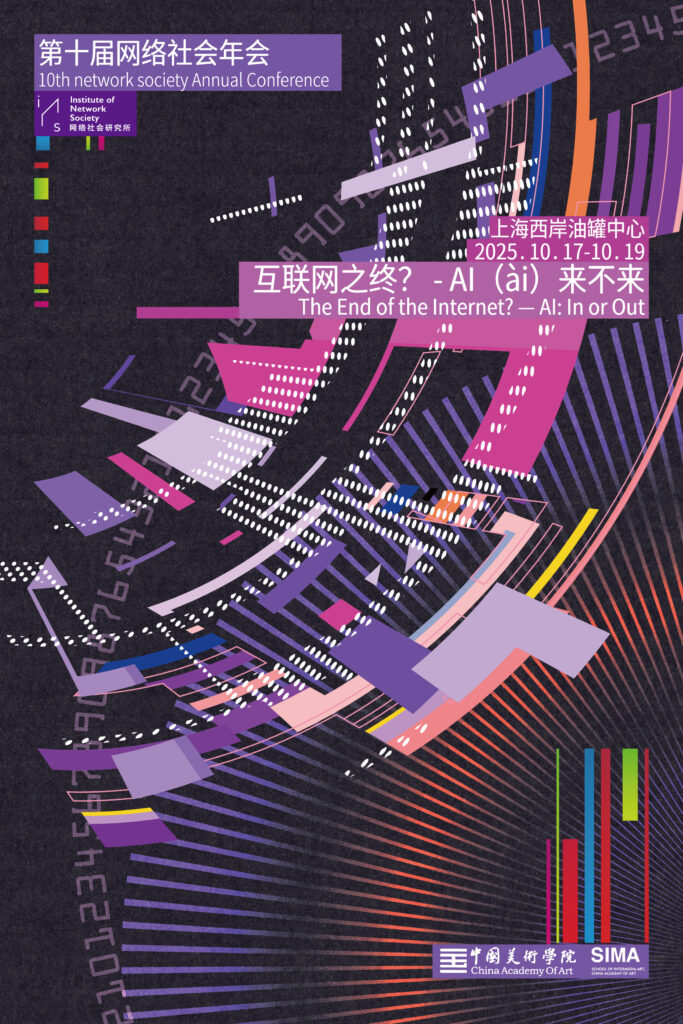
The 10th Annual Conference of Network Society
The End of the Internet? — AI: In or Out
HOST
Institute of Network Society (INS),
School of Intermedia Art (SIMA),
China Academy of Art (CAA)
CONVENER
HUANG Sunquan
Academic Committee
LI Kaisheng
MIN Han
HUANG Sunquan
CHEN Jieren
LIU Yisi
ZHOU Pengan
INTRODUCTION
Over the past decade, we have consistently pursued a “triple remix”of theory, technology, and action to interrogate the publicness of network society. The first conference, themed “The Power of Networking,” questioned the paradigm formation of techno-social ecology. The second, following Lefebvre’s itinerary, examined urban life and the everyday in the algorithmic age. The third, “Smart Urban Networks,”turned toward infrastructures and civic technologies. The fourth, “Netizens 21,”returned to media archaeology and platform critique. The fifth and sixth, held during the global pandemic, grounded discussions in practical experiments—distributed networks, encryption and cooperative token economies, metaverse rural reconstruction—opening up the linkage among tools, organization, and collaboration. The seventh contrasted P2P with the vocabulary of Web3, unfolding across seven global cities to clarify the contribution of distributed urban public cultures. The eighth reread the genealogy of counterculture and digital technology from the 1960s to the present. The ninth shifted the field site to the Global South, beginning in Chiang Mai to trace manufacturing, mobile connectivity, social media, and new terrains. This trajectory—from theoretical diagnosis, to protocol design, to geopolitical sites—points to the Institute’s enduring concern: How is the public preserved and reinvented amid technological renewal? How has the network transformed aesthetic production?
The 10th Conference, “The End of the Internet?”is not an apocalyptic proclamation, but an interrogation of systemic transition.When the public techniques of hyper-connectivity (citation, interoperability, transparency , and traceability) are replaced by natural-language prompting interfaces (large databases, system defaults, agentic decisions), are we crossing an invisible yet decisive threshold? “AI:In or Out”is not the doomer/ bloomer ideology of historical finality; it is the familiar advertising script of capitalist operation.
Today, social media platforms own “private data”(corporate assets made from personal data), making them effectively disconnected. Now the governance of AI is even more opaque: the entire history of humanity, the crystallization of humanistic and artistic intelligence, is subsumed without public authorization, without attribution or mechanisms of reciprocity, into a new form of “model capital”—something rentable, encapsulable, and arbitrageable. Moreover, who—and what kinds of data—are included within the language, corpora, and benchmarks of models? Who and what are excluded from computation, standards, and profit- sharing? This is the “protocol”question we have repeatedly posed for a decade—indeed the very key to the network-sociological concept of publicness.
In the early internet, public life was sustained by open protocols—HTTP, SMTP, RSS, ActivityPub—where fields, formats, and interoperability were collectively agreed upon. This was “inter-networking”:I could connect to you, and you to me; the rules were open, auditable, and replaceable. Today, the nodes have subtly shifted: we face model interfaces—API terms, system prompts, alignment strategies, content filtering, and evaluation constraints. These also function as “protocols,”but now as black-boxed, mutable, and unilaterally advanced by a handful of providers. Thus, the transformation unfolds: from open-protocol interoperability to model-interface inter-guidance.
The inter-guidance led by giant AI corporations is, in fact, the exploitation and hyper-valorization of “general intellect”(in Marx’s sense). Thus, when work becomes prompt, we may be facing the most dangerous turning point in human civilization: humanity’s collective reservoir of knowledge is filtered into “large language models”; language, the loom of social relations, is transformed into a teleprompter interface; craft, judgment, and aesthetic training are compressed into tokenized commands billed line by line. The danger lies not in machines becoming more intelligent, but in the corporate enclosure of general intellect as proprietary capital—concealing the broader social process of extraction–capital–labor, while gradient rents are captured through black-box evaluations and infrastructural monopolies. When work is prompt, if we do not rewrite the rules, we effectively hand over authorship, publicness, and the right to future distribution to system defaults:browsing and critical analysis are replaced by summoning; craftsmanship and coding are simplified to prompting; authorship is diluted into parameters.
As the Network Society Conference reaches its tenth anniversary, we face not only the compound power of capital-technology and the socio-technical construction of culture-technology, but also algorithmic sovereignty, corpus sovereignty, and infrastructural struggles among nation-states on a global scale. Perhaps no moment is closer to Marx’s Grundrisse, where he wrote: “The development of fixed capital indicates that general social knowledge has become a direct force of production.”And again:”Fixed capital is the most adequate form in which capital, as capital, can be represented.”Is this not artificial intelligence? Is AI not capitalism’s dream lover?
The tenth year is not a call to forget earlier questions in order to update solutions; rather, it is to find, within the ongoing battlefield, the ideals and practical possibilities lost in the late internet era—precisely what enables us to confront a seemingly new, yet more refined and labor-efficient form of exploitation.
In retrospect, the Institute of Network Society will showcase its decade of cumulative research projects (such as SparkLink, Archverse, cooperative models of computation, urban forums, young scholars forums, and hackathons). In addition to keynote lectures, this year’s conference will also exhibit research materials and video screenings from the Culture & Technology Trilogy, along with the Young Scholars Forum.
TIME
October 17–19, 2025 (UTC+8:00)
PLACE
UFO Terminal, Tank No.1, West Bund Tank Shanghai
(2398 Longteng Avenue, Xuhui District, Shanghai, China)
LIVE STREAMING


On-site Registration
Please click the link or scan the QR code to complete your registration.
Pre-registered participants will have priority access to simultaneous interpretation devices and reserved seating.
(A valid ID is required as a deposit when collecting interpretation equipment on site.)

AGENDA
| October 17 2025 | ||
|---|---|---|
| Time(UTC+8) | Activities | |
| A.M. | Forum I: Young Scholars Session | |
| 9:00 | Venue Opens | |
| 9:20-9:30 | Welcoming Remarks by Liu Yisi | |
| 9:30-10:30 | Self-organized Panel|Affective Prompts Commenter: LIU Yisi Speakers: ZHU Yun|My “Lover”: The Chinese Scholarly Landscape of Otome Game Studies (2019–2025) CHEN Suyuan|Romancing with AI: The Commercial Construction, Textual Conditioning, and Intimacy Practices of AI Products—A Case Study of “Replika” ZHENG Yeying|Disembodied and Infinite Love: How General Conversational AI Reweaves the Network of Human Relationships YE Yunhe|From Embodied Encounters to Algorithmic Matching: Blued’s Technological Mediation and the Construction of Intimacy among Chinese Generation-Z Gay Men (Institute of Network Society, China Academy of Art) | |
| 10:30-11:10 | Self-organized Panel|Hijacked Futures and the (Im)possibility of Alternative Imagination: The Tech Right, Venture Capital, and the Specter of Anti-Democracy Commenter: JIANG Feiran Speakers: JIN Bowen|The Political Engineering of Venture Capital: How the Tech Right Drives the Corporate Statization of the American State YANG Qichen|Dark Enlightenment, Antichrist, and Techno-Messiah: How Does the American Tech Right Construct a Contemporary Theological Narrative? QIN Chuan|Arts and Humanities Labs under Technological Governance: A Genealogical Inquiry into the Critical Role of Art Schools (The Institute of Contemporary Art & Social Thoughts, China Academy of Art) | |
| 11:20-12:20 | Creative Talk moderator: ZHOU Peng’an Speaker: LUO Xiao Speech Title: When Generation Becomes Routine: Flux, Protocol, and Oblivion in the AI Era | |
| October 18 2025 | ||
| Time(UTC+8) | Activities | |
| A.M. | Keynote Forum – I | |
| 9:00-9:30 | Opening Remarks MIN Han, Vice Dean of School of Intermedia Art(SIMA), CAA Prof. HUANG Sunquan, Director of the Institute of Network Society and Conference Convener | |
| 9:30-10:30 | Panel 1|The Quiet Editor:Public Reason under Prompted Interfaces Speaker: Dylan Reibling Speech Title: Interrogating Infrastructure: Platforms, Predictions, and Prompts | |
| 10:30-10:45 | Break | |
| 10:45-11:45 | Panel 3|Atlas of AI Infrastructures: Cloud Heat, Ground Truth Speaker: Joana Moll Speech Title: The Interface Inside | |
| 11:45-12:45 | Panel 1|The Quiet Editor:Public Reason under Prompted Interfaces Speakers: Scott Moore & Bogna Konior Fireside Chat Title: Machine Decision is Not Final: Contesting the Quiet Editor | |
| P.M. | Keynote Forum -II | |
| 2:00-3:00 | Panel 4|When the work is Prompt Speaker: Nick Montfort Speech Title: Coding, Clicking, and Prompting to Make Art | |
| 3:00-4:00 | Panel 4|When the work is Prompt Speaker: Felix Staldert Speech Title: Digital culture, Generative AI, and Art | |
| 4:00-4:15 | Break | |
| 4:15-5:15 | Panel 2|Gradient Rent: The Political Economy of Prompts Speaker: Jack Stilgoe Speech Title: Bringing AI Down to Earth | |
| 6:30-8:30 | Film Screening and Discussion *The End of the Internet *by Dylan Reibling | |
| 8:30-10:00 | Live Coding Performance | |
| October 19 2025 | ||
| A.M. | Keynote Forum -III | |
| 9:30-10:30 | Panel 2|Gradient Rent: The Political Economy of Prompts Speaker: James Steinhoff Speech Title: Prompting and the political economy of (non)determinism | |
| 10:30-11:30 | Panel 3|Atlas of AI Infrastructures: Cloud Heat, Ground Truth Speaker: LU Miao Speech Title: Data center for the tropics: Heat management, Chinese tech, and energy politics in West Africa | |
| P.M. | Young Scholars Forum | |
| 1:00-2:30 | Young Scholars Forum|Panel 1 The Quiet Editor:Public Reason under Prompted Interfaces Commenter: HUANG Sunquan Speakers: DING Fan, YUAN Jinyu, ZHANG Jingni(College of Arts & Media, Tongji University)|The Quiet Editor and the Reconstruction of Public Rationality: A Critical Study of Implicit Power Mechanisms from the Perspective of Communicative Rationality HUANG Yuemin(East China Normal University), GUO Dumo(Royal College of Art)|Mirrors of Infinite Depth: Internal Circulation of LinguisticSymbols in the Post-Internet Era ZHAO Jiajing(Institute of Network Society, China Academy of Art)|Heresy Marginalia: The Struggle of Jailbreak Prompts LI Yangzi(Nankai University)|From Collective Resonance to Algorithmic Response: How Generative AI Reshapes Queer Narratives and the Politics of Visibility in Fandom Viola Leqi He, Max Loeffler(NYU Shanghai)|Violence of Alignment: How to Stop Worrying and Love Haunted Software LU Manman(Shandong University)|From “Super Puppets” to “Cyber Super Puppets”: Power Manipulation and Ethical Examination of Virtual Influencers in Intelligent Advertising(online) | |
| 2:30-3:30 | Young Scholars Forum|Panel 2 Gradient Rent: The Political Economy of Prompts Commenter: HUANG Sunquan, LIU Yisi Speakers: TONG Zhaoxiang(Institute of Network Society, China Academy of Art)|The Uneven Geographies of Artificial/Intelligence: The Labor Process of Data Annotators XU Ke(Institute of Network Society, China Academy of Art)|Mothers on the Digital Assembly Line: The Dilemmas of Motherhood for Female Data Annotation Workers in China’s Counties HUA Xizi(NYU Shanghai)|Parasitize Between Systems: Cross-Model Protocol Aesthetics As Method WANG Shaowei(Media and Communication, University of Oslo)|Prompt as Wager: Semantic Finance and the Fourth Value Form of Traffic in Vertical Drama Economies(online) | |
| 3:30-3:45 | Break | |
| 3:45-4:15 | Young Scholars Forum|Panel 3 Atlas of AI Infrastructures: Cloud Heat, Ground Truth Commenter: Speakers: PAN Ji MU Haojie(Fudan University)|“Green” versus “Panoramic”: Frictions and Politics of Urban Infrastructure ZHANG Xushan(Tsinghua University)|The Meshwork of Lines: Following the Fluid Trajectories of Data Centers | |
| 4:15-6:30 | Young Scholars Forum|Panel 4 When the work is Prompt Commenter: HUANG Sunquan, PAN Ji, LIU Yisi Speakers: JIANG Yizhu(Institute of Network Society, China Academy of Art)|machine imaginaire: A Critique of Aesthetic and Algorithmic Power in AI-Generated Art SUN Jinghе(School of Intermedia Art, China Academy of Art)|Interface, Feedback, and Decisional Violence: The Isomorphic Logic Between Video Games and Warfare YAN Hui(Independent researcher)|The algorithmic reconstruction of authorship: How AI Art reshapes creative identity and power REN Xuanqi, WU Yufeng(Tianjin Academy of Fine Arts)|From Poor Images to Prompts: Visual Genealogy and Authorship Reconstruction of Dreamcore Aesthetics in the AIGC Era LIN Qin(University of Nottingham Ningbo China)|Beyond the Algorithm: Cultural Expression of AI Divas from Production to Performance YAO Lijin(The Research Institute of Better China Initiative of CAA)|Judgment as Infrastructure in Human–AI Collaboration: The Case of Archival Exhibition Work SHI Yijia(Department of Transmedia Art, Xi’an Academy of Fine Arts)、WANG Zhizi、TANG Lan(Center for Art Education, Xi’an Jiaotong University)|Prompt as Method: Authorship, Presence, and Aura in AI-Generated Art JIN Qiuyu(Department of Arts Studies and Curatorial Practices, Graduate School of Global Arts, Tokyo University of the Arts)|Prompt Mechanisms and Audience Memory: The Transformation of Individual Experience in Contemporary Time(online) LIU Lei April(Global Arts and Culture, Rhode Island School of Design)|Accelerant: Designer’s Choice: Norman Teague – Jam Session and the Institutionalization of AI Art and Design(online) | |
| 19:30-21:00 | HUANG Sunquan: Screening and Discussion of Episode I: San Francisco: Personal Computer and Counterculture |
SPEAKERS
(Arranged in order of the speeches)
Dylan Reibling
Bio: Dylan Reibling is a Canadian filmmaker whose work explores the intersections of technology, politics, and culture. His debut feature documentary, The End of the Internet (2025), premiered in competition at CPH:DOX and has screened internationally at BAFICI, DokFest Munich, and beyond. The film examines the decentralization movement and the ways digital infrastructures shape social, political, and economic life. Reibling has previously worked with VICE on the acclaimed series Cyberwar and has presented work at festivals and institutions across North America and Europe. He is currently developing new projects on digital futures, technological frontiers, and political thought.
Speech topic: Interrogating Infrastructure: Platforms, Predictions, and Prompts
Abstract: What do infrastructures make possible—and what do they foreclose? This keynote examines how infrastructures—whether network protocols, platforms, or predictive algorithms—shape political, social, and cultural life. Drawing on encounters with technologists, activists, and communities during the making of the feature documentary The End of the Internet (2025), director Dylan Reibling traces the trajectory of distributed systems from their Cold War origins to the present dominance of platforms, highlighting the tensions between emancipatory ideals and commercial realities.
Early visions of decentralized networks promised resilience and non-hierarchical communication, ideals that resonated with countercultural movements of the 1970s. Yet the commercialization of the World Wide Web re-centralized control, naturalizing platforms as the primary mediators of digital experience. This infrastructural consolidation has produced new forms of constraint through algorithmic filtering, surveillance, and monetization.
Artificial intelligence represents a further transformation: where earlier textual infrastructures emphasized provenance, processing, and proscription, contemporary systems rely on prompts and prediction. Large Language Models do not reason but generate probabilistic continuations of past data, raising questions about knowledge, imagination, and the limits of scale.
The keynote argues that interrogating infrastructure means uncovering the affordances built into technical systems—because these affordances shape the world. To accept the seamless experiences offered by technology without scrutiny risks abandoning institutions and values that require care, debate, and collective commitment. Infrastructure, therefore, must be critically examined not only as a technical substrate but as a determinant of the futures we are able to imagine and build.
Joana Moll
Bio: She is a Barcelona/Berlin-based artist and researcher. Her work critically examines how techno-capitalist narratives shape the “alphabetization” of machines, humans, and ecosystems, focusing on data materiality, surveillance, and the militarization of civil society through digital media. Her projects have been presented globally at venues such as the Venice Biennale, Ars Electronica, ZKM, and The New York Times, The Financial Times, and Wired. She co-founded the Critical Interface Politics Research Group in Barcelona and has collaborated with the Mozilla Foundation. Currently, she is a Professor for Networks at the Academy of Media Arts Cologne (KHM) and a visiting lecturer at Elisava, Barcelona School of Design and Engineering.
Speech topic: The Interface Inside
Abstract: In 2012, a viral video showed a one-year-old trying to swipe, pinch, and zoom on a paper magazine, growing frustrated when the images failed to respond. Her parent ended the clip with a striking remark: “Steve Jobs has coded a part of her operating system.” This talk uses that moment as a lens to explore how technology inscribes itself into our bodies, gestures, and imaginations, and it will reveal how artistic practice can uncover the often invisible entanglements between technology, ideology, materiality, and capital in the age of data extraction.
Scott Moore
Bio: Scott Moore is a co-founder at Gitcoin and a General Partner at Public Works. He also serves as an advisor to a wide range of other projects pushing forward plural technologies including Metagov and the Plurality Institute. By pioneering new forms of internet-native funding, he has helped collectively distribute over $500m to causes ranging from climate change to open source software.[](https://codimd.caa-ins.org/zNaFvlYpRhWsebRL7VF8pA?view#200-515-PM-Keynote-Forum--II
Bogna Konior
Bio: Bogna Konior is a scholar and a writer whose work focuses on emerging technologies.
She is currently Assistant Professor of Media Theory at NYU Shanghai, where she works at the Artificial Intelligence & Culture Research Center, and the Interactive Media Arts department.
She is the author of Dark Forest Theory of the Internet, forthcoming in the Theory Redux Series from Polity Press in 2025. With Benjamin Bratton and Anna Greenspan, she is the co-editor of Machine Decision is Not Final: China and the History and Future of Artificial Intelligence, forthcoming from Urbanomic in 2025, and distributed by MIT Press.[](https://codimd.caa-ins.org/zNaFvlYpRhWsebRL7VF8pA?view#200-515-PM-Keynote-Forum--II
Fireside Chat topic: Machine Decision is Not Final: Contesting the Quiet Editor
Abstract: What we read today is increasingly shaped not by editors we can see, but by the “quiet editor”: system prompts, safety filters, and retrieval pipelines hidden within prompted interfaces. These determine who becomes visible, what tones are permissible, which contexts get erased. They replace verifiable sources with the appearance of credibility, footnotes with synthetic authority.
The quiet editor operates at scale and speed that exceeds human oversight, making thousands of editorial decisions per second about what counts as reasonable, credible, or even sayable. Yet these decisions appear to users as natural, neutral, even inevitable; machine verdicts handed down without appeal.
This conversation with Bogna Konior examines whether contestability is desirable or even possible under these conditions with specific focus on her Dark Forest Theory of the Internet. It will explore the implications of our infrastructure for public reason becoming proprietary and opaque, and what arises from AI systems that can generate unlimited, even contradictory evidence.
In a world where communication attracts danger, is editing violence or care?
Nick Montfort
Bio: Nick Montfort’s work includes ten computer-generated books (in print from seven presses), the collaborations The Deletionist and Sea and Spar Between, and more than fifty individual digital projects. His latest poetry book, All the Way for the Win, is composed entirely of three-letter words. His MIT Press books include The Future and two co-edited volumes, The New Media Reader and Output: An Anthology of Computer-Generated Text, 1953–2023. He’s a professor at MIT, principal investigator in the University of Bergen’s Center for Digital Narrative, and directs a lab/studio, The Trope Tank. He lives in New York City.
Speech topic: Coding, Clicking, and Prompting to Make Art
Abstract: Artists have made art with general-purpose, programmable computers almost from the moment of their invention, using many different methods. Writing computer programs (coding) was certainly the earliest way to coax art from computers. Initially, that coding was done using the instruction sets of particular processors. Before long, high-level languages allowed artists, and others, to write programs with greater ease, ones that were more legible to humans. Within two decades of the computer’s invention, innovators had developed special platforms and tools for the creation of art. In creative text generation, for instance, Joseph Weizenbaum is well-known for developing a computer character, DOCTOR, the first chatbot. However, his 1960s ELIZA was not just a way of making one character. It was a general-purpose platform for making different conversational systems. By that time, Max Matthews had developed MUSIC, a general synthesizer system, and Ivan Sutherland’s Sketchpad provided vector-drawing capabilities in the first-ever graphical user interface. Now, in addition to arcane types of programming (assembly and low-level coding), more approachable types of programming (in high-level languages), and tools for making art (from hypertext systems to applications for photo editing and 3D modeling), what seems to be a radically new way of engaging with the computer is erupting: Generative AI. Instead of writing to the specifics of a computer processor’s instruction set, or writing high-level object-oriented code, or developing artwork with clicks of a mouse in an app, we can write prompts and see what the system does.While I will have some to say about the specifics of this latest development, the main argument I’ll make is that new modes of computational artmaking do not obliterate previous ones. Some participants in today’s demoscene, a European community, craft their real-time animations with very low-level programming. Some artists write their own programs to transform images rather than using the abilities of Photoshop. While there are an abundance of creative platforms and tools available, those who program in performance (livecoders) very often write their own platforms — as if they were musicians inventing their own instruments. And livecoding almost always involves projecting and sharing the code as the musician and visualist develop and change it, so that transparency and even a sort of programming education becomes part of the performance. The question, then, is not what to do when prompt-writing takes over, but what the new ecology of computer art will be like as Generative AI takes its place among existing practices.
Felix Stalder
Bio: Felix Stalder is a professor the Zurich University of the Arts, teachingin the Department of Fine Arts “art:ifical studies” major. His workfocuses on the intersection of cultural, political and technologicaldynamics, in particular on new modes of commons-based production,copyright, datafication, AI, and transformation of subjectivity.
He not only works as an academic, but also as a cultural producer,as long-time moderator of 〈nettime〉, a crucial nexus of critical netculture, first for the email list, now for its node in the fediverse. Heis a member of the World Information Institute and the TechnopoliticsWorking Group, both based in Vienna.He is the author/editor of numerous books, among others DigitalSolidarity (PML & Mute, 2014), Kultur der Digitalität / DigitalCondition /數字狀況 (Suhrkamp, 2016/Polity Press, 2018, School of PublicArt, 2023), Aesthetics of the Commons (Diaphanes, 2021), DigitalUnconscious (Autonomedia, 2021), From Commons to NFTS (Ljubliana 2022)and “Contemporaneity in Embodied Data Practices” (Sternberg Press, 2025)
Speech topic: Digital culture, Generative AI, and Art.
Abstract: If we take culture to be the sum of all activities through whichsocieties organize meaning (to guide action), then generative AIintroduces a profound transformation of (digital) culture. Initially,digital culture was shaped by the interaction of three processes:referentiality (meaning as a relation between things), communality(meaning negotiated within groups), and algorithmicity (meaning throughautomated selection). LLMs and other types of generative AI, on theother hand, do not use any of that. They produce what looks likecultural output through correlations only, but across a large number ofvariables. There is no recourse to external references, logic, orsemantics. In this way,they cannot generate meaning to guide action butgenerate action to guide meaning. In linguistic terms, the function oflanguage shifts from “signification” to “action”. These models, toparaphrase Donald McKenzie, are not cameras, but engines.Picking up on this shift, some of the most interesting artistic uses ofgenerative AI explore it as a tool to create agency while leavingmeaning-making explicitly to humans.
Jack Stilgoe
Bio: Jack Stilgoe is a professor in science and technology studies at University College London, where he researches the governance of emerging technologies. He is part of the UKRI Responsible AI leadership team (www.rai.ac.uk). He was principal investigator of the ESRC Driverless Futures project (2019-2022). He is a regular media commentator and adviser to the UK government on AI, self-driving vehicles and other new technologies.
Speech topic: Bringing AI down to earth
Abstract: As the momentum behind artificial intelligence grows, the debate about its benefit and risks looks peculiar. Benefits are often presented as utopian; risks as existential. We need to resist AI exceptionalism, think about AI as a ’normal technology’ (Narayanan and Kapoor 2025) and remember the lessons of previous emerging technologies. In this talk, I will present new results from surveys of members of the public and AI researchers to argue that there is an opportunity for a more constructive debate.
James Steinhoff
Bio: Dr. James Steinhoff is an assistant professor in the School of Information and Communication Studies at University College Dublin. His research concerns the political economy of AI, data and digital media. He is author of Automation and Autonomy: Labour, Capital and Machines in the Artificial Intelligence Industry (Palgrave 2021) and co-author of Inhuman Power: Artificial Intelligence and the Future of Capitalism (Pluto 2019).
Speech topic: Prompting and the political economy of (non)determinism
Abstract: This talk suggests that we can think of the political economy of prompting as a struggle over determinism and contingency. In general, capital as a system seeks to eliminate contingency from its operations in order to facilitate valorization, even as it simultaneously generates new kinds of contingency via competition between individual capitals. Prompting is a probabilistic algorithmic technique, yet the AI which it serves as interface to is the centerpiece of capitalist techno-enthusiasm. I consider why prompting is probabilistic and evaluate the possible ramifications of a recent attempt to “defeat” contingency in LLMs. The elimination of such non-determinism seems possible, but it has costs which introduce a new dimension of calculation into the political economy of AI.
LU Miao
Bio: Miao Lu is an Assistant Professor in the Department of Cultural Studies, Lingnan University, Hong Kong. Her research interests include infrastructure studies, science and technology studies, and China-Africa studies. Her monograph “The Transsion Approach: Translating Chinese Mobile Technology in Africa” will be published by the University of Illinois Press (Geopolitics of Information Series) in Fall 2025. Her works have appeared in Information, Communication & Society, New Media & Society, and Science, Technology & Human Values.
Speech topic: Data center for the tropics: Heat management, Chinese tech, and energy politics in West Africa
Abstract: The craze for AI and cloud computing has fueled a data center building boom across the world. Departing from the temperate normality in selecting data center sites, China’s expansion into the tropics suggests both the geography and materiality of cloud infrastructure are in flux. While Chinese tech giant Huawei has risen into a significant data center provider in Africa, it faces new challenges of heat management in the tropical climate. In Ghana, the Huawei-built National Data Center recently introduced solar technology with the aim of reducing energy cost and carbon footprint.
Drawing from interviews and ethnographic research from 2023 to 2025, this paper elucidates the thermopolitics of cloud infrastructure in Ghana. Using “tropical materiality” as a theoretical framework, this paper investigates how a variety of state and corporate actors navigate and negotiate the tropical materialities of data centers relating to heat and energy. Empirically, this paper sheds new light on the paradoxes of green energy and the shifting cloud geography. Theoretically, this study contributes to infrastructure studies, global China studies, and science and technology studies by asking what we can learn from the tropics to understand the intricate entanglements between state, nature, and infrastructure.
CREATIVE TALK SPEAKER
LUO Xiao
Bio: Luo Xiao is an algorithm engineer and digital artist, as well as the founder of Experimental Coding. He specializes in interactive media, artificial intelligence, and generative art through both creation and education. Currently, he serves as a Practicum Mentor at the AI and Art Creation & Research Center of Tongji University’s College of Architecture and Urban Planning, and holds the position of Executive Director at the AI Art Innovation Alliance (AIAIA).
Luo Xiao graduated from Beihang University with a background in Electronic Information Engineering and Software Engineering. He previously worked at Tencent ISUX and NetEase Games. Since 2005, he has been engaged in game development and new media art projects, and in 2020 began integrating AI technologies to reshape creative paradigms. His personal works have been exhibited in China, the UK, Japan, South Africa, Italy, and other countries.
Speech topic: When Generation Becomes Routine: Flux, Protocol, and Oblivion in the AI Era
Abstract: As generative practices enter daily life, how can digital artworks avoid being reduced to replicable combinations of prompts? From a practitioner’s perspective, this lecture shifts the focus from the “rule-based” approach of classical generative art to the “flux-oriented” dynamics of the generative AI era. It systematically introduces three methodologies: maintaining structure to preserve form and semantics, applying causal constraints to define feasible ranges, and shaping temporality to craft rhythm and texture. Through reproducible generative workflows, the talk explores how creators in the age of AI can retain authorship, trace origins, and document processes throughout creation and exhibition.
Conference General Chair: Huang Sunquan
Executive Planner: Wang Jingjie
Conference Affairs Team: Zheng Yeying, Wang Anqi, Zeng Mengrui
Working Group: Zhou Peng’an, Ding Le, Zeng Mengrui, Jing Jujin, Tian Peisong, Wang Anqi, Li Mengshu
Live Broadcast & Video: Jing Jujin, Li Yiyang, Zhao Jiajing, Li Chengjin, Li Yixin
Visual Design: Li Mengshu, Ding Le, Zheng Yeying
Sound: Boyang Guan
Motion Graphics: Shir-Shiko
本體論維度 / Ontological Dimensions