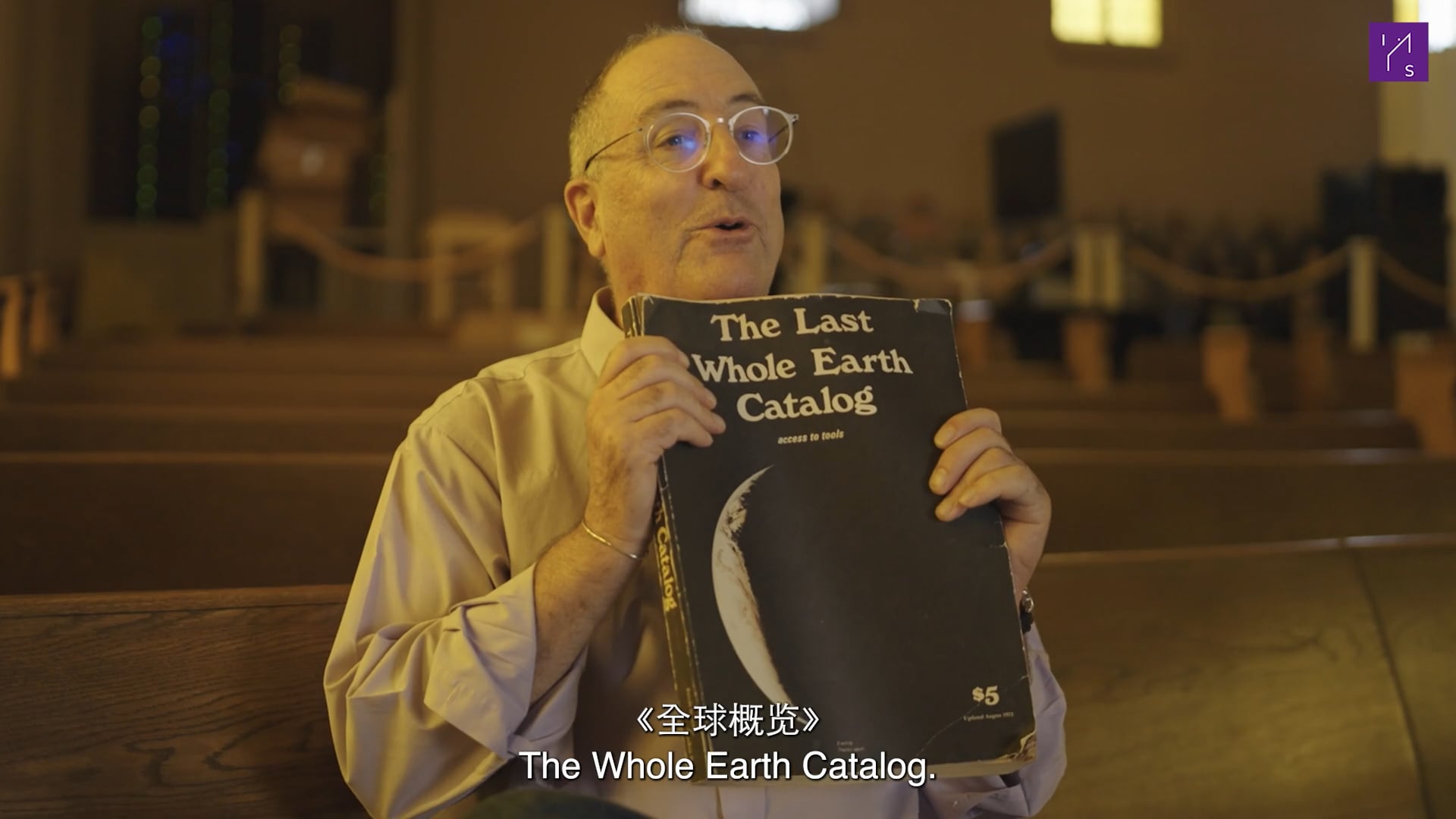
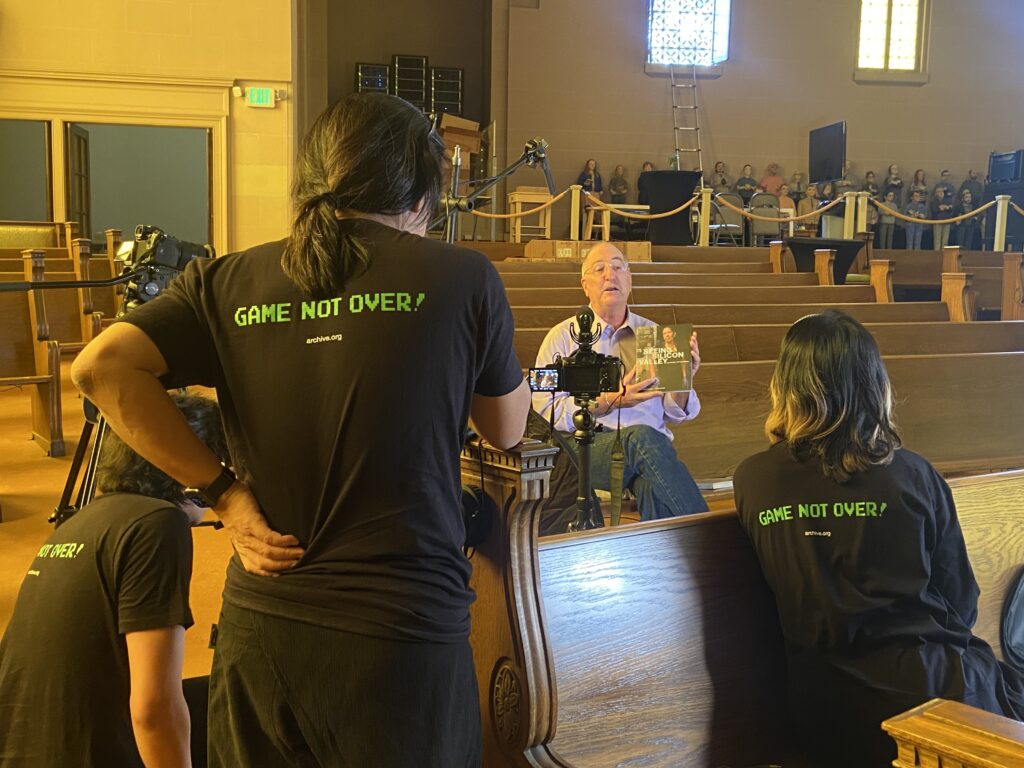
2023年夏末,我們拜訪了史丹佛大學與伯克利的校園,在互聯網檔案館的大教堂內見到了Fred Turner教授。他高個熱情,非常習慣於這樣的學術對話,並帶了最後一期《全球概覽》以及他自己的新作《看見硅谷》來到訪問現場。他的著作多半與技術與文化有關,特別是《從反文化到賽伯文化》一書,為我們勾勒了一條反文化與軍工複合體、烏托邦理想共構的技術樂觀主義的發展路徑,此書簡繁體中文版都早有,影響甚巨。
隨後,我們本來約在史丹佛大學裏的咖啡店,後來轉至Palo Alto的酒吧,也就是他文中提及的一間酒吧,與Lee Felsenstein一起,又聊了幾個小時。他的善談開啓了愉快的探訪,使得歷史與現在無比親密。於是我們可以稍稍理解坐在酒吧坐在我們身旁人羣,老嬉皮、科技新貴、金融黑幫的人們,如何在一個七萬人的小鎮上,成為今天控制世界最重要力量的一羣人。
***
訪談影片(攝影 / 黃孫權 陳懋璋 剪輯 / 姜奕竹 王婧潔 任柄霖 邵樂天 特效 / 嚴正浩)
訪談全文:
採訪 / 黃孫權 崔雨 蔡澤銳
翻譯編輯 / 黃孫權 劉懌斯
INS:第一個問題是關於你書中的文化框架。就像你書裏寫的《民主的環境》以及《從反文化到賽博文化》,你闡述了科技作為一種媒體形式的概念。我們喜歡文化如何重塑媒體的想法,這是特定歷史背景下的特定情景。你能更多地談談你研究中文化框架的根源嗎?為什麼它們變得如此重要?
Fred Turner:讓我稍微談談,關於兩本書中《民主的環境》和《從反文化到賽博文化》中的文化框架。我們常常對自己講述這樣一個故事:媒體技術的出現就會改變一切。特別是在硅谷,這是一個非常普遍的故事。但是當你真正接觸並觀察這些技術時,你會發現不同的社區——藝術家、思想家、政治人物、活動家——他們發現這些新技術,開始與之互動,然後開始用新技術重新想象自己現有的計劃。你可以最清楚地看到這一點,我認為這一點在反文化方面最為明顯。
你知道,當反文化在60年代出現時,他們延續了40年代軍事研究圈學到的一系列關於世界組織方式的想法。在這些觀點中,控制論和計算機描繪了一個沒有等級制度、沒有政治的世界。一個我們只需要互相發出信號,機器就能相互通信的世界。如果我們也是機器,那麼我們也能相互通信。所以,1960年代有一種源自科技界的社會願景流行起來,但這是一種不再需要政治的社會願景,我們所需要做的只是共享我們的思想,只要通信即可。
在我使用的框架裏,技術並不是真的被用作其原本的用途——即通信工具,而是成為了一個我稱之為“社會原型”的模型。這是一種關於我們如何組織社會的原型。而像反主流文化這樣的社羣會採用它,並用它來推廣他們希望在世界上看到的生活方式。
INS:在這個框架內,文化和技術似乎是相互交織的。你如何看待更廣泛的國際文化影響?
Fred Turner:這是一個非常有挑戰性的問題。我認為很多美國人,尤其是二戰後,認為技術是一種獨特的美國產品。我們會將技術和消費文化輸出到世界各地,世界將吸收它,並改變他們的政治體制。這代表了美國對中國的真實看法。在1960年代和1970年代,如你們所知,尼克松在此後去了中國。我們認為,如果我們幫助中國開放市場,中國將成為一個民主國家。因為不是每個人都想成為民主國家嗎?這是一種深深的民族主義幻想。我認為它仍然與技術緊密相連,但實際情況卻大不相同,實際情況更加國際化。
目前,硅谷超過50%的居民出生在美國以外的國家,硅谷一半的居民今天在家裏所說的語言不是英語。硅谷是一個完全國際化的地方。自1970年代以來,隨着航空旅行的興起和新媒體技術的興起,首先是電視和有線電視,現在是互聯網,我們生活在一個美國人接觸國際思想大為增加的世界中。
在1970年代,我的家庭接待了一位來訪的中國研究生。我從來沒有見過一箇中國人,一個真正的中國人。那是在1970年代,那時我想,哦,天哪!我和我的姐妹們整天都在問她問題,這讓她很疲憊。她人很好。今天甚至不需要問問題,社交世界的融合要深遠得多,而且更加多樣化。這創造了各種新的機會,我們可以看到和借鑑其他地方的文化設計。當然,我們也可以向其他地方輸出美國的文化設計。
你知道,我認為這是這個時代最偉大的事情之一,我也認為這也是讓人們緊張的事情。當我告訴我的學生們,我們生活在一個文化挪用(cultural appropriation)的時代時,他們對我非常生氣。嗯,弗雷德,文化挪用是不好的,我們應該讓每個羣體擁有自己的獨特文化。但我要說的是,生活不是那樣運作的。印度音樂可以傳到美國,深圳製造也可以傳到美國。同樣地,硅谷高度個體化、非常個體化的製造風格也可以傳到其他國家。
說了這麼多,這就是文化的力量。從這個意義上來說,我是反馬克思主義者。我認為馬克思總是說有一個基礎和一個上層建築,而在互聯網時代,文化和文化上層建築構成了一種新型的基礎。
也就是說,技術確實有影響力。全球範圍內正在發生一個我們稱之為“大規模個體化”的過程,這是一個非常強大的過程。在1940和1950年代,人們擔心電影院會讓所有美國人和歐洲人都產生同樣的想法,我們非常擔心大衆社會的趨同性。然而,如今我們正在經歷完全不同的情況:全球正在推動個體化的進程。我們口袋裏都有手機,可以隨時連接到互聯網。我在網上說一句話,30秒後就可能在中國傳播開來,這簡直不可思議!
過去,擁有廣播的能力意味着必須有一個電視臺,而如今,只需要一部iPhone。這種傳播方式上的差異令人驚歎。同時,我們的媒體信息也變得截然不同。我敢打賭我們都有TikTok,或者類似的應用。我打賭你的TikTok和我的TikTok內容完全不同,這很有趣,對吧?所以,我們擁有這些高度個體化的媒體系統。
這種個體化又與其他兩個現象緊密相連:消費品和交通運輸。我們生活在一個消費品日益多樣化、全球製造和流通更加廣泛的世界中。現在很難判斷某一件商品到底是在中國、美國還是孟加拉國製造的。在時尚界,這一點尤為顯著,因為人們不斷追求新的分類和設計,這也加強了個體化的過程。
除此之外,我們還有日益便捷的交通工具,比如飛機。我無法向你描述如今的旅行世界與我成長時有多大的不同。當我小時候,坐飛機是一件非常正式和罕見的事情,我大約十歲時全家坐了一次飛機。我們都穿着西裝和裙裝,我的父母穿着禮服,在機場下車時,媽媽還會幫我整理頭髮,因為那時旅行是一種極其奢華、非常特別的體驗。現在,搭飛機就像是從一個大陸乘坐公共汽車到另一個大陸,極大地增加了文化交流的頻率和文化差異的價值。
所以,我認為我們生活在一個文化差異、大規模個體化、以及支持這一切的技術正在推動社會和經濟變革的時代。同時,每個社會根據自己的歷史背景,以不同的方式應對這一變革,但我認為這些力量在各個社會中是相當相似的。
INS:你覺得現在的文化越來越趨同了?
Fred Turner:是的,也不是。我並不是說社會越來越相似,不,壓力或許非常相似,但不同的社會對它們的反應卻各不相同。我認為,你可以反駁說,消費文化正在全球化且變得相當相似。我去過上海,即使是20年前的上海,人們的穿衣風格也部分源於歐洲的影響。
你知道,我確信你也知道,我們正在關注中國的汽車製造商,很快我很可能會開一輛中國生產的電動汽車,這真是太棒了!所以,在消費文化的某些方面,確實有趨同的趨勢。然而,僅僅因為你穿了一件法國襯衫,或者在美國聽非洲音樂,並不意味着你改變了你的文化。
我們可以看到,不同國家在努力保護其傳統文化,並試圖通過使文化保持相對穩定的方式來應對正在發生的變化。我總是感到驚訝,尤其是在歐洲工作時,彼此相鄰兩千年的國家之間,文化竟然仍然如此不同。他們是如何做到的呢?即使在中國,我對中國的瞭解有限,但也知道中國南方和北方的文化差異極大。
INS:第三個問題實際上是關於斯圖爾特·布蘭德的。斯圖爾特·布蘭德是世界上非常重要的人物之一,人們對他有着截然不同的看法。有人認為他是一個預見未來的先知,另一些人則認為他是極端個人主義和新自由主義的象徵。那麼,你對布蘭德的傳奇怎麼看?
Fred Turner:讓我們首先來了解一下斯圖爾特·布蘭德是誰。斯圖爾特·布蘭德出生於二戰後不久,在1960年代初他就讀於史丹佛大學。那時他認為冷戰和核毀滅隨時可能發生。和他那一代的許多人一樣,他渴望長大後不再以等級制、工業化和軍事化的方式生活,因為這種生活方式似乎正是導致核毀滅的元兇。
然而,在成長過程中,他並不想放棄那些帶給他快樂的技術,比如電視、收音機、音響,甚至後來的LSD。他成為了反主流文化的核心成員,加入了肯·基西的“歡樂搗蛋”團隊。但是他最為人知的是創辦了《全球概覽》(Whole Earth Catalog)。現在可能看起來有些古怪,我很樂意隨時給你一個近距離的觀看。
這本《全球概覽》首次出版於1968年,當時斯圖爾特·布蘭德和他的妻子洛伊斯拜訪了一系列的公社,去看看人們需要什麼樣的工具。這是布蘭德當時一個重要的舉動。他還是一個社會學者稱為“網絡企業家”的人,在不同的社交網絡之間創造了交匯點,通過一個事件或出版物將這些網絡聯繫在一起。一旦人們聚集在一起並開始使用相同的語言,布蘭德也能用這種語言去描繪願景,於是他被認為是一個具有遠見的人。
我認為他有些像P.T.巴納姆( P.T. Barnum)之於馬戲團的角色。他不是馬戲團演員,但沒有他,馬戲團就不成其為馬戲團。這就是我對他的看法。《全球概覽》是一本非常有趣的書,大約在1966至1973年期間,美國經歷了有史以來最大規模的公社建設浪潮,幾乎有一百萬的美國人離開家園,搬到公社生活,他們開始與非親屬的人共同生活,搬到鄉村。
布蘭德看到了這一歷史時刻的發生,他說,我要為這些人提供工具。然而,他並沒有直接銷售任何東西,而是列出一系列可能需要的工具,並告訴你如何找到這些工具。你無法通過這本目錄買到任何東西,而是能夠看到你可能需要的物品,找到獲取它們的方式。史蒂夫·喬布斯後來認為,《全球概覽》是谷歌的先驅,這個說法確實有一定道理,對吧? 事實上,亞馬遜的第一個程序員也是《全球概覽》的成員,所以這本書對科技界的影響是深遠的。
我感興趣的是他對“工具”的理解。如果你要回到農田,你需要什麼樣的工具?比如拖拉機、吉普車、鋤頭、鏟子等。然而,《全球概覽》裏80%的內容其實是書籍。這是最後一期全球概覽的第322頁,裏面有一個巨大的計算器——為什麼要用巨大的計算器呢?你還會看到一本書,比如《控制論的意外發現》或《數據研究》。為什麼公社農場需要進行數據研究?這很不可思議吧?我的意思是 這個時候,毛澤東正在派人去農場,他們不會這樣使用電腦,對吧?
答案是,對布蘭德和他的社區而言,他們試圖實現一種來自軍事工業世界的夢想——這個夢想是消除政治,消除等級制度,成為如計算機的存在。我們可以分享信息、分享數據,看到一個通過看不見的系統相互連接的世界,他們稱其為“意識”。在這種“意識”中,我們可以在我們專屬場所建立一種新型社會。那個想法是科技世界和和反文化事物的融合,而布蘭德的角色在於,他主持了這場對話。
你知道的,有時候我會開玩笑說,我們把美國革命的英雄搞錯了。我們常談論喬治·華盛頓,但其實我們應該談論的是他的妻子瑪莎·華盛頓,因為她在家中舉辦晚宴,把革命者們聚集在一起商討大計。斯圖爾特·布蘭德就是科技界和反主流文化界的“瑪莎·華盛頓”——他把這些人召集到一起,提供了討論的平臺。
因此,我認為追問布蘭德到底是“遠見”還是“問題”的根源,並不是最合適的。他是一個聚集者,一個如巴納姆般的角色,一個為他周圍正在發生的馬戲團發聲的人,他擅長找到適合馬戲團的演出,重要的演出,他擅長髮現辯論的前沿。
而且他也是一個迷人的傢伙 你知道我遇見他的時候,你知道嗎?當我遇見他時,他對我非常開放。他讓我讀他的日記,這是一件令人難以置信的事情 那些日記非常的私密。他讓我接觸到一切,他是一個我認為,深信於開放性的人。這種開放性既是反主流文化的,也是控制論的,你可以在如今的硅谷人們的生活和工作方式中,聽到那種開放的回聲。我非常欽佩這一點。我在許多政治問題上與斯圖爾特·布蘭德持不同意見,但撇開這些不談,我非常欽佩他開放的心態,和能夠團結不同社羣,推動事物發展的能力。
INS:接下來的問題是關於性別批評和科技批評。從性別角度出發的批評指出《全球概覽》這樣的平臺被白人男性主導強化了保守的文化規範和階級權利動態,您如何看待科技在延續或挑戰這些這些文化和權力動態方面的角色?
Fred Turner:太好了。我非常同意女性主義批評家的觀點,她們認為科技世界在起源時是一個男性主義的地方,並且男性主義的互動模式被融入到了系統中。仇視女性主義在當今互聯網社區中是一種組織力量。但我想要做的是區分”社區”和”機器”。如果回顧反文化,特別是斯圖爾特·布蘭德所參與的部分,那是一個非常男性化的世界。一個非常男性化,非常順性別的世界。我研究反文化的一個原因是,我剛完成了一本關於越南戰爭的書,那個故事是如此悲傷和令人心碎,我必須得找點開心的事來做。我知道了,我來研究嬉皮士和公社,他們應該是快樂的。於是我開始進行這項工作,我開始和那些住在公社裏的人交談。他們卻非常不開心。事實證明,公社是規則被拋到一邊的地方,取而代之的是我稱為“酷炫統治”。你會看到占主導地位的有魅力的男性運作一切,而女性則被壓制。當我們去斯圖爾特公社的時候,你知道嗎?斯圖爾特·布蘭德的妻子洛伊斯對我說,她說:「看,弗德,斯圖爾特會去大房間,他們會和男人們一起做重要的決定,我和其他女人,我們去後面的房屋裏,往水裏加漂白劑,這樣人們就不會生病。」
這是一個非常分隔的世界。公社的另一件事是,它們非常的白人化。雖然沒有正式的種族歧視,但有很多非正式的排斥。我的意思是,你知道,人們只想和像他們一樣的人在一起,這通常意味着接受過大學教育的白人,或有能力接受大學教育的人。我看過的大多數公社都沒有有色人種,所以考慮到這種共同的起源,也許不足為奇的是隨着這一代人進入加利福尼亞的科技世界,他們帶着一些這個世界的無聲假設。在科技界,我經常看到一些在公社中也曾見過的東西。在公社裏,當你取消規章制度,當你去除官僚主義,消除了機構,然後你就說,啊 !這裏只有我和我的朋友。你會看到美國文化中最糟糕的規範,你得到了被放大(強化)的郊區,你讓男人支配女人,這是非常傳統,非常白人至上的,非常男性主義的。在科技界,當人們呼喚像Facebook或Instagram這樣的與朋友分享的系統時,他們也在呼籲建立這種反制度,反官僚主義,我甚至認為是反民主的邏輯。他們呼喚一個魅力的世界,一個與屬於和他們自己相似的人的世界,一個甚至歧視也不需要正式地發生的世界,因為它在非正式的情況下一直存在。我認為這種驅動力有助於新右派在美國的崛起,並且這是一個真正的問題。我認為這是由於科技界仍然存在高度性別歧視和種族歧視的現狀,取決於你所處的科技領域。我的意思是,情況非常複雜。
我曾經在Facebook待了很長時間,當它還叫Facebook的時候,有一天早上我看着所有的工人走進總部,我就坐在門口觀察着,許多不同的族裔,非常的多元,絕非大多數都是白人,而且也非常國際化,但在職業上並不一定非常多元化,所以事情變得複雜了。
我和攝影師Mary Beth Meehan合作了一本名為《看見硅谷》的書。我們試圖展示硅谷的工人階級長什麼樣子。這是一位在那裏經營塔可莉亞店的女性,我對這本書感到非常自豪。有趣的是,當我們試圖在美國出版這本書時,沒有一個美國出版商願意碰它他們說,這不是硅谷,理工男在哪裏?馬克·扎克伯格在哪裏?埃隆·馬斯克在哪裏?
這正是我們要表達的,作為美國人,我們學會了看那些推動這個行業的精英白人男性。我們已經忘記了所有在這裏工作且生活截然不同的有色人種。這是一位美洲原住民女性,她是一位非常重要的程序設計師,但鮮有人認識她。你可能知道,在硅谷我們有一個嚴重的無家可歸者的問題。我所在的史丹佛大學,周圍都是拖車,人們就像這樣住在拖車裏,因為住房太貴了。所以我想提出的問題是,反主流文化的動態是否已經成為硅谷精英企業家的動態?如果是的話它們又讓我們看不到什麼?我認為他們不讓我們看到的是,他們是如何製造不平等的。
就像在1960年代,公社創造了一個比我們想象中更加由順性別,白人男性主導的世界。硅谷正在創造一個比其領導人聲稱的更加不平等的世界。我們需要對此保持警惕。
INS:與上世紀60年代反主流藝術形式的反抗運動相類比,儘管兩者都以共享技術樂觀主義為特徵。你如何看待現在的硅谷文化?
Fred Turner:要回答你有關今天硅谷抵抗的問題,我們必須要先回顧一下1960年代。我一直以為在1960年代只有一個反主流文化,我以為白天是反對越南戰爭的遊行,晚上則是服用LSD。然後起牀重複這個過程。所以我認為文化和政治的抗議是一樣的。但事實並非如此,兩種截然不同的抗議方式。其中一種是伯克利的新左派在真正尋求參政組織政黨來改變政治制度,另一種是舊金山的新公社主義者,他們不想從事政治,他們認為他們應該只是獲得技術、LSD、音樂,並且思想交流,擁有新的意識,這就是未來。
硅谷的幻想是,我們將通過不斷改進的通信技術來實現變革。這是一種對科技公司經營者非常有利的幻想。如果你想在硅谷抵抗科技,你不能只作為一個使用者抵抗科技,你必須在工會中抵抗科技,你必須抵制機構中的技術,你必須走新左派的道路,而新左派的路線很像伯克利的路線。
我們現在開始看到這一點,我們看到科技工作者現在組成工會,甚至高管們現在也在組成工會,這對我們來說是非常新的。我認為這就是我們應該走的方向,科技行業的人們必須意識到他們是產業工人,而不僅僅是一種令人驚奇的設備和驅動它的反文化的神奇繼承者。
INS:如果你能給今天的硅谷取一個新的名字,你會怎麼稱呼它?
Fred Turner:哦,天哪!這真的是我從來沒有遇過這個問題,這真的是一個難題。讓我們想一想可能的答案,我們稱這裏為硅谷,是因為這裏生產芯片,我們往往忘記,這個地區是美國污染最嚴重的地理區域之一。整個谷地都有超級基金污染地點,超級基金污染地點是美國最嚴重的污染地,被公司遺棄,現在由州政府支付清理費用。我們這個縣(郡)是美國所有縣裏超級基金污染地點最集中的地方。我想上次查的時候,我們有17位億萬富翁,所以我們可以稱之其為”極端不平等和普遍污染的美麗山谷”。這有很多的詞語,在稱為硅谷前它被稱為”心之樂谷”,就是這樣被稱呼的,它被稱為心之樂谷,它是一個農業區域。我的房子所在的地方,在1954年之前都是農田,而心之樂谷現在,我不知道,也許製造不平等之谷?我不確定。
INS:下一個問題是關於硅谷的文化和技術。回顧一下硅谷的現代文化,你會如何描述在這個背景下出現的文化和技術之間錯綜複雜的關係?這種關係如何與我們這個時代的主流文化產生共鳴?
Fred Turner:硅谷的一個錯覺是,你只需要考慮到硅谷的技術和文化,但是有一個第三要素,我們必須要整合進來,這對今天的硅谷非常的重要,那就是商業。這是一個高利潤的盈利地區,它有意識地和明確地,採用自己的神話和歷史來掩蓋巨大的財富累積。所以,一方面在硅谷本地,我們有一種互相交流的文化,公司之間的界限非常開放,你可以和任何地方工作的人交談。我會出去喝啤酒,坐在酒吧裏,聽到一些來自谷歌的驚人對話。我會想,你不應該在這裏談論這個,所以非常開放。但同時,也非常以利潤為導向,而以利潤為導向的部分體現在公司面向外部時。你會想到Facebook或者其他人工智能公司,它們本質上是採礦企業,就像我們過去開採煤礦,過去開採化石燃料一樣,現在我們進入社交世界,開採我們的互動並將其作為在線產品轉售,並附加廣告。我們在硅谷告訴自己,我們正在通過讓人們互相溝通,成為可能的方式改變世界。這是一種對沒有政治只有共享思想的舊反文化夢想的復活,一個分享思想的世界,但這都是胡扯。這只是宣傳,這是一種銷售新的營銷策略的方式被著名學者Shashana Zuboff 稱為《監視資本主義》那是我們現在生活的世界,至少在硅谷,這是我們正在輸出的文化。
最後要說的是,在關於Facebook或Google等地方的報道中,他們會告訴你所有用戶都是平等的。看吧!我們為所有人開發了一項新技術,也許他們是這樣做的,但他們開發的是使多數人失去財富的技術。大多數人成為了數據開採的來源,只有少部分人從中獲利。這很像20世紀初煤礦工人砍伐山脈的情況。人們在礦井裏工作,承受傷病,而礦主則住在完全不同的地方這是一個兩面的情況。因為一方面沒有什麼改變,我認為我們真的是處於另一個掠奪性的工業時期,但我確實認為有些事情發生了變化,同時記住這些變化是很困難的。
我認為我們之前談到的大規模個體化,是一個令人難以置信的現象。我認為媒體的景象讓我們看到了世界上許多不同的生活方式。這是一件了不起的事情,我在一個非常小的鄉村長大,在那裏,那些個性陰柔的男性在他們小時候會被打。我看着我的女兒從八年級畢業,她當時13歲,她的一個朋友站在舞臺上談論,自己作為一個13歲的同性戀女性的經歷。這在一代人之間是一個令人難以置信的變化。這是因為媒體,因為互聯網,因為它向我們展示了世界的方式,所以一方面,是的,影響通常是相當負面,但並非完全負面。這是我們面臨的挑戰之一。
INS: 你對人們談論歷史和藝術感到非常有趣,你如何看待1960和70年代的硅谷?你如何看待那個時期的視覺文化或形象變化?
Fred Turner:硅谷的視覺文化已經發生了很大的變化。在1960年代 機器和文化都是不同的。那時的機器往往非常大,佔據整個房間,有些笨重。人們纔剛剛開始能夠進行可視化繪圖之類的事情,那時仍然非常集中於數字和單點應用。相比之下,這裏的藝術場景,雖然很小,但卻充滿了手繪和嬉皮風。所以早期的蘋果宣傳材料,如果你能回頭看看蘋果最早的小冊子都是手繪的,感覺就像是你的朋友給你的一幅圖畫。因此美學上的理念是:看呀!這些超級高性能的機器真的屬於我們這個低調,迴歸自然,手寫的世界。
這一切都發生了很大的變化,從1980年代開始,火人節便出現了。但我認為火人節是新美學的一個很好的代表。火人節是一個有7萬人參加的節日,他們在沙漠中建造了一座城市,你住在不同的營地,不同的社區。你創作藝術,你創作了這些大型的以技術為中心的藝術形式。在硅谷藝術是相當高科技的和難以實現的,在那個沙漠中工作非常困難,非常的炎熱,沙漠的沙子本身有點有毒,非常的痛苦,但人們還是做到了。我在那裏花了很多時間,問他們為什麼,他們說, 好吧,你知道,在這裏,我基本上可以實現硅谷的價值觀。他們告訴我這是在工作中可以做到的事情,但是我可以和我的朋友一起做,這是我的,我擁有它。所以你在硅谷有些項目團隊正在製作高科技藝術,然後這些藝術有時會被送回舊金山成為城市的一部分,這就是我們現在的處境,所以手工製作真的改變了。
INS:你是否將Web3和區塊鏈視為技術烏托邦傳統的延續,還是它們帶來了新的可能性?
Fred Turner:不,它們是技術烏托邦的一部分,尤其是區塊鏈。它是一種幻想,可以追溯到1940年代。這個幻想是 ,再次強調,一個沒有政府的世界的幻想,一個在這個世界中,技術和與技術合作的善良人們,可以取代不言而喻的權力至上的政治世界。我不認為這是有效的。區塊鏈還沒有顯現出取代其他機構的能力,恰恰相反,你會看到區塊鏈中出現了各種濫用行為,因為它是非機構化的,因為它沒有受到監管,就像你曾經在股市中看到的那樣。
所以,記住,我在史丹佛大學教書,這所大學培養出了山姆·班克曼-費裏德。我不知道你是否熟悉山姆,山姆在比特幣中進行了一個價值數十億美元的騙局。他之所以在比特幣中進行這個騙局,部分原因是這個行業基本是不受管制的。所以,不是,也許比特幣真的是一種新的貨幣,很棒,但比特幣會為大衆創造出更幸福的社會嗎?我非常懷疑。
INS:我們都知道當今科技界有很多問題。你認為,是否存在另一個世界或另一種方式去創造更美好的世界呢?
Fred Turner:這是一個非常好的問題。這個問題比我能給出的答案範圍要大得多,但我會試試看,因為,你知道,為什麼不呢?
近幾年,幾十年來,在硅谷,我們一直有一個幻想,即如果我們搭建某種技術,我們曾經稱之為“意識技術”和“通信技術”,然後將它們建造得足夠大,並將它們傳播到全世界,一個新的、更民主的世界將會出現。我們看到這並不是真的。埃隆·馬斯克目前控制着幾乎所有“星鏈”所需的衛星,這是美國政府為烏克蘭提供幫助的技術。我們依賴於單一的私營企業去運作,基本上是國家運作的項目。你可以看到這種私有化的趨勢在許多不同的地方都在發生。所以,我覺得我們需要做的是找到一種方法來建立能夠利用科技、限制科技,並改善我們生活的機構。我不認為技術增強的通信一定能使我們自由。它使我們個體化,但這於自由不同。
自由取決於擁有確保資源更平等分配的機構,確保在集體需求時,能以某種方式代表這種需求,而不僅僅掌握在一個領導者手中。你可以在科技領域以及其他許多地方看到這種私有化的衝動。在美國,私營公司正試圖接管學校系統,他們試圖接管醫療保健,他們已經接管了醫療保健。
我們如何擁有代表集體利益的機構?我們如何公正而有效地實現這一點?這是我認為的問題。我認為,你現在世界各地看到的是,不同的政治體系競相提供這種機制。我認為每個系統都有一些優勢,其中許多,包括我們自己的體系,傾向於獨裁寡頭統治,這是一個問題。
我不知道我們將會走向何方,但我認為答案在於政治,而不是技術,尤其是不要將技術用作政治的替代品。
附英文原問答稿
INS: The first question is about cultural frameworks in your book. Like in your book, The Democratic Surround* **and** *From Counterculture to Cyberculture, you articulated the concept of technology as a form of media. I like how culture reshapes media.It’s specific to the specific historical context. Could you tell us more about the roots of the cultural frameworks in your research? Why are they so vital?
Fred Turner: So, let me say a little bit about the cultural frameworks in both books, The Democratic Surround and From Counterculture to Cyberculture. We often tell ourselves a story that media technologies arrive and change things just by arriving. Especially in Silicon Valley, that’s a very common story, but when you actually get up close and look at the technologies, what you find are different communities of artists, thinkers, political people, activists who discover these new technologies, start interacting with them, and then begin to reimagine their own existing projects in terms of the new technologies. And you can see this most clearly, I think, with, oh, let’s see, I suppose with Counterculture.
You know, when the Counterculture comes along in the 1960s, they’re carrying forward a series of ideas about the way the world is organized that they have learned from the military research world of the 1940s.And in these ideas, cybernetics computing depicts a world without hierarchy, without politics, a world in which all we need to do is signal one another, and the machines will communicate with each other, and we can communicate with each other, as if we, too, were machines.
There’s a kind of social vision that comes to the 1960s from the tech world, but it’s a social vision in which we no longer need politics. All we need to do is share our minds.All we need to do is communicate.In the framework that I’m using there, the technology isn’t really a tool for communication yet; it will be. Rather, it’s a model, something I actually call a social prototype. It’s a prototype of a way we can organize society, and communities like the Counterculture take that up and use it to promote a way of living that they otherwise want to see in the world.
INS: Within this framework, culture and technology appear to be intertwined. How do you view the broader international cultural impacts?
Fred Turner: This is a really challenging question. So, I think a lot of Americans, especially right after World War II, thought that technology was kind ofa uniquely American product, and that we would export technology and consumer culture to the world. The world would absorb it, and would change their political systems.Certainly, that was true in America’s view of China in the 1960s and 1970s. You know, finally, when Nixon went to China, after that we thought, “Well, if we just help China open up markets, China will become a democracy, because doesn’t everyone want to be a democracy?” And this is a kind of deeply nationalistic fantasy. That still clings, I think, to technologies. But the facts on the ground are quite different. The facts on the ground are much more international. Silicon Valley, more than 50% of the people who live in Silicon Valley today were born in a country other than the United States. More than half of the people who live in Silicon Valley today speak a language other than English at home. Silicon Valley is a fully international place. And since the 1970s, with the rise of air tRavel, the rise of new media technologies, first television and cable, and now the internet, we live in a world where our access, Americans’ access, to international ideas, is greatly enhanced.
So in my family in the 1970s, we had a visiting Chinese graduate student, and I had never met a Chinese person, like a real Chinese person. It was in the 1970s. It was like, “Oh my gosh!” My sisters and I just asked her questions all day long. She was so tired of it. She was very nice. Today, it’s not even a question.The integration of the social world is much more serious and much more diverse. That creates all kinds of new opportunities. We can see and borrow cultural designs from other places, and of course, we can offer cultural designs from the States to other places too.You know, I think, that’s that’s one of the greatest things about this time. I think it’s also something that makes people very nervous. When I say to my students, that we live in an age of cultural appropriation, They get really angry with it. They say, “Well, Fred, cultural appropriation is bad. We need to allow each group to have their own authentic culture.” And I say, “Life doesn’t work like that, you know.Indian music can come to the States, you know, Shenzhen manufacturing can come to the States.” And by the same token, the highly personalized, highly individualized style of manufacturing, that we have in Silicon Valley, can and does tRavel to other countries.
Having said that, that was all about the power of culture.In that sense, I’m an anti-Marxist. I think thatMarx always said that there was a base in the superstructure. I think today in the Internet era, culture and cultural superstructure is a new kind of base. That said, technologies do have impact, and one of the things that we can see, I think, happening around the worldis a process that we can call mass individualization. And it’s a really powerful process. In the 1940s and 50s, we were worried that cinema would make all Americans and Europeans just think the same thing. We were very worried about mass society. Today we have something very different going on. We have a kind of global push toward individuation. We have cell phones in our pockets. We have instant internet contact. I can say something online and it can be in China in 30 seconds. That’s incredible. It used to be to have broadcasting power, you had to have a television station.
Today, all you have to have is an iPhone. That’s an amazing difference.Likewise, of course, our media feeds are very different. I bet we both have TikTok, or something like that. And I bet your TikTok and my TikTok are very different. And that’s fascinating, right? So we have these highly individualized media systems. That in turn couples up with two other phenomena. I think one is consumer goods and the other is transportation. We live in a world where consumer goods are becoming ever more differentiated and ever more globally manufactured and circulated. It’s very hard now to tell whether something was made in China, the United States, Bangladesh, and you can see it in fashion. The kind of constant seeking for new, new, new divisions that enhances this process of individuation. Along with that, we have transportation. We have airplanes. I cannot tell you how different the tRavel world is now than when I grew up. When I grew up, to go on an airplane, it was like, my family went on an airplane when I was about 10. We were dressed in suits. My sisters wore beautiful dresses. My mother and father dressed in a suit and a dress. We were very formal. We were very careful in how we presented ourselves. My mother combed my hair when we got out of the car at the airport. Because tRavel was so rare, so luxurious, so special. Now it’s like we all ride buses from continent to continent. That in turn increases both the frequency of cultural exchange and the value of cultural difference. So I think we live in a time when cultural difference, mass individuation, and technologies that support that are driving social and economic change in many societies. And each society is dealing with it a little bit differently depending on their history, but the forces, I think, are quite similar across societies.
INS: Do you think that today’s cultural differences become more and more the same?
Fred Turner: No, I don’t. I don’t mean that societies are ever more the same. No, I think the pressures are very similar, but societies react to them in very different ways.I think that, you know, you could argue that consumer culture is becoming globalized and quite similar. You know, I’ve been to Shanghai, and even Shanghai 20 years ago, people were dressing with styles borrowed from Europe. And you know, I’m sure that, you know, I know that we’re looking at Chinese auto manufacturers, and sometimes quite soon, I’m quite likely to be driving an electric Chinese car. Okay, great. So consumer culture might be leveling in that way, but just because you are wearing a French shirt, or here in the States, maybe listening to African music, does not mean that you’ve changed your culture. I think we can see strenuous efforts in different nations to preserve traditional cultures, and to try to manage the changes that are underway in ways that keep the culture somewhat similar. I’m always amazed.
I work in Europe a lot, and I’m always amazed when I’m there how different the cultures are in countries that have been next to each other for 2000 years. How do they do that, right? And, or even with what littleI know about China, within China, the south and the north are very different.
INS: So, the third question is actually about Stewart Brand.Stewart Brand is a very important figure in the world.And people actually have very different opinions. Some people view him as a visionary who anticipates trends, while other people recognize him as an icon presenting extreme individualism and neoliberalism. What’s your perspective on the legacy of Brand’s creations?
Fred Turner: So let’s begin by thinking about who Stewart Brand has been. Stewart Brand was born not long after World War II, went to college at Stanford in the early 1960s, at a time when he thought the Cold War nuclear holocaust was about to happen at any moment. And like other members of his generation, he wanted to grow up to become an adult who did not have a kind of hierarchical, industrial, military way of living, of the kind that seemed to have produced the nuclear holocaust. But he also wanted to grow up in a way where he didn’t have to get rid of the technologies that had given him so much pleasure: television, radios, stereos, and very soon after that, LSD. And, you know, he became a central member of the Counterculture. He joined Ken Kesey’s Merry Pranksters, most famously. But what he was best known for was creating this: The Whole Earth Catalog. This might look a little bit funky now, and I’m happy to give you a close-up view at any point.
But so this was published first in 1968, and it came about when Stewart Brand and his wife Lois went to a series of communes to see what kinds of tools people needed. And this is the quintessential Stewart Brand move. Stewart Brand is, what a sociologist would call, a network entrepreneur. He finds the place between different social networks, creates an event or a publication that brings the networks together. And then once they come together, the network starts speaking the same language. And once they do that, he can speak it too, and so suddenly he hears the visions around him and can be credited as a visionary.
I would argue that he’s a little bit like P.T. Barnum was to the circus. He’s not a circus performer, but without him, there’s no circus. That would be my take. So, the Whole Earth Catalog is interesting. From 1966 to 1973, more or less, was the largest wave of commune building in American history. Almost a million Americans leave their homes and move to communes. They start living with other people to whom they weren’t related; they move out to the countryside. Brand sees this moment going on, and says “I’m gonna give them tools.” But what he does is he creates a list of tools, and then shows you how to get them.You can’t actually buy anything through this catalog, All you can do is see things that you might need and figure out how to get them for yourself. Steve Jobs would later argue that this was a forerunner of Google, right? And it makes a certain amount of sense. Amazon’s first programmer was part of the Whole Earth Catalog team. So it feeds directly into the tech world. But what’s interesting to me is what he thought a tool was. If you were going back to the land and working on a farm, what kind of tools would you want? Yeah, like a tractor, a jeep, a hoe, a backhoe, something to dig with, a shovel. Me too. That’s not what’s in here. What’s in here—there’s some of that—but 80% of what’s in the Whole Earth Catalog is actually books. So here’s page 322 from the last Whole Earth Catalog. And look what they’ve got for tools: this is a giant calculator. Why do you need a giant calculator? Right? Why do you need that? Or why do you need a book?I think, where is it? It’s called Cybernetic Serendipity. Here it is: Data Study. Why do you need to do data study on a commune farm? I mean, this is the same time when Mao is sending people to the farms. They’re not using computers like this. Why?
And the answer turns out to be that for Stewart Brand and his community, they were trying to live out a dream that actually came from the middle of the military-industrial world. And the dream was one where we could do away with politics, do away with hierarchy, and instead become literally like computers: we could share information, we could share data, we could see that the world was interconnected through invisible systems, and we could call that whole business “consciousness.” And from that consciousness, we could build a new kind of society in our set-aside places. All right. That idea is a fusion of tech world thingsand countercultural things, and Brand is important because he hosts that conversation.
You know, I like to say a lot, like, you know, that I like to say that we got the heroes of the American Revolution wrong. We always talk about George Washington, but the person we should be talking about is Martha Washington, his wife, because she has the dinners at the house where all the revolutionaries come together and make their plans. Stewart Brand is the Martha the tech world and the Counterculture.He brings these folks together and has the dinners, and this is one of them. So, I don’t think it’s quite the right question to ask whether Brand is a visionary or a problem. Brand is a gatherer, a Barnum, a spokesman for a circus that is happening all around him. He is a genius at finding the right acts for the circus, the important acts for the circus. He is a genius at spotting the leading edge of debates, and he is also a fascinating guy. You know, when I met him, he was very, very open with me. He let me read his diaries, which is an incredible thing – very intimate diaries. He gave me access to everything. And he’s somebody who, I think, deeply believes in openness in a way that is both countercultural and cybernetic, and you can hear echoes of that openness in the way that people live and work in Silicon Valley today.
I very much admire that. Now, I disagree with Stewart Brand on many political issues, but setting that aside, I very much admire his openness and his ability to gather different communities together to move something forward.
INS: So this question is about Gender critics in the technological movement. The question is critiques have emerged from a Gender perspective, asserting that platforms like the Whole Earth Catalog were dominated by white males, reinforcing conservative cultural norms and hierarchical power dynamics. How do you perceive the role of technology in either perpetuating or challenging these aspects of culture and power dynamics?
Fred Turner: Great.So, I very much agree with feminist critics who argue that in its origins, the tech worldw as a masculinist place, a nd masculinist modes of interaction were built into the system. It’s also very clear that misogyny is an organizing force among different internet communities today. But what I want to do is distinguish the communities from the machines. If you go back to the Counterculture, especially to the part of it that Stewart Brand is a part of, it is a deeply masculine world, a very male world, a very straight world. One reason I studied the Counterculture was that I had just finished a book about the Vietnam War, and the story about the Vietnam War was so sad and heartbreaking.I’m like, “I have to work on something happy. I know, I’ll work on hippies and communes, and they’ll be happy! And so then I go and I do that work, and I start talking to people who lived on communes, and they’re very unhappy. It turns out that communes are places where rules get pushed aside, and instead of rules, what you get is what I call “rule by cool.” You get dominant charismatic men running the place, women being pushed down.And you know, Stewart Brand’s wife, Lois, said to me,” Look, Fred, when we would go to communes, Stewart would go to the big room, and they would make important decisions with the men. Me and the other women, we’d go to the back room and put bleach in the water so people didn’t get sick.”
It is a very segregated sort of world. The other thing about the communes was that they were very white, and it wasn’t that there was official racism, but there was a lot of that kind of unofficial exclusion. Like, I mean, you know, people just wanted to be with people like themselves, and that meant generally white folks with college educations or the ability to get them. And most of the communes I looked at had no people of color at all.So, given that kind of communal origin, it maybe isn’t so surprising that, as that generation moves into the tech world in California, it carries with it some of the sort of unspoken presumptions of that world. Something I see a lot in the tech world is something I saw in the communes.In the communes, when you take away regulation, when you take away bureaucracy, when you take away institutions, and you just say, “Ah, it’s me and my friends,” what you get are the worst norms of American culture. You get the suburbs on steroids. You get men dominating women.It’s very straight.It’s very white. It’s very macho.In the tech world, when people call for systems, like Facebook or Instagram, that are about sharing with my friends, They’re also calling for this kind of anti institutional, anti bureaucratic, and I would argue anti democratic logic. They’re calling for a world of charisma, a world of people like themselves, a world where discrimination doesn’t even have to be done officially, because it’s so present constantly unofficially. I think that drive has has helped give rise to the new right in America and it’s a real problem.
I think it depends on the degree to which the tech world is still highly misogynistic and racist. Depends on what part of the tech world you’re in.I mean, and it gets very complicated.I spent a lot of time at Facebook when it was still Facebook, and I was there one morning when I watched all the workers come into the headquarters building. I just sat by the door and watched them. Very diverse ethnically, very diverse. Not at all mostly white folks, but also very international, and not necessarily very diverse professionally. So it gets complicated. I did a book with a photographer named Mary Beth Meehan called Seeing Silicon Valley, where we tried to surface what the Working Class in Silicon Valley looked like, and, you know, here’s a woman who runs a taqueria there. I’m very proud of the book.It was interesting to me that when we tried to publish the book in the United States, no American publisher would touch it.They said, “That’s not Silicon Valley. Where are the tech bros? Where’s Mark Zuckerberg? Where’s Elon Musk?” And that’s our point exactly. As Americans, we’ve learned only to look at the elite white menwho drive this part of this industry.We’ve learned to forget all of the people of color who just work here and whose lives are very different.This is a Native American woman. She’s a really important coder, not widely recognized. You may know that we have a huge homeless problem here in Silicon Valley. Stanford University, where I work, is surrounded by trailers, and people living inside their trailers like this because the housing is too expensive.
So, I guess the question I’m trying to raise is: Have the dynamics of the Counterculture become the dynamics of elite entrepreneurship in Silicon Valley? And if they are, what are they keeping us from seeing? And I think what they’re keeping us from seeing is how they are producing inequality. In the same way that in the 1960s, communes produced worlds that were much more straight, white, male than we ever think. Silicon Valley is producing a world that is much more unequal than its leaders claim it is. And we need to be alert to that.
INS: Can you tell us about the resistance of the Counterculture movement in the 1960s against dominant artistic forms that, how do you perceive the culture of Silicon Valley now, although both were characterized by shared technological optimism?
Fred Turner: So, to answer your question about resistance in Silicon Valley today, we have to go back to the 1960s for a moment. I always thought there was one Counterculture in the 1960s.
I thought it was marching against the Vietnam War during the day, and then taking LSD at night, getting up, doing it again. So cultural and political protest, I thought, were the same. Turns out, not to be true.T wo very different ways of doing protest. One, in Berkeley, the New Left, really seeking to do politics, form parties to change a political system. The other, the New Communalists, based in San Francisco and then on the communes. They didn’t want to do politics at all. They thought the y should just get technology, get their LSD, get their music, and get their heads together, have a new consciousness, and that would be the future. The fantasy in Silicon Valley is that we will make change by getting ever better communication technologies. That’s a fantasy that serves the people who run tech companies very well. If you’re going to resist tech here in the Valley, you don’t resist tech as a user. You have to resist tech in a union. You have to resist tech in an institution. You have to take the New Left road, and the New Left road is very much sort of the Berkeley road.
We’re starting to see that now. We see tech workers now forming unions, even executives are forming unions now, which is very new for us. That’s where I think we have to go.People in the tech industry have to realize that they are industrial workers, not just magical inheritors of an incredible device and the Counterculture that fuels it.
INS: If you could give a name to Silicon Valley now, what would it be?
Fred Turner: What a great question! If I could name Silicon Valley, what would I name it now? Huh…Oh my…That is really…I’ve never had that question, and that is a tough one.Well, let’s think about what might go into the answer. So we call it Silicon Valley after the chips. We tend to forget that this region is one of the most polluted geographies in America. We have Superfund sites all through the Valley. Superfund sites are the most polluted sites in America; they’ve been abandoned by companies, and the state has to pay for them now. We have the highest concentration of those in one county here of any county in America. We have, I think last time we checked, we had 17 billionaires just in Silicon Valley. So we might call it “The Beautiful Valley of Radical Inequality and Ubiquitous Pollution.” It’s a lot of words. You know, before it was Silicon Valley, it was called the Valley of Heart’s Delight. That’s what it was called. It was called the Valley of Heart’s Delight, and it was a farming area. Where my house is was farmland until they built my house in 1954. And the Valley of Heart’s Delight, now…I don’t know. I mean…The Valley of Inequality Production? I’m not sure.
INS: The next question is about culture and technology nowadays. According to the modern culture of Silicon Valley, how would you describe the intricate relationship between culture and technology that emerges in this context? How does this relationship resonate with the prevailing culture of our time?
Fred Turner: So, one of the illusions of Silicon Valley is that all you need to do to think about the Valley is think about its technologies and its culture. But there’s a third piece that we have to reintegrate, and it’s very central to the Valley today, and that’s business. This is a highly profitable, for-profit region that is deliberately and explicitly taking up its mythology, taking up its history to mask a tremendous effort at making a huge amount of money. So, on the one hand, locally in Silicon Valley, we have a culture where we talk to each other.The boundaries of companies are very open; you can talk to anybody who works anywhere.I’ll go out for beers, and I’ll be sitting in the bar, and I’ll be hearing these amazing conversations from Google.I’m like, “We shouldn’t be talking about that here!” So, very open, but at the same time,very profit-driven.And the profit-driven part comes in as the companies face outward. You think about a Facebook or even different AI companies. They are essentially mining enterprises. As we used to mine coal, as we used to mine fossil fuels, now we take the social world, and we mine our interactions, and we resell them as products online, and we attach advertising to them. We tell ourselves here in the Valley that we’re changing the world by making it possible for people to communicate with one another. That’s a resuscitation of the old countercultural dream of a world without politics, a world of just shared mind. But it’s bullshit. It’s just…it’s propaganda. It’s a way of selling a new marketing strategy that Shoshana Zuboff has famously called “surveillance capitalism” That’s where we live now.
And at least in Silicon Valley, that’s the culture that we’re exporting now. The last thing to say is that in the stories about places like Facebook or Google, they will tell you”all users are equal. “Look, we make a technology for everyone – maybe they do. But they make a technology whose wealth disenfranchises most people. Most people are sources of mining data; a few people profit from that.It’s a lot like the early 20th century, when coal miners chopped up mountains, and people worked in the mines, and they got sick, and the owners lived somewhere else completely. It’s a mixed bag, because on the one hand, nothing changes in the sense that we really are,I think, in another predatory industrial period. But I do think some things change, and it’s hard to remember those at the same time. I think that the mass individuation we talked about earlier is an incredible phenomenon. I think that a mediascape that allows us to see so many different ways of being in the world is an incredible thing. I grew up in a very small town in the countryside where men who were effeminate there, when they were boys, would be beaten up.I watched my daughter go to her graduation from eighth grade. She was 13, and one of her friends stood on the stage and talked about what it was like to be a 13-year-old gay woman. That’s an incredible change in one generation, and it’s because of media, because of the internet, because of the ways that it shows us the world. So on the one hand, yes, the effects are often quite negative, but not exclusively negative. And this is one of our challenges.
INS: You were very delighted to see people talking about history and art. How do you seethe 1960s and 1970s Silicon Valley? How do you see the visual culture or the image changes during that time?
Fred Turner: So, the visual culture of Silicon Valley has changed a lot. In the 1960s, both machines and culture were different: The machines tended to be very large, room-sized, kind of clunky. People were only just beginning to be able to do visual drawing kinds of things.It was still very number-heavy and point-heavy. By contrast, the art scene here, such as it was, was very hand-drawn, hippie-fied. So the early Apple materials, if you can go back and look at early Apples, Apple’s very earliest pamphlets, they were all hand-drawn. They felt like a drawing that your friend had given you, and so the aesthetic was one of “Look, these super high-powered machines really belong in our very low-key, back-to-the-land, hand-written world.” That’s changed a lot.
Starting in the 1980s, the Burning Man Festival came along. But I think Burning Man is a very good representative of the new aesthetic. Burning Man is a festival where, last time, 70,000 people went. And they build a city out in the desert, and you live in different camps, different communities. And you make art. You make these large, technologically-centered art forms. And in Silicon Valley, the art is pretty high-tech and pretty hard to do. It’s very difficult to work out in that desert.It’s very hot. The desert sand itself is sort of toxic. It’s miserable.But people do it. And I asked them why they spent a lot of time there.And they say, “Well, you know, here, I can basically live out the values of Silicon Valley, the things they tell me I can get at work. But I can do it with my friends, and it’s my own. I own it. So you have these project teams working in the Valley, making high-tech art. And then that art will sometimes be sent back to San Francisco to be part of the city. That’s where we are now. And so the hand-making has really changed.
INS: Do you see Web3 and blockchain as an extension of technological utopian tradition, or do they entail new possibilities?
Fred Turner: No, they’re part of techno-utopianism, and blockchain in particular is part of a fantasy that we can trace back to the 1940s. And the fantasy is, again, this fantasy of a world without government. A world in which technologies and good-hearted people working with technologies can replace the self-evidently power-hungry worlds of politics. I don’t think it’s effective. Blockchain has not shown the ability to replace other institutions.On the contrary, you see the kinds of abuses in blockchain because it’s deinstitutionalized, because it’s not regulated, that you used to see in the stock market. So remember, I teach at Stanford, which producedSam Bankman-Fried. I don’t know if you’re familiar with Sam.Sam ran a multi-billion dollar scam in Bitcoin. And he ran that in Bitcoin in part because the industry was basically deregulated. And so, no, Maybe bitcoin is a new kind of money. Great. But will Bitcoin produce a happier society for more folks? I doubt it very much.
INS: We all know there are lots of questions in the tech world today. Do you thinkt here is any alternative world or alternative way to get better world?
Fred Turner: Yeah. It’s a really great question.And it’s a much bigger question than I could probably give a real answer to. But I’ll try, because, you know, why not? For some years now, for some decades, the fantasy in Silicon Valley has been that if we build tech – we used to call technologies of consciousness, technologies of communication -and we build them large enough and we spread them throughout the world,a new, more democratic world will emerge. We’re seeing that that’s not true. Elon Musk, at the moment, controls almost all of the satellites that are required for Starlink, which is the American government technology for providing help to the Ukrainians.We are dependent on a single private enterprise for what is essentially a national project. And you see that kind of privatization move happening in lots of different places.
So my sense is that what we need to do is actually find ways to build institutions that can use tech, constrain tech, and improve our lives. I don’t think that technologically enhanced communication necessarily frees us. It individuates us, but that’s not the same thing as being free. Being free depends on having institutions hat ensure the more equal distribution of resources, that ensure that when there’s a collective need, that need is represented in some way, and it’s not just in the hands of one leader. You see this privatization impulse in tech in many other places.In America, private entities are trying to take over the school system, they’re trying to take over healthcare, they’re taking over healthcare. How do we have a representative of the collective good? How do we have institutions that do that fairly and well? That’s, I think, the question, and I think that one of the things you see around the world right now is different political systems competing to provide that. And I think every system has some things that are strong; many of them, including our own, tend toward authoritarian oligarchy. That’s a problem.
I don’t know where we’re headed, but I think the answer is in politics, not in technology, and especially not in using technology in lieu of politics.
***
***
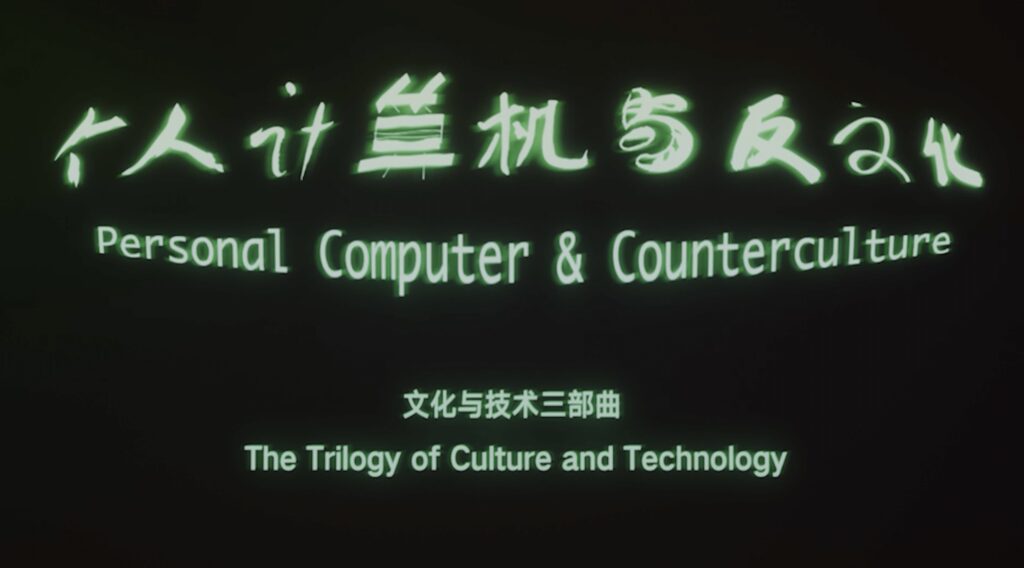
文化與技術系列採訪影像源於“文化與技術三部曲”(The Trilogy of Culture and Technology)計劃。本項目將在舊金山、深圳、新竹進行實地走訪與拍攝。企圖描繪出全球電子產業之新圖景,無能理解這金三角的技術創新與資金流動,各自文化代表的視野,就無能理解當今電子脈衝的星球。
“個人計算機與反文化”(Personal Computers & Counterculture)篇章將講述技術如何作為文化政治的產物,從個人與集體政治相互校準的鬥爭中而出現。本篇提取個了人計算機發展史中社會運動的基因,通過走訪美國舊金山及其周邊地區的遺蹟,訪問學者、前學生運動參與者、個人計算機開發者、技術行業從業人員,試圖展現1960年代發源於北美的個人計算機是如何伴隨着嬉皮士、學生運動、反文化運動、常青藤精英、LSD倡導者、搖滾樂手、科技烏托邦主義者、新公社派形成的技術─意識形態社羣推廣傳播開來。此訪談系列,乃是每一部曲長片文本的前奏。
本體論維度 / Ontological Dimensions