中文 / ENGLISH
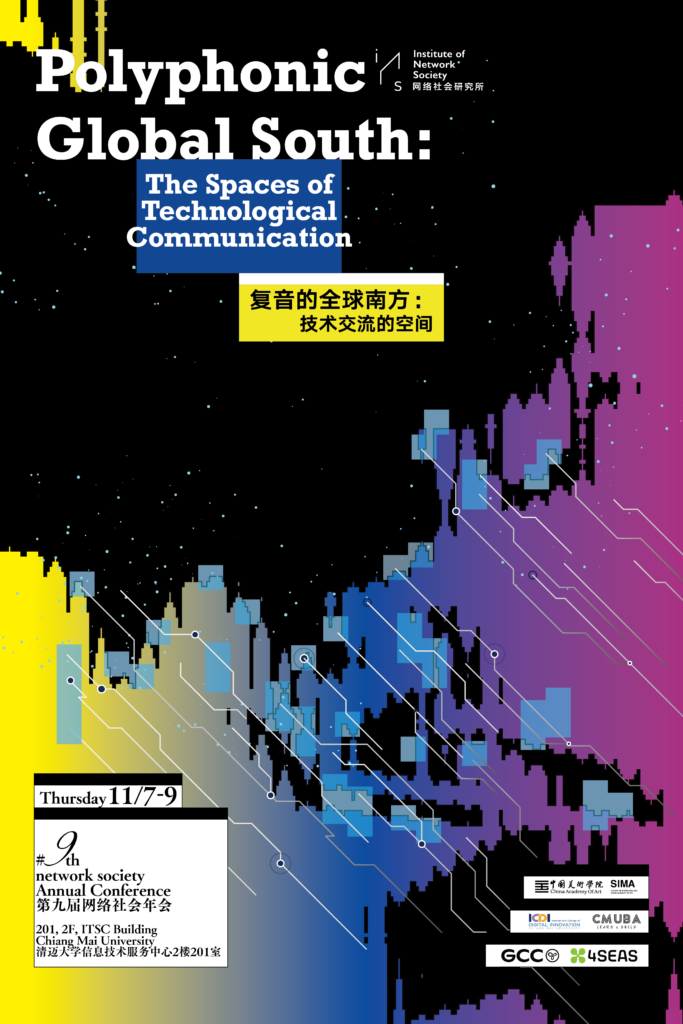
第九屆網絡社會年會
複音的全球南方:技術交流的空間
主辦單位
中國美術學院(CAA),跨媒體藝術學院(SIMA)
網絡社會研究所(INS)
總召集人
黃孫權、劉懌斯
共同組織者
焦會峰
引言
學術引用 Citation
黃孫權(2024)。專題引言。收錄於黃孫權(主編),《ACID #2:複音的全球南方:技術交流的空間》,頁 3–4。中國美術學院網絡社會研究所 INS。ISSN 2960-0944。 Huang, Sun-Quan (2024). Foreword. In Huang, Sun-Quan (Ed.), ACID No.2: Polyphonic Global South — The Spaces of Technological Communication, pp. 3–4. Institute of Network Society, CAA. ISSN 2960-0944.
技術權力形成的北方/中心敘事依賴,使得全球南方成為單一故事,並鞏固了某種既定現象,而對明顯的緊張、細微的複雜和不一致的同時性視而不見,導致了一種慢性貧困(chronic poverty)。數位不平等的說法無法掌握此種不利數位納入(adverse digital incorporation)的現實。經過八屆網絡社會年會對於理論與現實的探求,我們企圖擺脫以往理論與意識形態的習慣,本年會議將以“複音的全球南方:技術傳播的空間”為主題,探討全球南方的技術傳播過程在全球化與在地化的雙重張力下演變的複雜路徑。
複音說明在不同文化、經濟和社會背景下的技術動態多樣性。技術傳播指的是技術從發源地向其他地區傳遞、轉移以及互相影響的過程,這種跨地域流動充滿了宰制與反抗的故事。空間不僅指地理上的位置,更涉及技術在社會結構中的嵌入與再生產。全球南方作為一個先是政治,後為經濟的學術術語,通常指那些在全球經濟體系中處於相對劣勢的地區和國家,這些區域接受高技術成品的引入,同時提供便宜勞動力與物料。換句話說,它作為主要的勞動提供者與商品消費者,支撐了蓬勃的全球數位經濟,也被生產成符合全球資本生產結構中所需要的空間,一個物質的且意識形態的空間。本次會議將聚焦東南亞地區,探討技術如何在這些區域中相互馴服而有當今的數位星球樣貌。
會議將通過四個專題討論來深入技術傳播的多維度。首先,全球南方是製造的,以及被製造的“世界工廠”;其次,移動通訊與可攜式設備的連接性建構了不同身份與社群可能;第三,社會性媒體正在改變社會關係與經濟模式;最後,Web3與區塊鏈技術以及AI,浮現了一個新地形:人民對掌握自身財富的希望與國家政體控制人民的慾望同時加速。加密貨幣持有者所熱衷脫離國家控制的網絡城市,與每個國家都極力發展的國家主權式的AI佈局,正在形成某種對沖的力量。
在這山壑起伏之中,擁有技術者將登上峰頂,而脫節者跌入谷底,或甚有之,人類最終只是AI的養分,而人道(humanity)成為未來夢想亟待拋棄的本性。若非如此,全球南方是最有機會繪出此新地形圖之希望的區域。
時間
2024年11月7日-9日
地點
泰國清邁市清邁大學(CMU)
信息技術服務中心201室(ITSC Building)
RX33+C6J, Tambon Su Thep, Mueang Chiang Mai District, Chiang Mai 50200, Thailand
GPS座標:18.803633, 98.953058
谷歌地圖導航、蘋果地圖導航
直播地址
B站直播
https://live.bilibili.com/1802589

YouTube直播
https://www.youtube.com/live/UXH9asLuFHA

Slido提問
https://app.sli.do/event/dLjb7wURiCj98oTsrtbaLx

活動議程
| 11月7日 | ||
|---|---|---|
| 時間 (UTC+7) | 活動內容 | |
| 上午 | 09:30-16:00 | 城市之旅-清邁 集合點:拜斯里瑪雅酒店(Baisirimaya Hotel) 導航地址:21, 109, Chang Phueak, Mueang Chiang Mai District, Chiang Mai 50300, Thailand GPS座標:18.809342, 98.963738、谷歌地圖導航、蘋果地圖導航 |
| 下午 | 17:00-21:00 | 特別活動:Pop-Up City | 四海社區(4Seas) 活動地址:4seas Mountainview 導航地址:81 Ban Pong, Hang Dong District, Chiang Mai 50230, Thailand GPS座標:18.747220, 98.889650、谷歌地圖導航、蘋果地圖導航 |
| 11月8日 信息技術服務中心201室(ITSC Building) | ||
| 時間 (UTC+7) | 活動內容 | |
| 上午 | 08:30-09:00 | 開幕致辭:中國美術學院網絡社會研究所-黃孫權教授 / 清邁大學國際數字創新學院-Rujira Ouncharoen教授 / 全球華人數字共享社區-朱聿欣(美國區負責人) 文化與技術三部曲II《世界工廠:深圳》預告片 |
| 板塊一:製造南方 | ||
| 09:00-10:00 | 演講議題:從技術浪漫主義到技術封建主義——中韓早期信息社會的歷史比較研究 發言嘉賓:王洪喆 | |
| 10:00-11:00 | 演講議題:情感與算法——解開社交媒體政治的數字核心(線上發言) 發言嘉賓:Merlyna Lim | |
| 11:00-12:00 | 演講議題:垃圾佬——以再利用作為平價電子產品的來源 發言嘉賓:周蓬岸 | |
| 下午 | 板塊二:流動的聯結性 | |
| 13:30-14:30 | 演講議題:全球本土的親密關係——全球南方對移動中介關係的理論化 發言嘉賓:Jason Vincent A. Cabañes | |
| 14:30-15:30 | 演講議題:流動社群——NFT市場、移動方法與傳播 發言嘉賓:Tom McDonald | |
| 15:40-18:30 | 清邁大學 & 中國美術學院 研究生論壇: 任柄霖|傅瓚的遊戲歷程:解碼手柄上的計算機啟蒙 許可|數字殖民主義下的全球南方:消失的社交媒體和中國啟示 姜奕竹 李程錦|創新還是模仿?重思山寨的轉變軌跡 韓佳欣 仝昭祥|“無奮鬥,不龍華”,龍華汽車站田野調查 張祁鍇|信任機制:亞洲以太坊社區的價值協商嘗試 穆罕默德·伊利亞斯|通過點對點(P2P) 能源交易和區塊鏈創新促進可持續發展和清潔能源轉型 焦會峰|真菌協議:可持續的公共產品 討論環節 | |
| 11月9日 信息技術服務中心201室(ITSC Building) | ||
| 時間 (UTC+7) | 活動內容 | |
| 上午 | 板塊三:社會性媒介 | |
| 09:00-10:00 | 演講議題:數字行動主義與男性權益運動的民粹主義浪潮(線上發言) 發言嘉賓:廖雪婷 | |
| 10:00-11:00 | 演講議題:平臺、勞動力與中介動態 發言嘉賓:Cheryll Ruth Soriano | |
| 11:00-12:00 | 演講議題:社交媒體與泰國佛教的相互作用 發言嘉賓:Patchanee Malikhao | |
| 下午 | 板塊四:新地形 | |
| 13:30-14:30 | 演講議題:Web3與區塊鏈遊戲:一種南方視角 發言嘉賓:Saskia Witteborn | |
| 14:30-15:30 | 演講議題:消除數據偏見以構建包容性技術(線上發言) 發言嘉賓:Payal Arora | |
| 15:30-16:30 | 演講議題:當人工智能遇上Web3:共築可持續數字經濟 發言嘉賓:朱飛達 | |
| 16:30-17:30 | 演講議題:數字經濟3.0:顛覆性演進 發言嘉賓:Anukul Tamprasirt | |
| 17:30- | 閉幕派對 活動地址:1F, International College of Digital Innovation, Chiang Mai University 導航地址:239 Nimmanahaeminda Road, Suthep, Muang, Chiang Mai 50200, Thailand GPS座標:18.793800, 98.967329、谷歌地圖導航、蘋果地圖導航 |
主題演講嘉賓
(按演講順序排列)
王洪喆
WANG Hongzhe
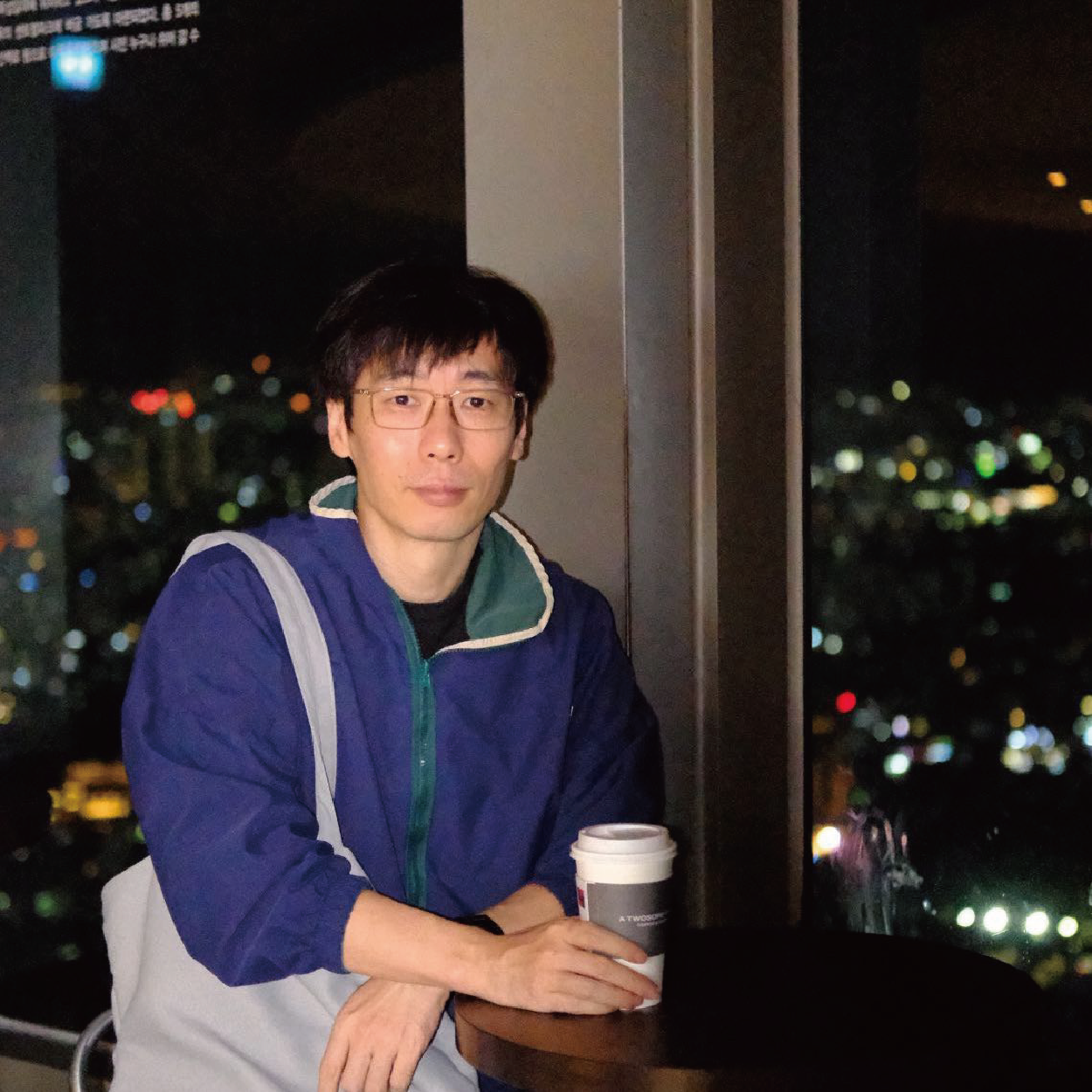
簡介:出生於遼寧鞍山,媒介史學者,香港中文大學博士,北京大學新聞與傳播學院研究員、博士生導師。王洪喆的研究與實踐跨越多媒介、技術、歷史和影像,興趣涉及媒介史、控制論史、信息社會與勞工研究;他同時是研究網絡“北京媒介小組”和“遊戲手冊”的發起人,“拆東西研究所”的聯合發起人。
演講主題:從技術浪漫主義到技術封建主義:中韓早期信息社會的歷史比較研究
摘要:我嘗試將“早期信息社會”作為一種後冷戰時代的社會類型和特殊的歷史過程加以討論,以理解東亞社會信息技術擴散早期的一種特別的技術專業主義人格,和以發展主義的民族主義為特徵的社會氛圍,進而為後發國家的技術創新精神提供某種文化的解釋,並評估由這種歷史過程的終結所帶來的後果——技術封建主義的擴張。
梅莉娜·林
Merlyna Lim

簡介:Merlyna Lim是加拿大數字媒體與全球網絡社會研究主席、傳播與媒體研究教授,也是卡爾頓大學ALiGN媒體實驗室的創始人和主任。她在印度尼西亞的達耶科洛特(Dayeuhkolot)出生併成長,她的研究探討了數字技術與社會的相互作用,重點關注互聯網、社交媒體和人工智能。她的工作探索了這些技術和社會動態如何在公民參與、激進主義和民主進程等領域辯證地相互塑造。她以東南亞、中東及北非地區為立足點,倡導將全球南方視為關鍵的研究中心,並根據其自身的條件來解決現實世界的問題。她的主要著作包括《東南亞的社交媒體與政治》(Social Media and Politics in Southeast Asia)(Cambridge UP, 2024)、《根源、路線、路由器:當代社會運動的傳播與媒體》(Roots, Routes, Routers: Communication and Media of Contemporary Social Movements)(Sage, 2018)和《在線集體行動:社交媒體中群體的動態》(Online Collective Action: Dynamics of the Crowds in Social Media)(Springer, 2014)。
演講主題:情感與算法:解開社交媒體政治的數字核心
摘要:本次演講探討社交媒體算法與政治格局之間的複雜關係,重點關注它們對公民和政治話語的影響。以東南亞為背景,它解開算法過程、用戶行為和社會政治背景之間的動態相互作用,並強調了情感——社交媒體中的“貨幣”——在這些相互作用中的核心地位。通過審視政治行動者如何操縱算法以及社交媒體平臺中嵌入的營銷策略,本演講進一步揭示了情感與算法政治如何共同作用於政治集體主義的強化過程,同時加劇了虛假信息的傳播與極化現象的深化,從而在區域乃至全球範圍內促進了威權主義傾向的加劇與轉型。
周蓬岸
ZHOU Pengan

簡介:新媒體藝術家,中國美術學院網絡社會研究所客座研究員,“網頁裡的電腦博物館”站長。主要研究方向為信息技術影響下的流行文化、媒介考古學、新媒體藝術創作等。
演講主題:垃圾佬:以再利用作為平價電子產品的來源
摘要:本次演講主要討論電子廢物和二手電子產品市場對中國技術社群發展的影響。2000年代對進口電子廢物即“洋垃圾”的重利用在中國塑造了多個具有各自獨特技術面向和產品偏好的愛好者社群。這些社群對中國民眾的數字素養提升做出過重要貢獻,並在2010年代影響中國的電子製造業。形成一類以部分使用回收舊部件生產新產品的製造商,創造出一種兼具資源循環利用和技術創新價值的廉價電子產品市場。
傑森·文森特·A·卡巴內斯
Jason Vincent A. Cabañes
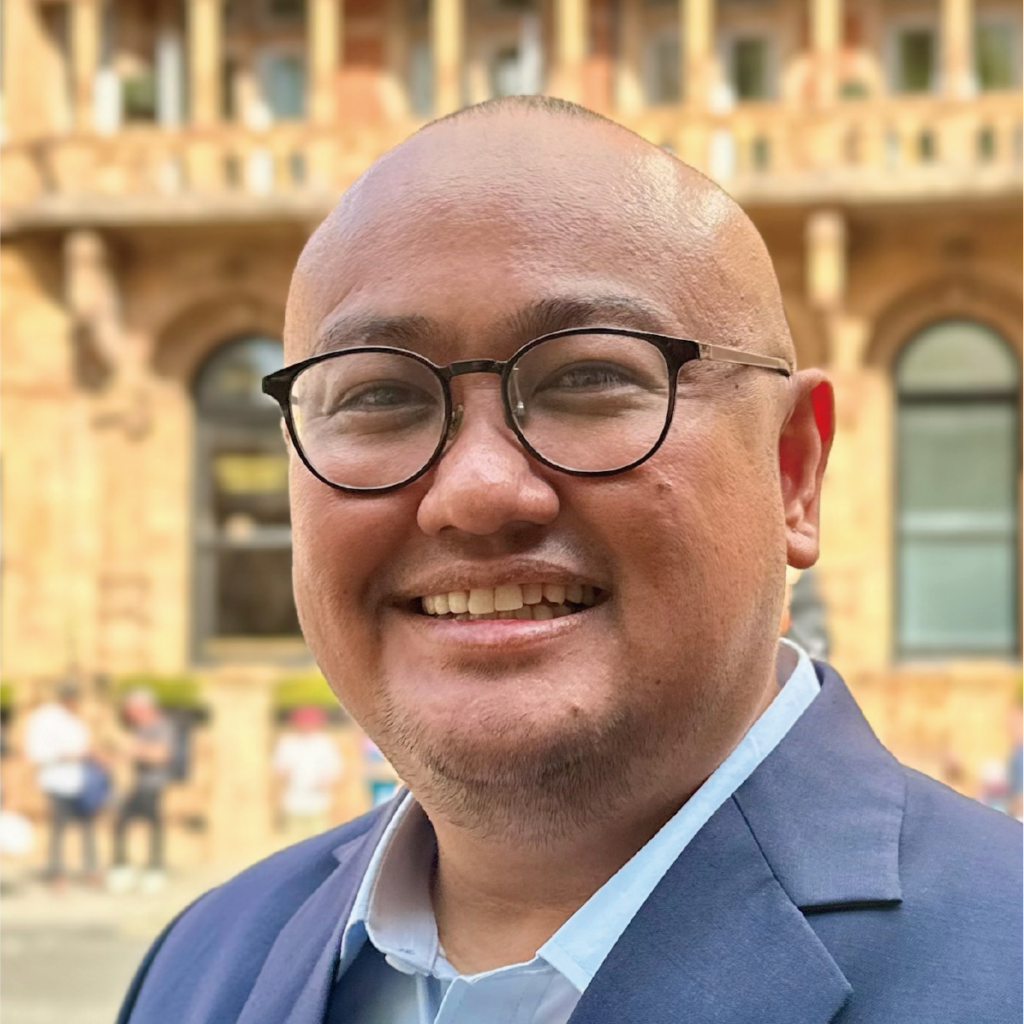
簡介:Jason Vincent A. Cabañes是倫敦大學金匠學院後殖民媒體與文化專業的高級講師。他的研究涉及世界各地跨文化團結與親密關係的複雜中介。他還致力於研究數字媒體文化與全球南方的政治、社會經濟和文化現實之間的關係。他是短篇專著《消費數字虛假信息:菲律賓人如何應對種族主義和歷史扭曲的在線政治內容》(Consuming Digital Disinformation: How Filipinos Engage with Racist and Historically Distorted Online Political Content)(ISEAS-Yusof Ishak Institute, 2023)的合著者,也是《亞洲的移動媒體與社會親密關係:重構地方聯繫並制定全球關係》(Mobile Media and Social Intimacies in Asia: Reconfiguring Local Ties and Enacting Global Relationships)(Springer, 2020)一書的合編者。他的其他作品見於《移動媒體與傳播》(Mobile Media and Communication)、《新媒體與社會》(New Media and Society)以及《傳播、文化與批判》(Communication, Culture and Critique)等頂級期刊。目前,他正在撰寫一本關於媒體與後殖民種族主義的全書,該書將由紐約大學出版社出版。
演講主題:全球本土的親密關係:全球南方對移動中介關係的理論化
摘要:本次演講深入探討了“全球本土的親密關係”這一概念如何捕捉移動媒體在人們日益全球化的社交體驗(從浪漫關係到家庭關係再到社群關係)中所扮演的角色。它詳細闡述了全球本土親密關係的三個關鍵維度:數字接入、情境地域性和社會技術動態。通過這樣做,它展示了這三個維度如何都指向了理解移動媒體轉型作用與當地文化和全球文化相互作用之間糾纏關係的重要性。本次演講還強調了全球本土親密關係的關鍵維度如何體現了基於非西方社會和全球南方社會現實發展理論的價值。它指出了這種理論化對於包括西方和全球北方在內的多種情境的相關性。
湯姆·麥克唐納
Tom McDonald
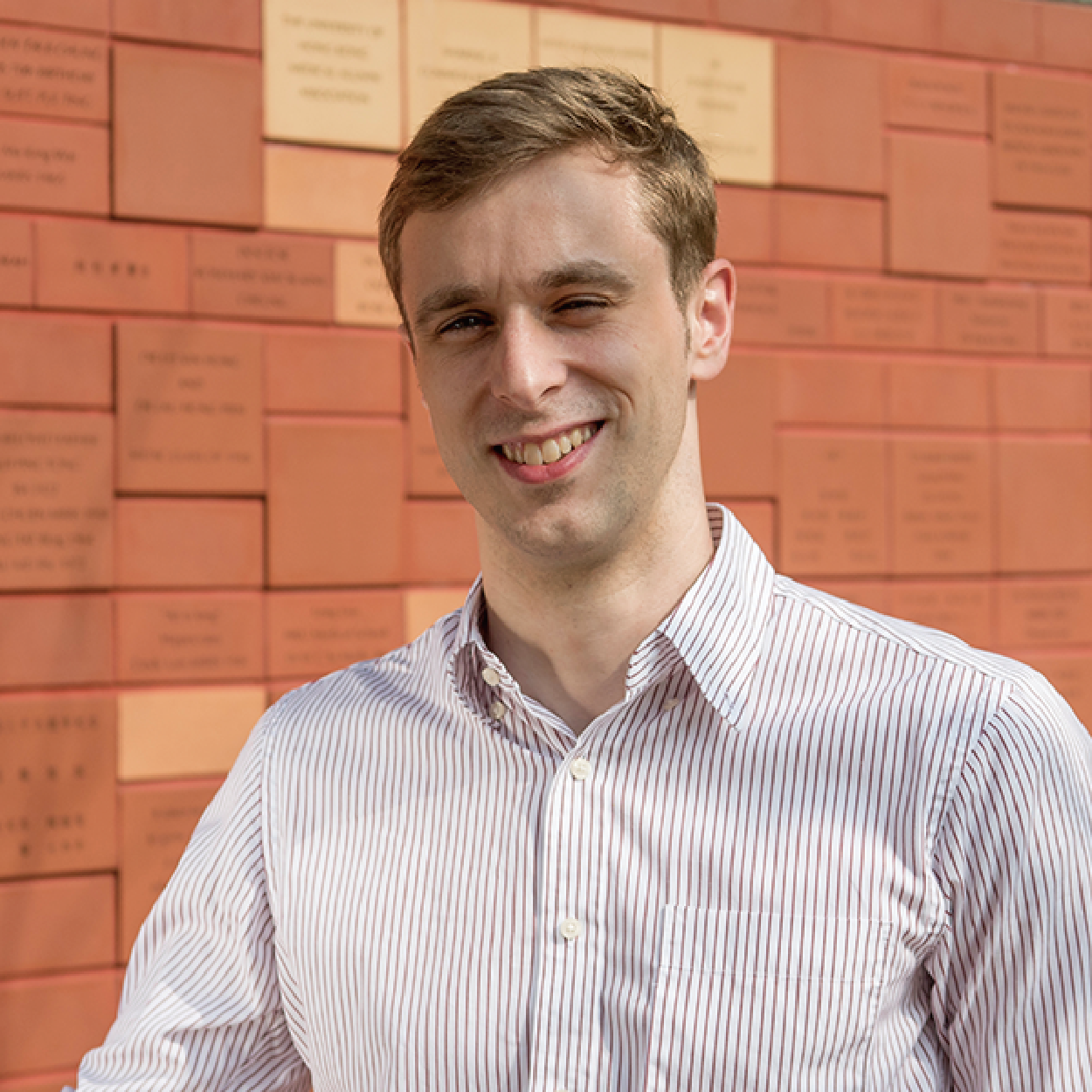
簡介:Tom McDonald是香港大學社會學系的人類學家。他的研究集中在探討亞洲新興的數字貨幣、媒體和技術形式所帶來的文化影響。他曾在《美國人類學家》(American Anthropologist)、《經濟與社會》(Economy & Society)和《文化經濟期刊》(Journal of Cultural Economy)等眾多學術期刊上發表文章。
演講主題:流動社群:NFT市場、移動方法與傳播
摘要:關於加密社群的主流敘述通常將其描繪為高度去中心化的,由匿名和對權威的不信任所驅動。本研究於2022年-2023年進行,採用移動調研方法(即客體訪談及數字民族誌)對香港25名基層NFT收藏者進行研究,探討他們如何理解數字錢包中NFT所圍繞的社群。本研究發現,NFT所有者追求的是一種主要通過Web 2.0技術(即手機、社交媒體和集中式網站)構建的“流動社群”,而非依賴去中心化區塊鏈技術。我認為,流動性遠非純粹的金融衡量標準,它必須通過連接多層平臺基礎設施(包括NFT市場、數字錢包、社交媒體)來協調並融合多種流動(貨幣流動、信息流動、關係流動)。本研究的重要意義在於,它引入了流動性這一隱喻,並探討了其對平臺研究的潛在貢獻。
廖雪婷
Sara Liao

簡介:廖雪婷是賓夕法尼亞州立大學媒介研究專業的助理教授。她是一名媒體學者和女權主義者,研究數字媒體、女權主義、全球化和東亞流行文化的交叉領域。她目前正在從事數字女權主義運動以及中國厭女文化的理論化與寫作工作。
演講主題:數字行動主義與男性權益運動的民粹主義浪潮
摘要:在本次演講中,我將追溯中國男性權益組織如何在線上崛起,並與媒體文化和國家形成強大聯盟,使性別歧視和厭女情緒與當代流行精神相融合,無縫銜接性別對立敘事,成為主導的文化符號。這些力量之間的協同一致,為數字平臺對特定熱門賬號及內容的打擊與審查提供了正當性,還在國家意識形態的背書下,進一步推動了反女權主義作為一種治理手段的發展。同時,圍繞厭女情緒含義的其他形式的爭論、衝突和鬥爭變得更為激烈、顯眼和流行,其文化影響力不亞於反女權主義努力,從而加劇了父權文化和資本主義所造成的結構性問題。具體而言,我特別關注情感作為情感經濟在群體聯結和分裂中的作用。男性權益組織的情感構建,與中國的人口危機官方說辭以及生育政策導向緊密交織,這不僅加劇了厭女情緒的表現形式,也滲透進日常言論與微觀攻擊行為之中,併為這一話語賦予了民族主義、男性至上主義、異性戀規範化和過度男性化的色彩。
謝麗爾·魯絲·索里亞諾
Cheryll Ruth Soriano

簡介:Cheryll Ruth Soriano博士,是馬尼拉德拉薩大學傳播學系教授。她在全球、區域和國家層面的平臺勞動與平臺化研究網絡中發揮著積極作用,其中包括Fairwork(擔任首席研究員)以及亞洲的平臺生態系統和交易文化。她的著作有《菲律賓數字文化:YouTube上的中介動態》(Philippine Digital Cultures: Brokerage Dynamics on YouTube)(與E. Cabalquinto合著,Amsterdam University Press, 2022)和《亞洲視角下的數字文化:新興現象,持久概念》(Perspectives on Digital Culture: Emerging Phenomena, Enduring Concepts)(與S. Lim合著,Routledge, 2018)。Cheryll是新創刊的開源期刊《平臺與社會》(Platforms & Society)的創始聯合主編,同時擔任傳播與媒體研究領域重要期刊的編輯委員會成員。她曾在新加坡拉薩爾藝術學院(LCA)、澳大利亞皇家墨爾本理工大學(RMIT)和北京大學(PKU)擔任訪問學者。
演講主題:平臺、勞動力與中介動態
摘要:平臺在重塑當代社會行為方面發揮了關鍵作用,而基於視頻的社交平臺則是推動創意、本國語言、私密和情感表達民主化的關鍵驅動力。本次主題演講將引用她的著作《菲律賓數字文化:YouTube上的中介動態》,聚焦於後殖民數字社會中中介勞動的動態。它將在平臺介導的工作領域以及菲律賓的社會文化和經濟現實的背景下,探討數字勞動、社交媒體文化生產和影響力塑造實踐。本次分析從三個方面深化了我們對社交媒體和數字勞動的理解:(1)通過描繪由社交媒體介導的中介(數字勞動中介)的崛起及其在全球平臺勞動力市場中的作用;(2)強調支撐這些中介的“創業團結”本質;(3)探索塑造這些中介出現及其在當地推廣平臺勞動方面影響力的結構性和社會技術條件,同時探討與之競爭的模糊性、不穩定性、機遇和能動實踐的話語。
帕查妮·馬利考
Patchanee Malikhao
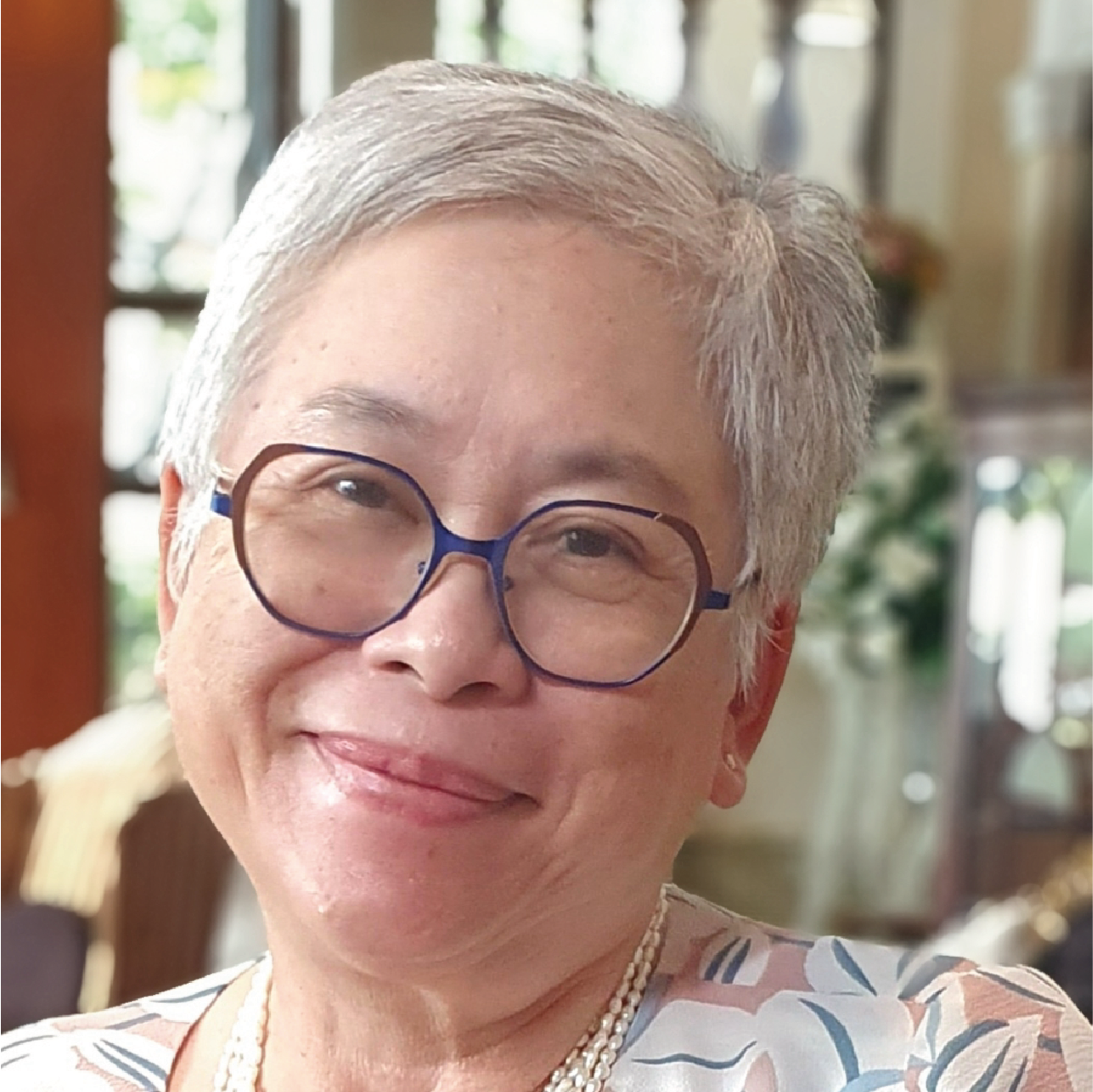
簡介:Patchanee Malikhao在2007年獲得澳大利亞昆士蘭大學博士學位,她是一名社會學家,擅長大眾傳播研究與圖形藝術研究。她曾在泰國兩所著名高校——朱拉隆功大學(Chulalongkorn University)和泰國法政大學(Thammasat University)接受教育,並分別在美國紐約羅切斯特理工學院(RIT)和澳大利亞昆士蘭大學(UQ)接受高等教育。她曾在澳大利亞、美國、比利時、荷蘭和泰國從事社會變革傳播研究、健康傳播研究以及圖形藝術、新聞學和傳播學的教學與研究工作。自20世紀80年代以來,她一直從事學術寫作。她的研究興趣廣泛,涵蓋可持續社會變革的傳播、HIV/AIDS等健康相關領域、正念新聞學、泰國佛教與社會傳播、全球化與泰國文化、跨文化傳播以及泰國文化與傳播等。目前,她是泰國清邁Fecund傳播諮詢公司的資深顧問。
演講主題:社交媒體與泰國佛教的相互作用
摘要:從歷史角度看,泰國佛教是萬物有靈論、上座部佛教和婆羅門教的融合體。隨著泰國經歷從古代、原始全球化、全球化到當代全球化這四個全球化階段,泰國佛教的信仰與實踐也相應地發生了變化,尤其是自社交媒體普及以來。本報告試圖分析:(1)自朱拉隆功國王(拉瑪五世)統治時期泰國僧伽(或佛教團體)成為國家的一部分以來,其受到了哪些影響;(2)經濟和社會發展對泰國佛教,特別是萬物有靈論的信仰、邪教、印度教神靈和占星術產生了哪些影響;(3)泰國的大眾媒體和新興社交媒體如何炒作佛教、萬物有靈論以及進一步推動佛教商業化。
薩斯基亞·維特伯恩
Saskia Witteborn

簡介:Saskia Witteborn現任香港中文大學新聞與傳播學院教授。她獲得華盛頓大學(WSU)博士學位,專攻批判性技術研究和移民與流動過程的數字化轉型。她曾與北美、歐洲、東亞以及數字空間的移民合作。Saskia曾任柏林自由大學(The Free University of Berlin)、柏林洪堡大學柏林實證移民與融合研究所(The Berlin Institute for Empirical Migration and Integration Research at Humboldt University)、法國國立高等電信學校(Télécom Paris)以及倫敦政治經濟學院(The London School of Economics)訪問學者。她的研究成果發表於合集和權威期刊,包括《傳播學雜誌》(Journal of Communication)、《文化研究》(Cultural Studies)、《遠程通信與信息學》(Telematics and Informatics)和《融合》(Convergence)等。她是《不羈之言:流離失所與越界政治》(Unruly Speech: Displacement and the Politics of Transgression)(Stanford, 2023)的作者,《SAGE媒體與移民手冊》(The SAGE Handbook of Media and Migration)(SAGE, 2020)的合著編輯,以及《在一起》(Together)(Oxford, 2005)的合著者。
演講主題:Web3與區塊鏈遊戲:一種南方視角
摘要:媒體與傳播文獻已通過多種理論視角探討了基於區塊鏈的遊戲和其他Web3應用。本演講結合這些文獻,並以菲律賓“邊玩邊賺”遊戲為例,拓展了關於Web3應用的社會技術特性的現有論點。這些論點說明了菲律賓的勞動力外流歷史、業務流程外包以及新冠肺炎疫情期間的不確定性等因素,如何為該國的區塊鏈和加密貨幣採用創造了條件。在此背景下,本討論展示了文化實踐及其性別化和階層化的表現如何影響用戶對“邊玩邊賺”遊戲的三種特性(即持久性、訪問權限和所有權)的參與。本演講強調情境化研究的重要性,並認為,在上升經濟體中,應將技術受害敘事與戰略抱負敘事相結合。同時,本演講也提醒人們要警惕企業關於Web3前景的敘事以及將金融投機作為社會流動機會的推廣。
佩雅爾·阿羅拉
Payal Arora
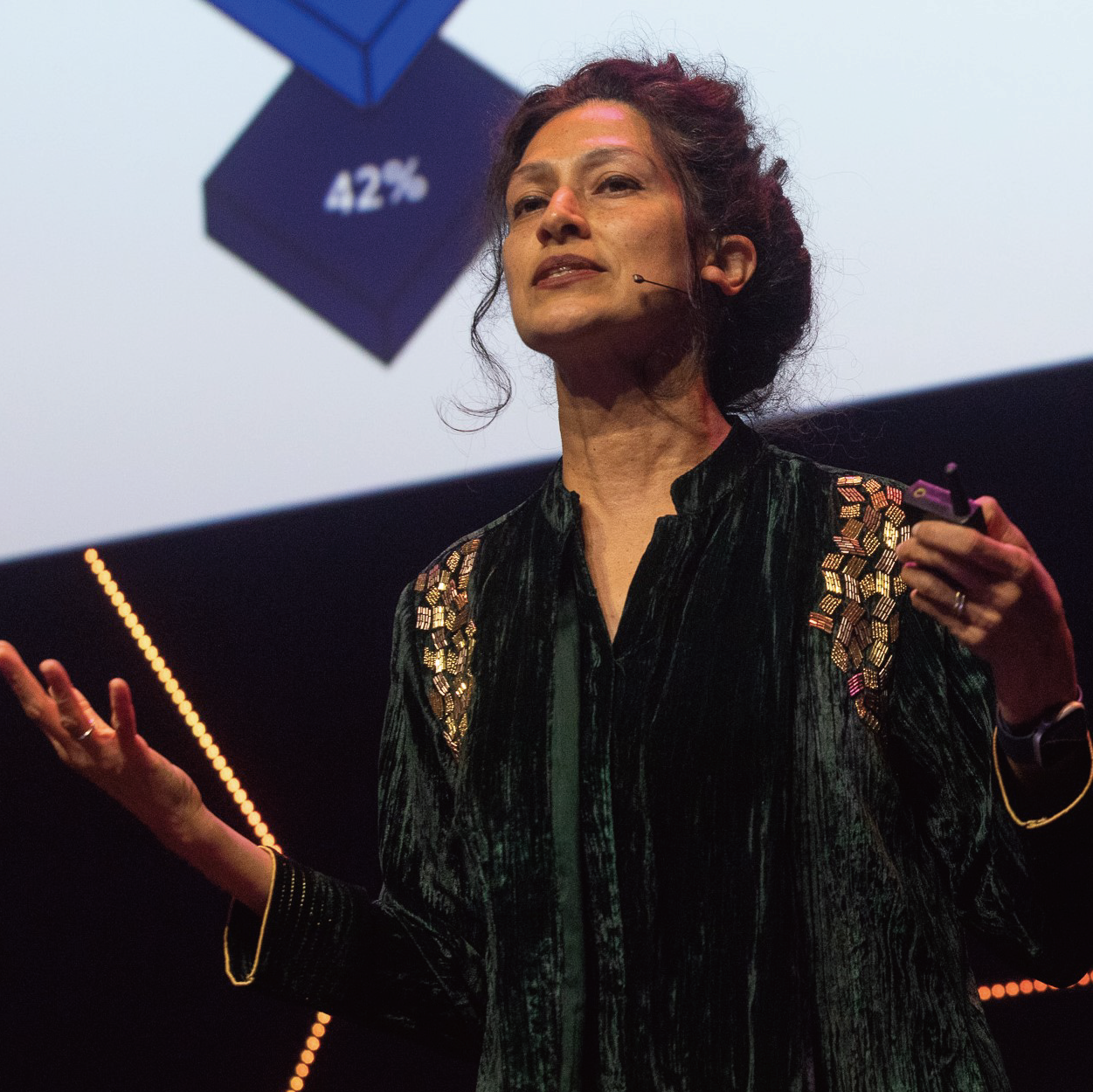
簡介:Payal Arora是烏得勒支大學(UU)包容性人工智能文化教授,也是FemLab和包容性人工智能實驗室的聯合創始人。作為一位數字人類學領域的領軍人物,她在全球南方地區擁有二十年的用戶經驗,致力於推動構建包容性人工智能設計和政策。Payal撰寫了100多篇期刊文章和獲獎書籍,包括與哈佛大學出版社合著的《下一個十億用戶》(The Next Billion Users)(Harvard University Press, 2019)。福布斯雜誌稱她為“下一個十億用戶的冠軍”和“改革科技界的合適人選”。她與麻省理工學院出版社合作的新書《從悲觀到希望:全球南方包容性技術設計的經驗》(From Pessimism to Promise: Lessons from the Global South on Designing Inclusive Tech)(The MIT Press, 2024)在國際媒體上引起了廣泛關注,包括《金融時報》(Financial Times)、BBC《科技解碼》(BBC Tech Decoded)和《UX雜誌》(UX Magazine)等紛紛報道。約150家國際媒體對她的工作進行了報道,其中包括《經濟學人》(The Economist)、《99%隱形》(99% Invisible)、《TechCrunch博客》(TechCrunch)和《波士頓環球報》(The Boston Globe)等。她為公共部門和私營部門提供諮詢服務,包括聯合國難民署、Spotify、畢馬威、Adobe、IDEO、谷歌和通用電氣等,並擔任多個董事會成員,包括聯合國董事會和紐約世界婦女全球理事會。她曾在67個國家的350多個重要活動和邀請演講中發表講話,包括ACM FAccT、哥本哈根科技節、re:publica、COP26、世界經濟論壇、瑞典互聯網基金會等活動,與Jimmy Wales、Steve Wozniak等人物同臺,並在TEDx演講中探討互聯網的未來和創新。她曾是洛克菲勒貝拉吉奧(Rockefeller Bellagio)的駐地研究員,擁有印度、美國和愛爾蘭血統,視阿姆斯特丹為家。
演講主題:消除數據偏見以構建包容性技術
摘要:如今,已眾所周知的是,我們現有的許多數字應用程序都是基於西方、受過良好教育、工業化、富裕和民主(WEIRD)社會的擔憂、需求和願望構建的。長久以來,以白人、男性和中產階級為主流的規範塑造了我們看待世界的方式。鑑於數字技術的全球無處不在,近年來,不同的利益相關者越來越認識到這個問題的嚴重性。一些程序員和政策制定者正在尋求消除算法、平臺和數據集偏見的具體方法。挑戰層出不窮:在構建全球通用的設計時,我們如何兼顧不同的地方文化?在將“公平性”付諸實踐以構建新的數據集時,考慮到數據是從動態變化的情境中獲取意義的,我們如何區分歧視性價值與描述性價值?在我們的人工智能(AI)應用程序中融入“真實性”和“本土性”意味著什麼?阿羅拉(Arora)在其新書《從悲觀到希望:全球南方設計包容性技術的經驗》(由麻省理工學院出版社/哈珀柯林斯印度分公司出版)中探討了這些問題。她認為,我們今天關於AI最基本的問題是社會性的而非技術性的,這就是為什麼我們需要來自各行各業和各個學科的關鍵變革者共同努力,共同邁向一個造福所有人和地球的人工智能未來。
朱飛達
ZHU Feida
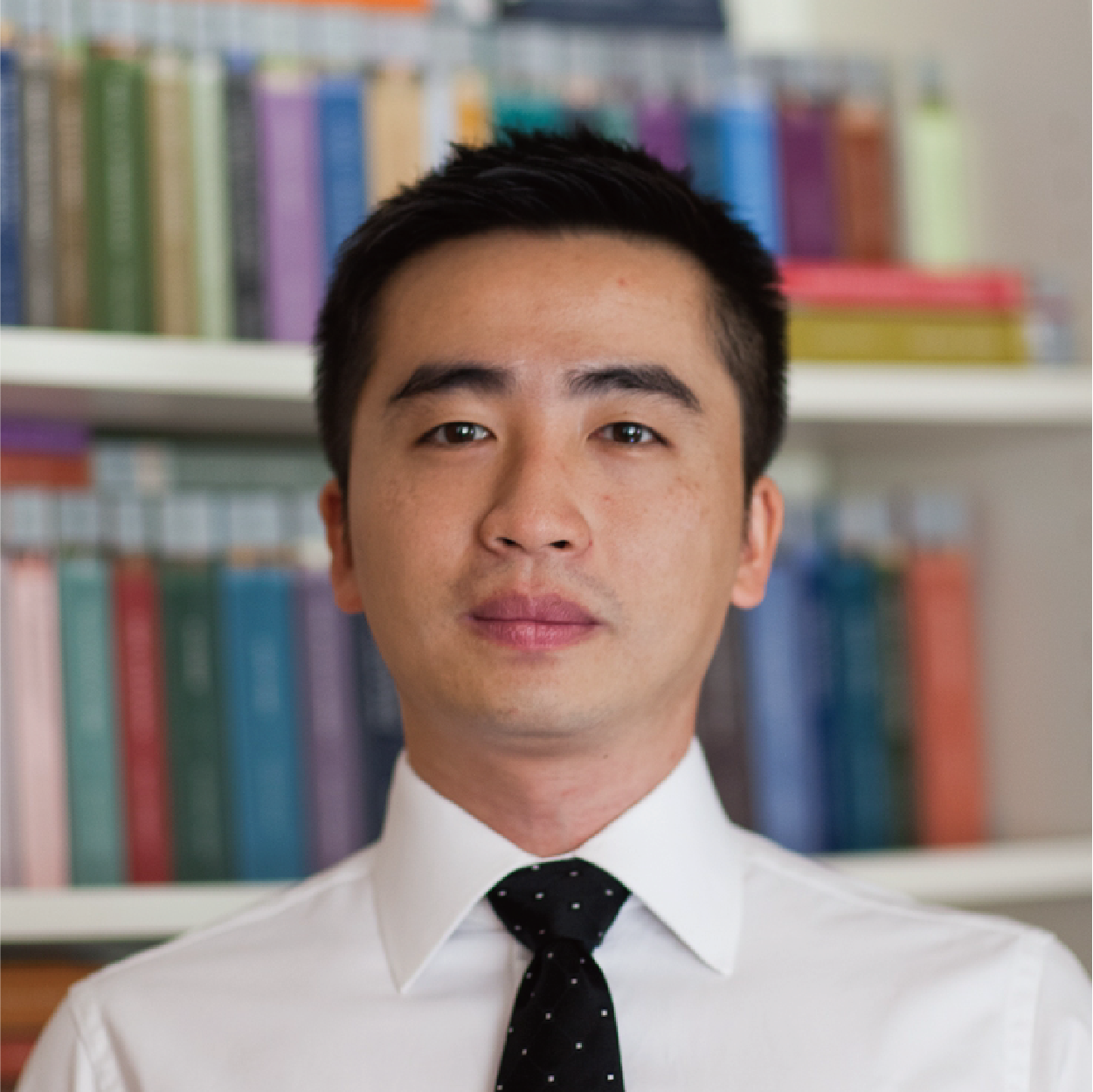
簡介:朱飛達教授於2009年獲得伊利諾伊大學厄巴納-香檳分校(UIUC)計算機科學博士學位,目前擔任新加坡管理大學(SMU)計算與信息系統學院的終身講席教授及副院長。他的研究興趣包括人工智能與協同智能、區塊鏈、數據資產與人工智能治理,並重點研究這些技術在商業、金融和消費創新方面的應用。他曾是中國平安保險集團頂峰大數據分析實驗室和星展銀行-新管大生命數據分析實驗室的創始主任。朱教授也是SYMPHONY的創始人和首席科學家。SYMPHONY是一個基於Web3的區塊鏈協議,旨在通過民主化和協同化的數據智能以及設計隱私來推動數據驅動經濟的發展。他在包括國際數據工程大會(ICDE)、國際超大型數據庫會議(VLDB)、特殊興趣組數據管理會議(SIGMOD)、國際知識發現與數據挖掘會議(KDD)、萬維網大會(WWW)、機器學習研究雜誌(JMLR)、數據庫系統事務雜誌(TODS)、知識與數據工程期刊(TKDE)等在內的國際頂級期刊和會議上發表了100餘篇同行評審論文。他在大規模頻繁模式挖掘方面的工作獲得了2007年IEEE國際數據工程大會(ICDE’07)和2007年亞太知識發現與數據挖掘大會(PAKDD’07)的最佳學生論文獎。他還獲得了第21屆數據庫系統高級應用國際會議(DASFAA’16)的最佳論文獎和第17屆萬維網信息管理國際會議(WAIM’16)的最佳演示論文獎。朱教授榮獲2019年亞太知識發現與數據挖掘大會(PAKDD)青年事業獎,並擔任2024年數據庫系統高級應用國際會議(DASFAA)的程序共同主席、2018年IEEE國際數據挖掘大會(ICDM’18)和2021年國際知識發現與數據挖掘會議(ACM KDD’21)的大會共同主席。
演講主題:當人工智能遇上Web3:共築可持續數字經濟
摘要:近期,人工智能(AI)領域的創新浪潮洶湧澎湃,不僅帶來了令人振奮的進步,也引發了人們對治理方面的深切關注,尤其是隨著應用程序的協作性日益增強。當數據、模型和計算資源在多個實體之間共享時,我們如何確保信任和激勵機制的有效性?Web3提供了一個潛在的解決方案。在本次演講中,我們將探討人工智能與Web3的融合,討論面臨的關鍵挑戰和核心技術組件。此外,我們還將通過幾個示例來說明這兩種技術如何協同工作。
阿奴庫爾·譚普拉瑟特
Anukul Tamprasirt
簡介:Anukul Tamprasirt博士是一位國際資源專家。目前,他是清邁大學國際數字創新學院的講師。他於清邁大學(CMU)知識管理專業獲博士學位;於美國孟菲斯州立大學(UofM)電信專業獲碩士學位。他在多家跨國公司擁有豐富的工作經驗。他曾擔任美國軟件開發團隊負責人、國際顧問、創業企業家等職務。他擅長軟件工程、數據建模和數據中心管理。他最近的研究領域涵蓋物聯網(IoT)、大數據、數據架構和人工智能(AI)。
演講主題:數字經濟3.0:顛覆性演進
摘要:信息通信技術已從上一個千年跨越至今日的數字技術時代。起初,技術演進主要致力於通過自動化提高生產力。近年來,技術開始從自動化向智能化轉變。隨著更先進的數字技術的出現,顛覆性在近年來進一步加劇。這不僅僅侷限於生產力層面,而是已經發展成為一種由社會驅動數據新範式(即社交媒體、元宇宙、區塊鏈和人工智能)驅動的新型經濟。此外,這些還是當今快速商業競爭節奏中新的社會經濟貢獻因素,與不斷發展的技術相互交織。
協辦單位
清邁大學國際數字創新學院 (ICDI)
國際數字創新學院(ICDI)隸屬於清邁大學(CMU),旨在成為東盟地區數字創新與金融科技領域知識開發的領先創業學院。
清邁大學區塊鏈協會 (CMUBA)
清邁大學區塊鏈協會(CMUBA)是一個專注於培養對區塊鏈技術有深入理解和實踐能力的人才的組織,其使命是通過區塊鏈技術的應用來改善亞洲地區的福祉。
支持單位
全球華人數字共享社區 (GCC)
全球華人數字共享社區(GCC)成立於2023夏,是首個專注於在華語社區捐贈公共物品和開源項目的非營利性Web3公益基金。
四海社區(4Seas)
四海社區(4Seas)是由海外遊牧華人創立的,建設初創社會的清邁在地加密社區。四海社區希望打造一個探索和創新治理、身份認同及可持續經濟系統的實驗平臺。
推薦活動
ICDI: https://icdi.cmu.ac.th/News/ComingUp.aspx
CMUBA: https://cmuba.notion.site/Events-Happening-8668c2b17d774313b9f7db8d76260426
4Seas: https://4seas.notion.site/Pop-up-City-Season-ca8469aadc264b039846498fc88f49e0
GCC: https://www.gccofficial.org/project
Devcon 2024: https://devcon.org
工作團隊
崔雨、鄭葉穎、葉雲鶴、任柄霖、韓秋霞、李夢書、嚴正皓、田沛松、趙佳菁、朱顏、仝昭祥、王婧潔、馬雅、邊子晟、韓佳欣、姜奕竹、李程錦、阮璐欣、江子禕、許可、陳蘇元、李宜
視覺設計
李夢書
English / 中文
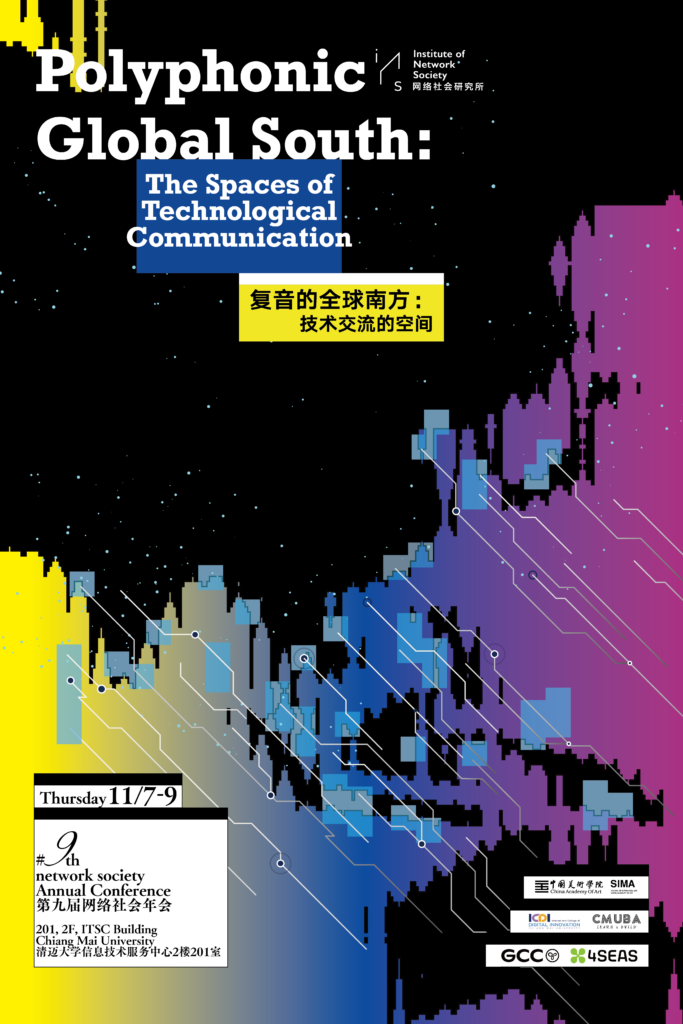
The 9th Annual Conference of Network Society
Polyphonic Global South:
The Spaces of Technological Communication
HOST
Institute of Network Society (INS),
School of Intermedia Art (SIMA), China Academy of Art (CAA)
CONVENERS
HUANG Sunquan, LIU Yisi
CO-ORGANIZER
JIAO Huifeng
INTRODUCTION
The dependence on a North/Center narrative shaped by technological power has reduced the Global South to a singular story, consolidating a predetermined phenomenon while conveniently overlooking evident tensions, subtle complexities, and inconsistent simultaneities. The result is a form of chronic poverty. The concept of digital inequality fails to capture the stark reality of adverse digital incorporation. After eight years of theoretical and practical inquiry at the Network Society Annual Conference, we now seek to break free from past theoretical and ideological habits. This year’s conference, themed “Polyphonic Global South: Spaces of Technological Communication,” will explore the intricate trajectories of how technological communication evolves in the Global South under the dual pressures of globalization and localization.
Polyphony illustrates the dynamic diversity of technological processes arising from various cultural, economic, and social contexts. Technological communication refers to the transmission, transfer, and mutual influence of technology from its point of origin to other regions, a cross-regional flow marked by stories of domination and resistance. Space is not merely a geographical location but involves the embedding and reproduction of technology within social structures. The Global South, a term initially political and later economic, generally refers to regions and nations disadvantaged within the global economic system. These areas are recipients of high-tech products while providing cheap labor and raw materials. In other words, the Global South acts as both the primary labor force and the consumer base, sustaining the booming global digital economy while being shaped into the material and ideological space necessary for global capitalist production. This year’s conference will focus on Southeast Asia, exploring how technology is reciprocally tamed and reshaped, creating the digital world we live in today.
The conference will explore the multidimensionality of technological communication through four thematic discussions. First panel, the Global South functions as both the manufacturing hub and the product of the “world factory.” Second panel, the connectivity provided by mobile communication and portable devices fosters diverse identities and community possibilities. Third panel, social media is transforming social relationships and economic models. Fourth panel, Web3, blockchain technologies, and AI are unveiling a new terrain where people’s aspirations for control over their own wealth clash with state desires to exert control over their citizens. Cryptocurrency holders are drawn to networked cities that escape governmental oversight, while nation-states vigorously pursue sovereign AI initiatives, creating a dynamic counterbalance.
In this undulating terrain, those equipped with technological prowess will ascend to the peaks, while the disconnected will plunge into the depths. In an even more unsettling vision, humanity may ultimately become mere sustenance for AI, with the essence of what it means to be human cast aside in the relentless pursuit of future dreams. Nonetheless, the Global South stands as the region with the greatest potential to chart this new terrain of hope.
TIME (UTC+7:00)
Nov 07-09 2024
PLACE
Room 201, ITSC Building, Chiang Mai University
RX33+C6J, Tambon Su Thep, Mueang Chiang Mai District, Chiang Mai 50200, Thailand
GPS Coordinates: 18.803633, 98.953058
Google Maps, Apple Maps
LIVE STREAMING
Bilibili
https://live.bilibili.com/1802589
YouTube
https://www.youtube.com/live/UXH9asLuFHA
Slido
https://app.sli.do/event/5kNtsdBpcv5XQgWLtbW2i3
AGENDA
| November 7th 2024 | ||
|---|---|---|
| Time | Activities | |
| A.M. | 09:30-16:00 | City Tour – Chiang Mai Pickup Location: Baisirimaya Hotel Directions: 21, 109, Chang Phueak, Mueang Chiang Mai District, Chiang Mai 50300, Thailand GPS Coordinates: 18.809342, 98.963738, Google Maps, Apple Maps |
| P.M. | 17:00-21:00 | Special Event: Pop-Up City | 4Seas Location: 4seas Mountainview Directions: 81 Ban Pong, Hang Dong District, Chiang Mai 50230, Thailand GPS Coordinates: 18.747220, 98.889650, Google Maps, Apple Maps |
| November 8th 2024, Room 201, ITSC Building | ||
| Time | Activities | |
| A.M. | 08:30-09:00 | Opening Remarks: Director of INS – Prof. HUANG Sunquan / Dean of ICDI-Asst. Prof. Dr. Rujira Ouncharoen / US Head of GCC – ZHU Yuxin An Intro Film of The World’s Factory: Shenzhen |
| Panel 1: Manufacturing South | ||
| 09:00-10:00 | Speech Title: From Techno-Romanticism to Techno-Feudalism: A Comparative Historical Study of Early Information Societies in China and South Korea Speaker: WANG Hongzhe | |
| 10:00-11:00 | Speech Title: Affect and Algorithms: Unpacking the Digital Heart of Social Media Politics (Online) Speaker: Merlyna Lim | |
| 11:00-12:00 | Speech Title: Lajilao: Reusing to Source Affordable Electronics Speaker: ZHOU Pengan | |
| P.M. | Panel 2: Mobile Connectivity | |
| 13:30-14:30 | Speech Title: Glocal Intimacies: Global South Theorising about Mobile Mediated Relationships Speaker: Jason Vincent A. Cabañes | |
| 14:30-15:30 | Speech Title: Liquid Communities: NFT Markets, Mobile Methods and Communication Speaker: Tom McDonald | |
| 15:40-18:00 | CMU & INS Graduate Forum: REN Binglin|FU Zan’s Gaming Odyssey: Decoding China’s Computer Culture through Joystick XU Ke|The Global South Under Digital Colonialism: Disappeared Social Media and China’s Revelations JIANG Yizhu, LI Chengjin|Innovation or Counterfeit? Rethinking the Transformation of “Shanzhai” HAN Jiaxin, TONG Zhaoxiang|”No fighting, no Longhua”, Field Research at Longhua Bus Station CMU Groups Discussion | |
| November 9th 2024, Room 201, ITSC Building | ||
| Time | Activities | |
| A.M. | Panel 3: Societal Media | |
| 09:00-10:00 | Speech Title: Digital Activism and the Populist Surge of the Men’s Rights Movement (Online) Speaker: Sara Liao | |
| 10:00-11:00 | Speech Title: Platforms, Labor, and Brokerage Dynamics Speaker: Cheryll Ruth Soriano | |
| 11:00-12:00 | Speech Title: The Impact of Social Media on Thai Buddhism and Vice Versa Speaker: Patchanee Malikhao | |
| P.M. | Panel 4: New Terrains | |
| 13:30-14:30 | Speech Title: Web3 and Blockchain Gaming: A Southern Perspective Speaker: Saskia Witteborn | |
| 14:30-15:30 | Speech Title: Debiasing Data to Build Inclusive Technologies (Online) Speaker: Payal Arora | |
| 15:30-16:30 | Speech Title: When AI Meets Web3 for Sustainable Digital Economy Speaker: ZHU Feida | |
| 16:30-17:30 | Speech Title: Digital Economy 3.0 Evolution of Disruption Speaker: Anukul Tamprasirt | |
| 17:30- | Farewell Party Location: 1F, International College of Digital Innovation, Chiang Mai University Directions: 239 Nimmanahaeminda Road, Suthep, Muang, Chiang Mai 50200, Thailand GPS Coordinates: 18.793800, 98.967329, Google Maps, Apple Maps |
SPEAKERS
(Arranged in order of the speeches)
WANG Hongzhe
Bio: WANG Hongzhe (b. 1983, Anshan, China) is a media historian and an associate professor in the Department of Journalism and Communication at Peking University. He obtained a Ph.D. in communication from the Chinese University of Hong Kong. His research interests include the history of media technology, the Cold War, cybernetics, the information society, and labor studies. He has long been involved in advanced studies in media-centered humanities, social sciences, and artistic works. He is the founder of Beijing Media Group and the Game Manual, and co-founder of Assembly. He lives and works in Beijing.
Speech topic: From Techno-Romanticism to Techno-Feudalism: A Comparative Historical Study of Early Information Societies in China and South Korea
Abstract: This talk attempts to define the “early information society” as a social type and a special historical process in the post-Cold War era in order to understand a contextualized technological professionalism and a social atmosphere characterized by developmental nationalism in the early stages of the diffusion of information technology in East Asian society, and so to provide a cultural explanation for the technological innovation spirit of late-developing countries and to evaluate the consequences of the end of this historical process – the expansion of technological feudalism.
Merlyna Lim
Bio: Merlyna Lim is the Canada Research Chair in Digital Media and Global Network Society, Professor of Communication and Media Studies, and founder/director of the ALiGN Media Lab at Carleton University. Born and raised in Dayeuhkolot, Indonesia, Lim’s research examines the interplay between digital technologies and society, focusing on the internet, social media, and AI. Her work explores how these technologies and societal dynamics dialectically co-shape each other in areas such as citizen participation, activism, and democratic processes. Grounded in the Southeast Asia and the MENA region, Lim advocates for viewing the Global South as a key research hub and addressing real-world issues on its own terms. Notable publications include Social Media and Politics in Southeast Asia (Cambridge UP, 2024), Roots, Routes, Routers: Communication and Media of Contemporary Social Movements (Sage, 2018), and Online Collective Action: Dynamics of the Crowds in Social Media (Springer, 2014).
Speech topic: Affect and Algorithms: Unpacking the Digital Heart of Social Media Politics
Abstract: This talk explores the complex relationship between social media algorithms and political landscapes, focusing on their impact on citizenry and political discourse. Grounded in the context of Southeast Asia, it unpacks the dynamic interaction between algorithmic processes, user behaviour, and socio-political contexts, highlighting how affect—the currency of social media—is central to these interactions. By examining how political actors manipulate algorithms alongside the marketing strategies embedded in social platforms, the talk reveals how affective and algorithmic politics fuel political collectivism while amplifying disinformation and deepening polarization, ultimately contributing to autocratic shifts on both regional and global scales.
ZHOU Pengan

Bio: ZHOU Pengan is a new media artist, guest researcher at the Institute of Network Society, China Academy of Art, and director of the Computer Museum in the Webpage. His main research interests include pop culture, influenced by information technology, media archaeology, and new media art creation.
Speech topic: Lajilao: Reusing to Source Affordable Electronics
Abstract: This speech primarily discusses the impact of the e-waste and second-hand electronics market on the development of China’s tech communities. In the 2000s, the reuse of imported e-waste, often referred to as “yang laji” (foreign trash), helped shape various hobbyist communities in China, each with its own unique technical focus and product preferences. These communities made significant contributions to improving digital literacy among the Chinese population and in the 2010s, influenced the country‘s electronics manufacturing industry. This led to the rise of manufacturers who partially use recycled components to produce new products, creating a market for affordable electronics that combines resource recycling with technological innovation.
Jason Vincent A. Cabañes
Bio: Jason Vincent A. Cabañes is a Senior Lecturer in Postcolonial Media and Culture at Goldsmiths, University of London. He researches the entangled mediations of cross-cultural solidarities and intimacies across the world. He also works on digital media cultures in relation to the political, socio-economic, and cultural realities of the Global South. He co-authored the short monograph Consuming Digital Disinformation: How Filipinos Engage with Racist and Historically Distorted Online Political Content (ISEAS-Yusof Ishak Institute, 2023) and co-edited the volume Mobile Media and Social Intimacies in Asia: Reconfiguring Local Ties and Enacting Global Relationships (Springer, 2020). His other works appear in top-tier journals such as Mobile Media and Communication, New Media and Society, and Communication, Culture and Critique. He is presently completing a full-length book on media and postcolonial racism, which will be published by New York University Press.
Speech topic: Glocal intimacies: Global South theorising about mobile mediated relationships
Abstract: This presentation discusses how the concept of “glocal intimacies” captures the role of mobile media in people’s increasingly global experiences of social relationships, from the romantic to the familial to the communal. It elaborates on the three key dimensions of glocal intimacies: digital access, contextual localities, and sociotechnical dynamics. In doing so, it shows how each of these dimensions points to the importance of understanding the entanglement of the transformative role of mobile media with the interplay of local and global cultures. This presentation also underscores how the key dimensions of glocal intimacies demonstrate the value of developing a theory grounded in the realities of a society in the non-West and the global South. It points out how such theorizing is relevant for diverse contexts, including the West and the global North.
Tom McDonald
Bio: Tom McDonald is an Anthropologist in the Department of Sociology, University of Hong Kong. His research examines the cultural consequences of novel formations of digital money, media, and technology in Asia. He has published articles in numerous academic journals, including American Anthropologist, Economy & Society, and the Journal of Cultural Economy.
Speech topic: Liquid Communities: NFT markets, mobile methods and communication
Abstract: Mainstream accounts of cryptographic communities present them as highly decentralized in nature, driven by anonymity and a mistrust of authority. This paper examines how NFT collectors in Hong Kong understand the communities that surround the NFTs held in their digital wallets. I draw upon mobile methods (i.e., object interviews and digital ethnography) of 25 grassroots Hong Kong-based NFT collectors conducted between 2022 and 2023. I find that NFT owners pursue a form of “liquid community” enacted primarily through Web 2.0 technologies—mobile phones, social media and centralised websites—rather than decentralised blockchains. I argue that liquidity, far from being a purely financial measure, must be achieved through interlinking multiple layers of platform infrastructures (NFT marketplaces, digital wallets, social media) to coordinate and coalesce multiple flows (monetary, informational, relational). The wider significance of this study is that it introduces, and explores the potential contribution of, the metaphor of liquidity to platform studies.
Sara Liao
Bio: Sara Liao is an Assistant Professor of Media Studies at Pennsylvania State University. She is a media scholar and feminist, researching the intersectional areas of digital media, feminism, globalization, and East Asian popular culture. She is currently working on theorizing and writing about digital feminist activism and the culture of misogyny in China.
Speech topic: Digital Activism and the Populist Surge of the Men’s Rights Movement
Abstract: In this talk, I trace how the online rise of men’s rights groups in China forms strong alliances with both media cultures and the state to render sexism and misogyny compatible with the contemporary popular ethos, working seamlessly with the gender antagonism narrative as a dominant cultural trope. The alignment and coordination between these forces legitimize digital platforms’ crusades against and censorship of certain visible and popular accounts and content and, thus, furthers the efforts of anti-feminism as a form of governance with the backing of the state ideologies. Simultaneously, other forms of contention, conflict, and struggle over the meanings of misogyny become heightened and visible and popular, having no less cultural influence than anti-feminist efforts, thereby enhancing the structural problems caused and exacerbated by patriarchal cultures and capitalism. Specifically, I pay specific attention to the circulation of emotions as affective economies to bond and divide groups. The affective formation of men’s rights groups is intricately entwined with the official claims about the population crisis in China and the policy orientation toward reproduction, which undergird heightened forms of misogyny as well as everyday speech and micro-aggressions and impart nationalist, male-supremacist, heteronormative, and hyper-masculine undertones to this discourse.
Cheryll Ruth Soriano
Bio: Dr. Cheryll Ruth Soriano is a Professor in the Department of Communication, De La Salle University Manila. She plays an active role in global, regional, and national research networks on platform labor and platformization research, including Fairwork (where she is the Principal Investigator) and Platform Ecosystems and Transactional Cultures in Asia. Her books include Philippine Digital Cultures: Brokerage Dynamics on YouTube (with E. Cabalquinto, Amsterdam University Press, 2022) and Asian Perspectives on Digital Culture: Emerging Phenomena, Enduring Concepts (with S. Lim, Routledge, 2018). Cheryll is the founding co-editor of the new open-access journal Platforms & Society and serves on the Editorial Boards of key journals in communication and media studies. She has held Visiting Fellowships at the LASALLE College of the Arts (Singapore), RMIT University (Australia), and Peking University (China).
Speech topic: Platforms, labor, and brokerage dynamics
Abstract: Platforms have been pivotal in redefining the conduct of contemporary society, and video-based social platforms serve as key drivers in the democratisation of creative, vernacular, intimate, and affective expressions. Drawing from her book, Philippine Digital Cultures: Brokerage Dynamics on YouTube, this keynote presentation focuses on the dynamics of brokering labor in a postcolonial, digital society. It will locate digital labor, social media cultural production, and influence-making practices within the landscape of platform-mediated jobs and the socio-cultural and economic realities of the Philippines. The analysis deepens our understanding of social media and digital labor in three critical ways: (1) by characterizing the rise of intermediaries (digital labor brokers) mediated by social media, and their role in global platform labor markets, and (2) by highlighting the nature of ‘entrepreneurial solidarities’ underpinning them; and 3) exploring the structural and socio-technical conditions that shape the emergence of these intermediaries and their influence in promoting the local adoption of platform labor, along with competing discourses of ambiguity, precarity, opportunity, and agential practice.
Patchanee Malikhao
Bio: Patchanee Malikhao (Ph.D. 2007, The University of Queensland, Australia) is a Sociologist with competencies in mass communication research and graphic arts research. She received her education in two prestigious universities in Thailand: Chulalongkorn University and Thammasat University, and higher education in the US (RIT, Rochester, NY) and Australia (UQ). She has worked in Australia, the US, Belgium, the Netherlands, and Thailand in the fields of Communication for Social Change research, Health Communication research, teaching and research in the graphic arts, journalism, and communication, in the above-mentioned countries. She has been an academic writer since the 1980s. She has a wide range of research interests from communication for sustainable social change, over health related areas such as HIV/AIDS to mindful journalism, Thai Buddhism and social communication, globalization and Thai culture, intercultural communication, and Thai culture and communication. Currently, she is senior consultant with Fecund Communication Consultancy in Chiang Mai, Thailand.
Speech topic: The impact of Social Media on Thai Buddhism and Vice Versa
Abstract: From a historical perspective, Thai Buddhism is a hybridization of animism, Theravada Buddhism, and Brahmanism. As Thailand has gone through four phases of globalization, from the archaic period, to proto-globalization, globalization, and contemporary globalization, Thai Buddhist beliefs and practices have also been modified accordingly, especially since the popularity of social media. This presentation attempts to analyze:
*(1)How the Sangha, or the Buddhist body of Thailand, has been impacted since it has become part of the state during the reign of King Chulalongkorn (Rama V);
(2)How the economic and social development has an impact on Thai Buddhism, especially the animistic beliefs, cults, Hindu Gods, and astrology; and
(3)How the Thai mass media and new social media create hypes on Buddhism, animism, and the further commercialization of Buddhism.*
Saskia Witteborn
Bio: Saskia Witteborn is a Professor in the School of Journalism and Communication at The Chinese University of Hong Kong. She received her Ph.D. from the University of Washington. She specializes in critical technology studies and the digital transformation of migration and mobility processes. She has worked with migrants in North America, Europe, East Asia, and digital space. Saskia was a visiting scholar at the Free University of Berlin, the Berlin Institute for Empirical Migration and Integration Research at Humboldt University, Télécom Paris, and the London School of Economics and Political Science. Her research has appeared in edited collections and leading journals, including the Journal of Communication, Cultural Studies, Telematics and Informatics, and Convergence. She is the author of Unruly Speech: Displacement and the Politics of Transgression (Stanford, 2023), co-editor of The SAGE Handbook of Media and Migration (SAGE, 2020), and co-author of Together (Oxford, 2005).
Speech topic: Web3 and Blockchain Gaming: A Southern Perspective
Abstract: Blockchain-based games and other Web3 applications have been explored in the media and communication literature through various theoretical lenses. The talk engages with this literature and expands existing arguments on the sociotechnical affordances of Web3 applications through the example of play-to-earn gaming in the Philippines. The arguments illustrate how a history of labor out-migration, business process outsourcing, and uncertainty during the COVID-19 pandemic have created the setting for blockchain and cryptocurrency adoption in the country. Against this background, the discussion shows how cultural practices and their gendered and classed iterations shape engagement with three play-to-earn gaming affordances: persistence, access, and ownership. The talk highlights the importance of contextualized research and argues that narratives of technological victimization in ascending economies should be complemented through narratives of strategic aspiration. At the same time, the talk cautions against corporate narratives of Web3 promise and the promotion of financial speculation as opportunities for social mobility.
Payal Arora
Bio: Payal Arora is a Professor of Inclusive AI Cultures at Utrecht University and co-founder of FemLab and the Inclusive AI Lab. She is a leading digital anthropologist with two decades of user experiences in the Global South, helping shape inclusive AI-enabled designs and policies. Payal is the author of over 100 journal articles and award-winning books, including The Next Billion Users with Harvard University Press. Forbes named her the “next billion champion” and “the right kind of person to reform tech”. Her new book with MIT Press, From Pessimism to Promise: Lessons from the Global South on Designing Inclusive Tech, has gained traction in international media, covered by the Financial Times, BBC Tech Decoded, and UX Magazine, among others. Approximately 150 international media outlets have covered her work, including The Economist, 99% Invisible, TechCrunch, and The Boston Globe. She has consulted for both the public and private sectors, including UNHCR, Spotify, KPMG, Adobe, IDEO, Google, and GE, and serves on several boards, including the UN and the World Women Global Council in New York. She has delivered more than 350 keynotes and invited talks in 67 countries at events such as ACM FAccT, Copenhagen Tech Festival, re: publica, COP26, World Economic Forum, and the Swedish Internet Foundation, alongside figures like Jimmy Wales and Steve Wozniak, as well as TEDx talks on the future of the internet and innovation. She is a Rockefeller Bellagio Resident Fellow alumnus, and, being Indian, American, and Irish, calls Amsterdam her home.
Speech topic: Debiasing Data to build Inclusive Technologies
Abstract: Today, it is well established that much of our existing digital applications are informed by concerns, needs, and aspirations of WEIRD societies (Western, Educated, Industrialized, Rich, and Democratic). The normative has long been white, male, and middle-class, shaping the way we see the world. In recent years, diverse stakeholders are increasingly recognizing the seriousness of the problem, given the global omnipresence of digital technologies. Some programmers and policymakers are looking for concrete ways to debias our algorithms, platforms, and datasets. Challenges abound: how do we account for varied local cultures while building designs that scale globally? In operationalizing ‘fairness’ into building new datasets, how do we identify a discriminatory over a descriptive value, given that data derives meaning from context that is dynamic and changing? What does it mean to inscribe ‘authenticity’ and ‘locality’ into our AI enabled applications? Arora draws from her new book ‘From Pessimism to Promise: Lessons from the Global South on designing Inclusive Tech’ with MIT Press/Harper Collins India to tackle these issues. She argues that the most fundamental questions we have today about AI are social and not technological in nature, which is why we need critical changemakers from across sectors and disciplines to move collectively towards an AI future that works for all people and the planet.
ZHU Feida
Bio: Prof. ZHU Feida is currently a tenured Chair Professor and Associate Dean at the School of Computing and Information Systems, Singapore Management University. His research interests include AI and collaborative intelligence, blockchain, data asset and AI governance, with emphasis on their application to business, financial, and consumer innovation. He was the founding director of both the Pinnacle Lab for Analytics with China Ping An Insurance Group and the DBS-SMU Life Analytics Lab. Prof. ZHU is also the Founder and Chief Scientist of SYMPHONY, a Web3 blockchain-based protocol to empower a data-driven economy by democratized and collaborative data Intelligence with privacy by design. Prof. ZHU has over 100 peer-reviewed research publications at top international venues, including ICDE, VLDB, SIGMOD, KDD, WWW, JMLR, TODS, TKDE, etc. His work on large-scale frequent pattern mining has won the Best Student Paper Awards at the 2007 IEEE International Conference on Data Engineering (ICDE’07) and the 2007 Pacific-Asia Conference on Knowledge Discovery and Data Mining (PAKDD’07). He also received the Best Paper Award at the 21st International Conference on Database Systems for Advanced Applications (DASFAA’16) and the Best Demo Paper Award at the 17th International Conference on Web-Age Information Management(WAIM’16). He won the Early Career Award from PAKDD’19 and is the PC Co-Chair of DASFAA 2024, the General Co-Chair of IEEE ICDM’18 and ACM KDD’21. Prof. ZHU obtained his Ph.D. in Computer Science from the University of Illinois at Urbana-Champaign (UIUC) in 2009.
Speech topic: When AI meets Web3 for Sustainable Digital Economy
Abstract: The recent surge in AI innovation brings not only exciting advancements but also significant concerns around governance, especially as applications become increasingly collaborative. How can we ensure both trust and incentivization when data, models, and computational resources are shared across multiple entities? Web3 offers a potential solution. In this talk, we will explore the integration of AI and Web3, discussing the key challenges and core technical components. We will also present a few examples to illustrate how these two technologies can work together.
Anukul Tamprasirt
Bio: Dr. Anukul Tamprasirt is an International Resource Person and currently a lecturer at the International College of Digital Innovation, Chiang Mai University. He holds a Ph.D. in Knowledge Management from Chiang Mai University and an M.S. in Telecommunications from Memphis State University, USA. He has extensive work experience in several multinational companies. He was the head of a software development team in the USA, an international consultant, and a startup entrepreneur. Dr. Anukul specializes in Software Engineering, Data Modeling, and Datacenter Management. His recent research interests include the Internet of Things (IoT), Big Data, Data Architecture, and Artificial Intelligence (AI).
Speech topic: Digital Economy 3.0 evolution of disruption
Abstract: Information and Communication Technology has spanned over from the past millennium into Digital Technology today. At first, the technological evolution dedicated for productivity improvement mostly from automation. In the recent years, technologies started to cross over from automation to intelligent. Disruption is be disrupted further in recent years with more advanced Digital technologies. It is not only just productivity aspects. It is become new type of economy powered by the new paradigm of the social driven data ie. social media, metaverse, blockchain and AI. Moreover, these are the new socio-economic contributing factors of very rapid pace of business competition intertwined with forth going technologies as seen today.
CO-HOSTS
International College of Digital Innovation (ICDI)
The International College of Digital Innovation (ICDI), affiliated with Chiang Mai University, aims to become a leading entrepreneurial college in the ASEAN region for knowledge development in the fields of digital innovation and financial technology.
Chiangmai University Blockchain Association (CMUBA)
The Chiang Mai University Blockchain Association (CMUBA) is an organization dedicated to nurturing talents with in-depth understanding and practical abilities in blockchain technology. Its mission is to enhance the well-being of the Asian region through the application of blockchain technology.
Facilitators
Global Chinese Community of Universal Digital Commons (GCC)
Established in 2023 summer, GCC is the first Non-profit Web3 foundation focused on supporting and funding public goods and open source projects within the Global Chinese Community.
4Seas
4Seas is a Chiang Mai-based crypto community founded by overseas Chinese nomads, aiming to build an entrepreneurial society. 4Seas aspires to create an experimental platform for exploring and innovating governance, identity, and sustainable economic systems.[](https://codimd.caa-ins.org/s/HyeZm2wAA#Recommanded-events
RECOMMANDED EVENTS
ICDI: https://icdi.cmu.ac.th/News/ComingUp.aspx
CMUBA: https://cmuba.notion.site/Events-Happening-8668c2b17d774313b9f7db8d76260426
4Seas: https://4seas.notion.site/Pop-up-City-Season-ca8469aadc264b039846498fc88f49e0
GCC: https://www.gccofficial.org/project
Devcon 2024: https://devcon.org
TEAM
CUI Yu, ZHENG Yeying, YE Yunhe, REN Binglin, HAN Qiuxia, LI Mengshu, YAN Zhenghao, TIAN Peisong, ZHAO Jiajing, ZHU Yan, TONG Zhaoxiang, WANG Jingjie, MA Ya, BIAN Zicheng, HAN Jiaxin, JIANG Yizhu, LI Chengjin, RUAN Luxin, JIANG Ziyi, XU Ke, CHEN Suyuan, LI Yi
VISUAL DESIGN
LI Mengshu
本體論維度 / Ontological Dimensions