學術引用 Citation
黃孫權、複島團隊(2014)。錄地景 Memo-scape。展覽手冊,臺北:立方計劃空間。 Huang, Sun-Quan & Islands Team (2014). Memo-scape. Exhibition booklet, Taipei: TheCube Project Space.
藝術家 Artists:黃孫權 × 複島團隊 HUANG Sun-quan & Islands
專案經理 Project Manager:羅悅全 Jeph LO
行政助理 Exhibition Assistants:梁以妮 LIANG Ini、陳怡君 LIN Yi-chun
展場技術 Technical Support:藝術戰爭公司 Art War Company
平面美術 Graphic Designer:複島團隊 Islands
翻譯 Translator:米傑富 Miller Jeffrey RYAN
發行 Publisher:立方計劃空間 TheCube Project Space
出版 Published:2014.5
展覽贊助 Exhibition Sponsor:台北市文化局
空間贊助 Space Sponsor:NCAF
感謝名單
感謝田野過程中協助我們的旗津與鹽埕居民,特別是接受百般打擾與長時間訪談的朋友:陳功勞、黃麗寬、張萬全、張清文、李逸修、李明朗、孫惠娟、林全誠、葉金祥、郭福龍、郭文瑞、黃林紅綿、黃注恩、黃信道、黃王錦華、黃英智、黃佑安、方維宏、鄔張鳳英、鄔淑華、陳浙平、顏依綾、顏金發
展覽手冊頁面
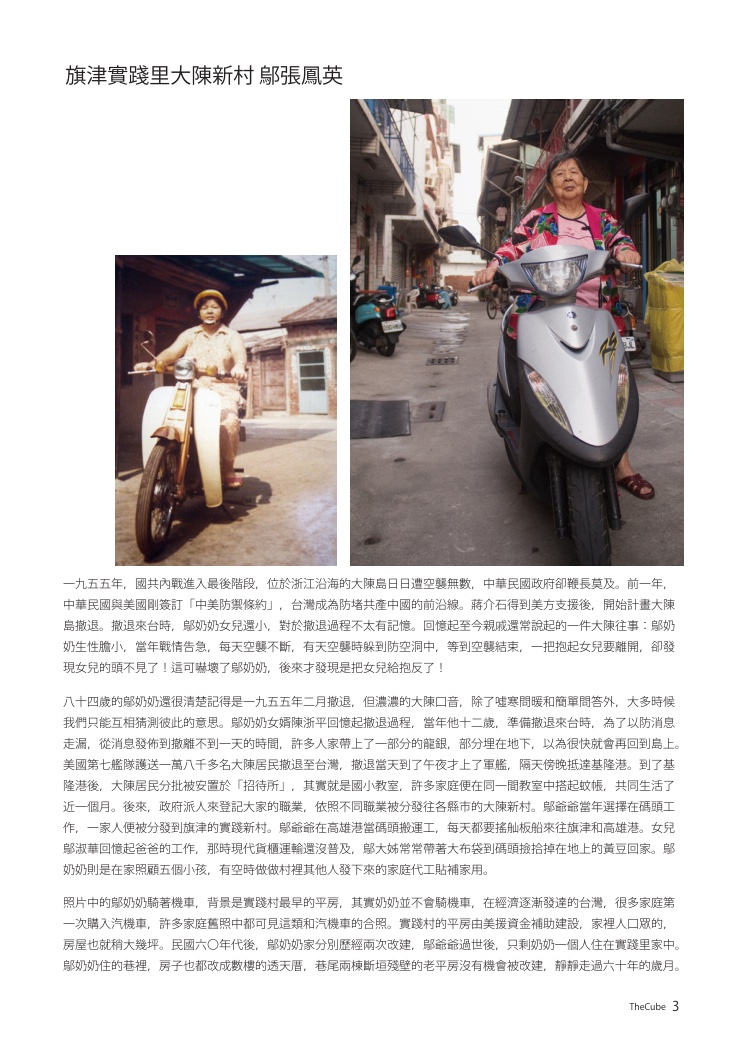
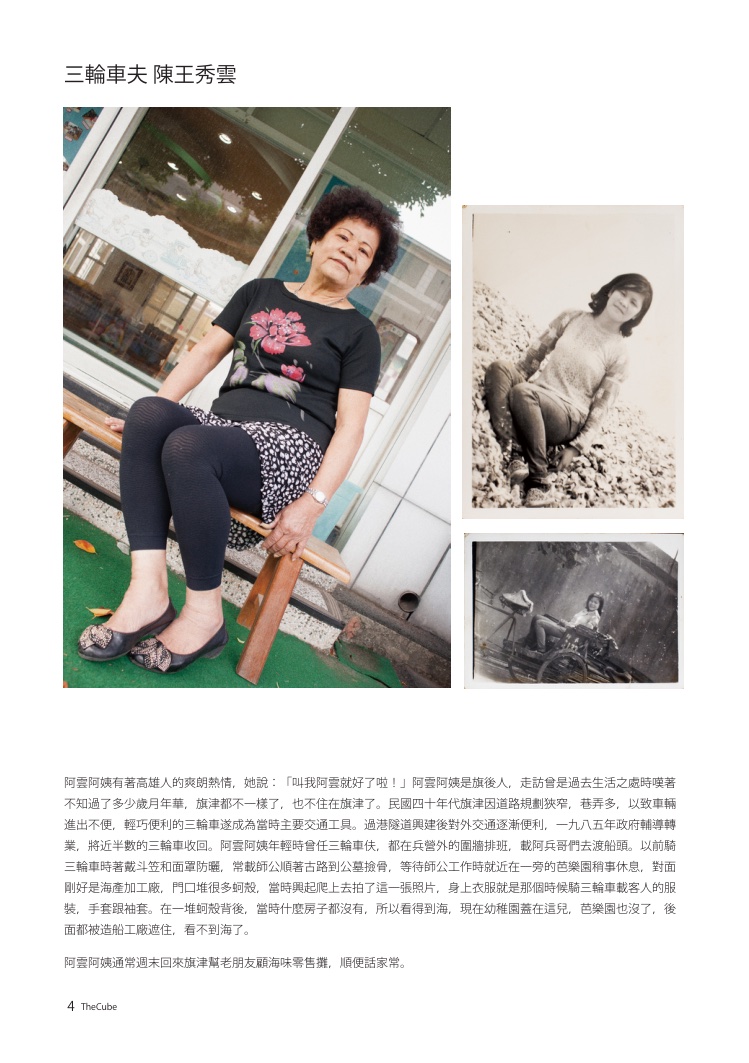
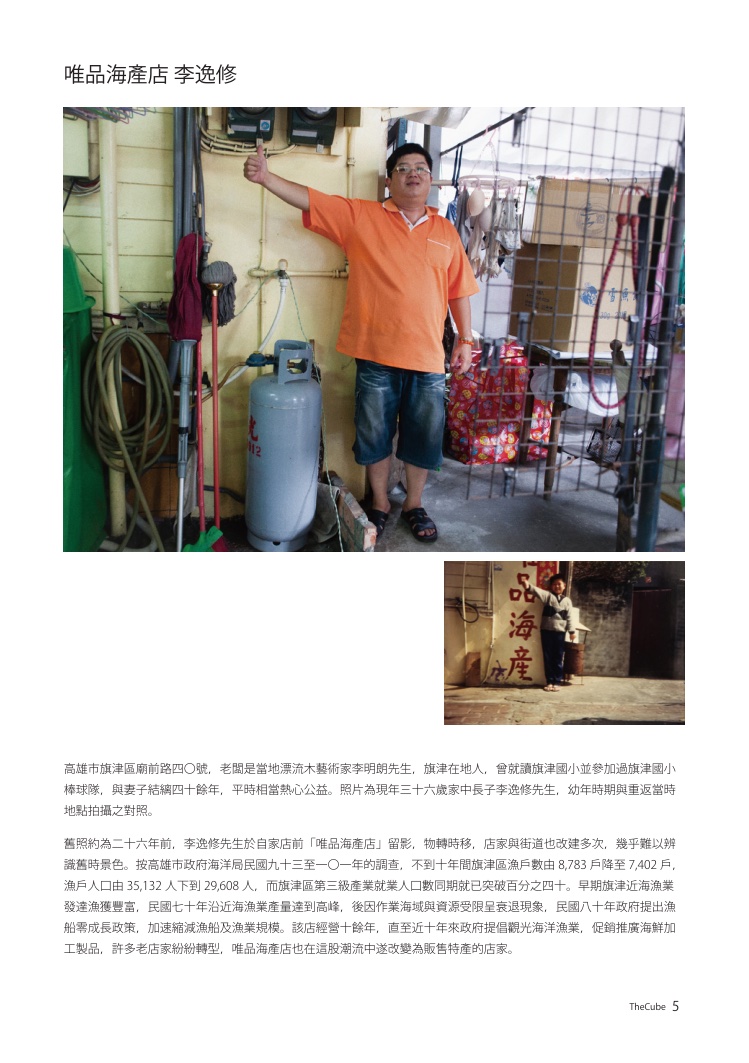
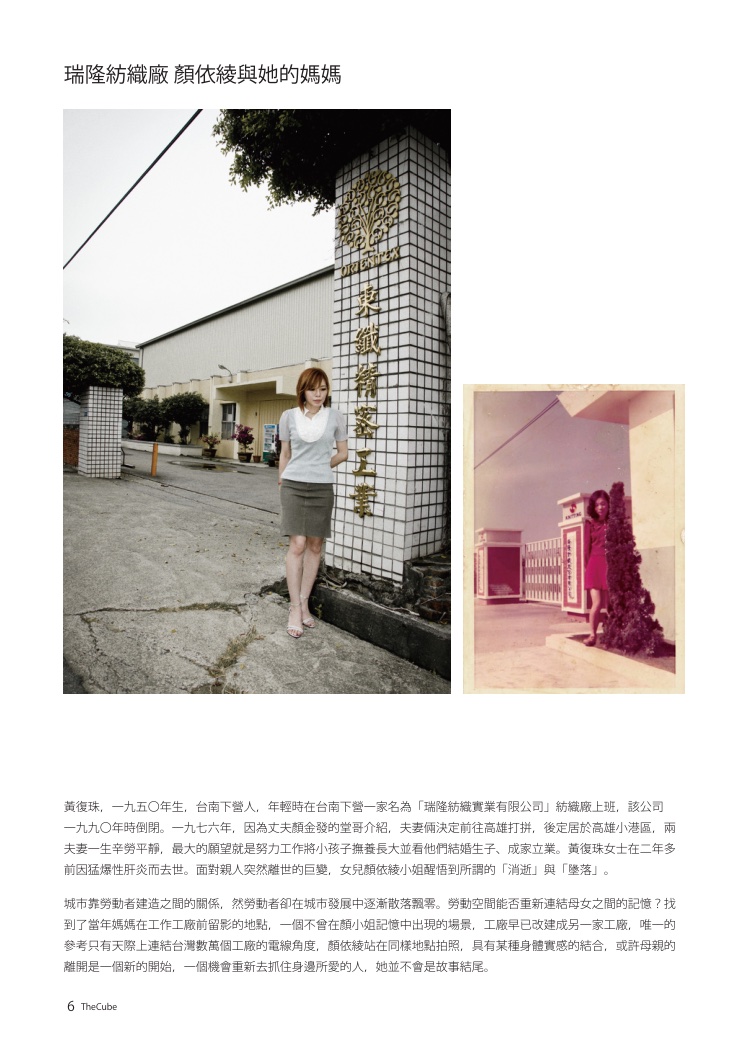
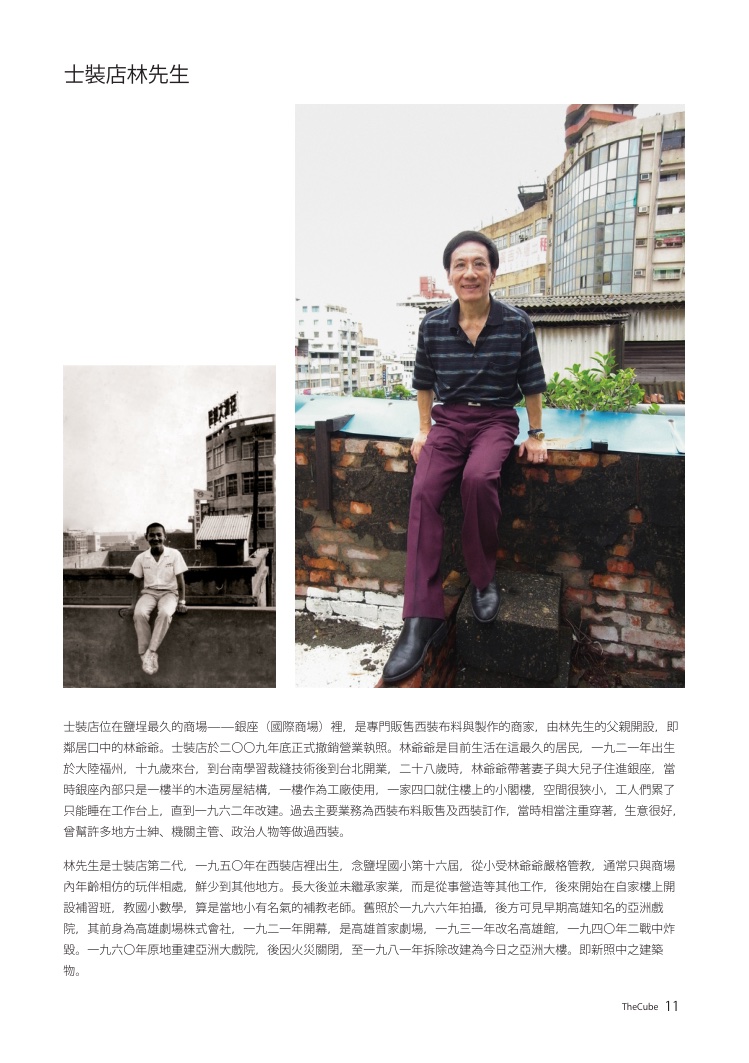
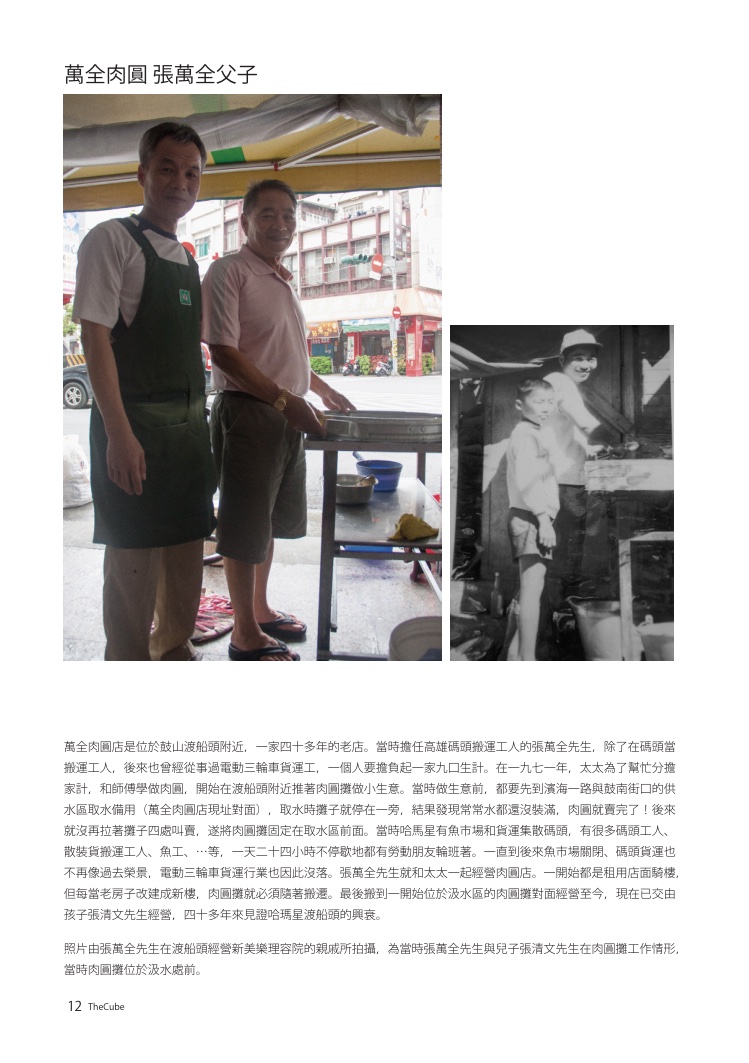
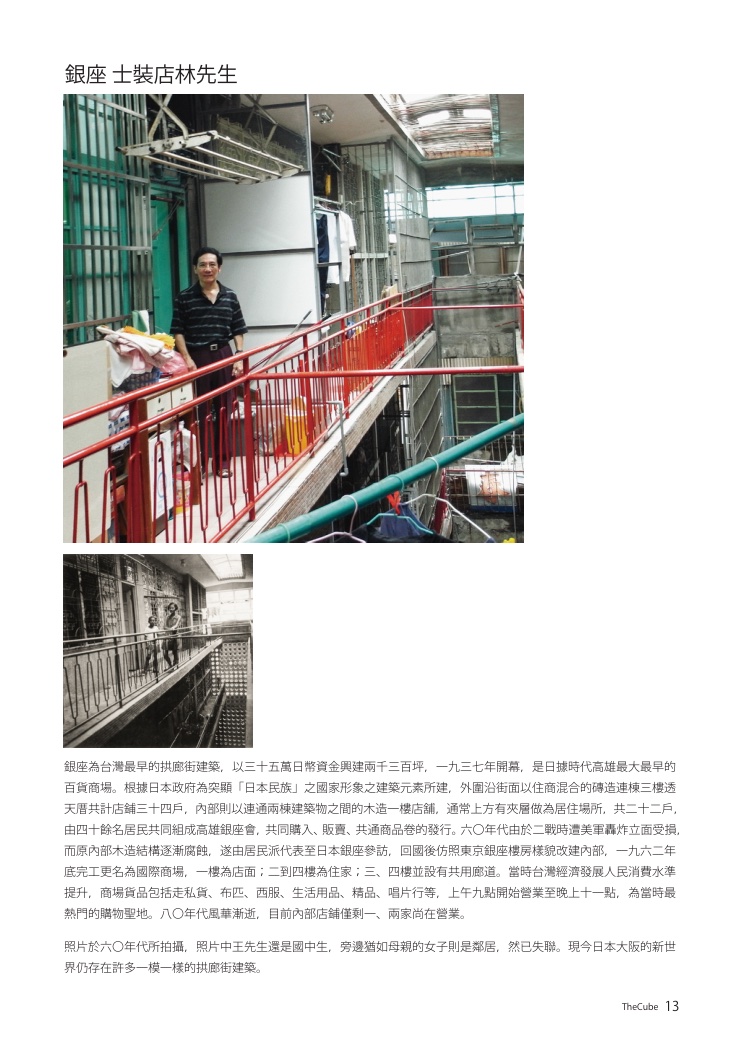
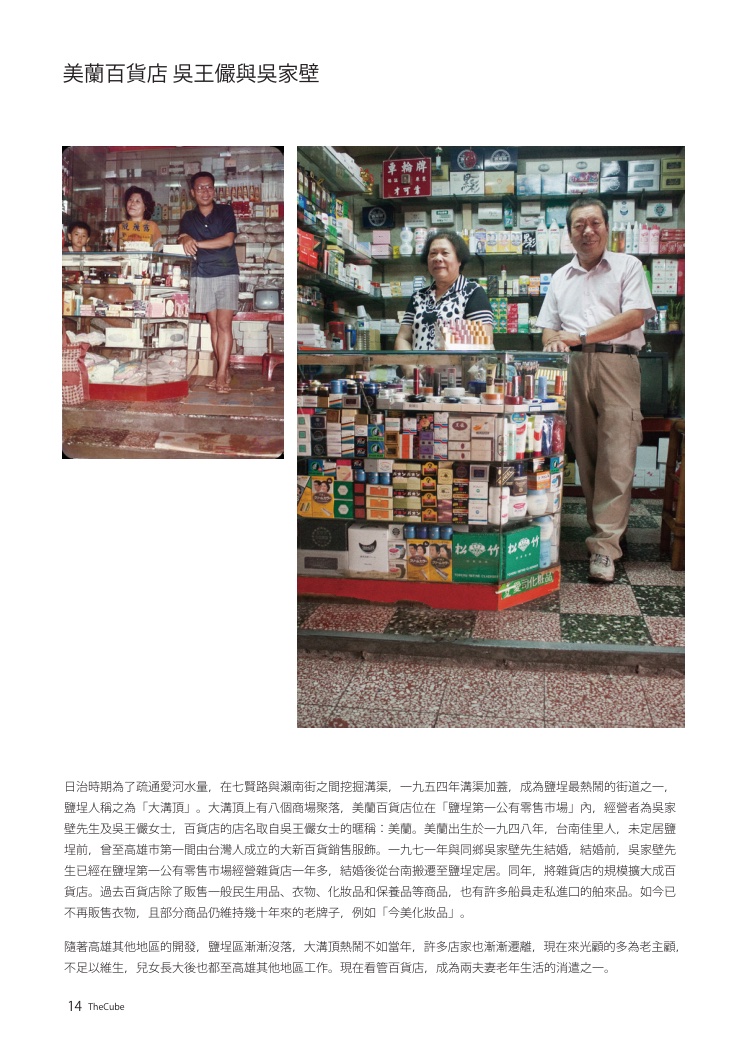
中文
錄地景 Memo-scape
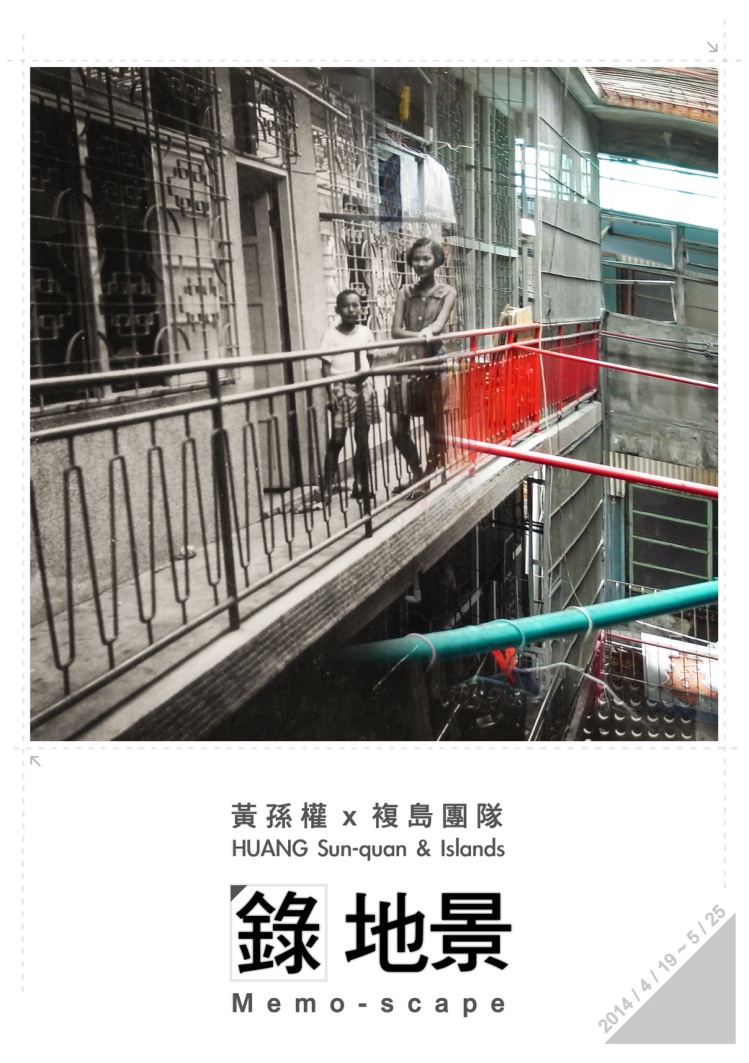
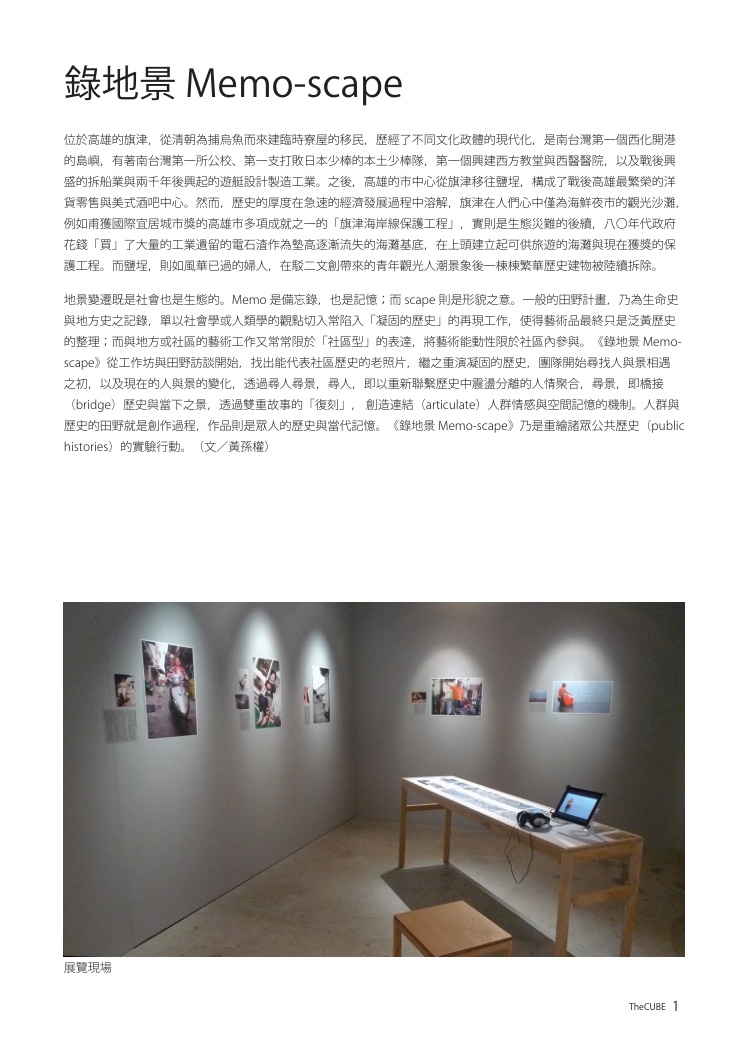
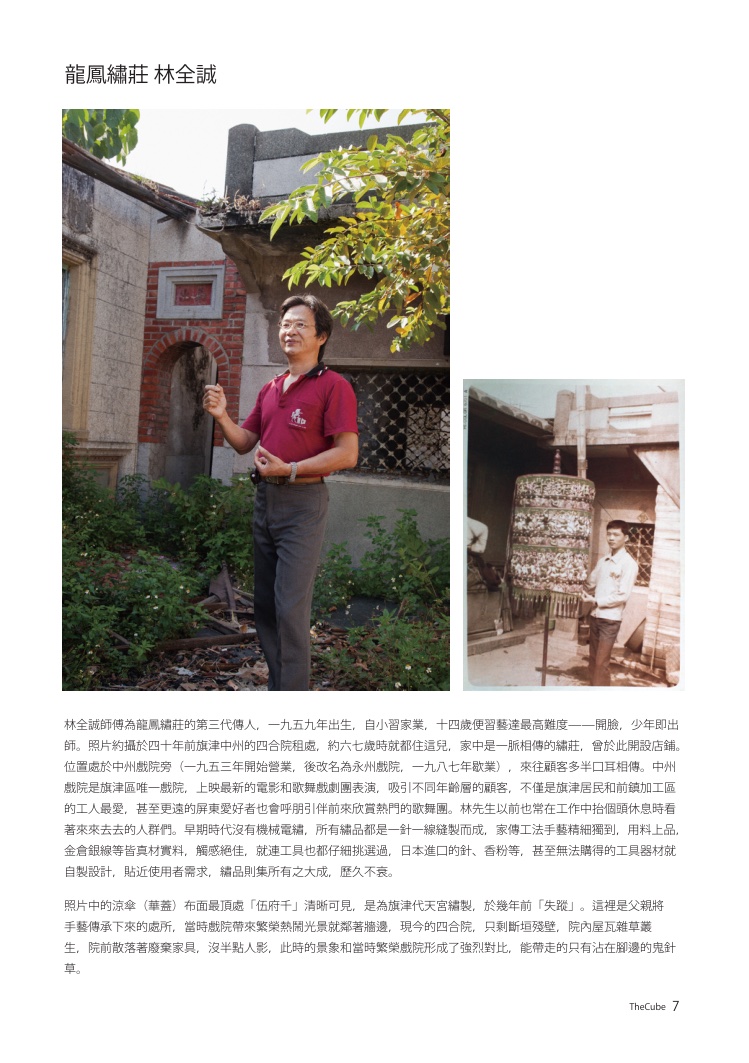
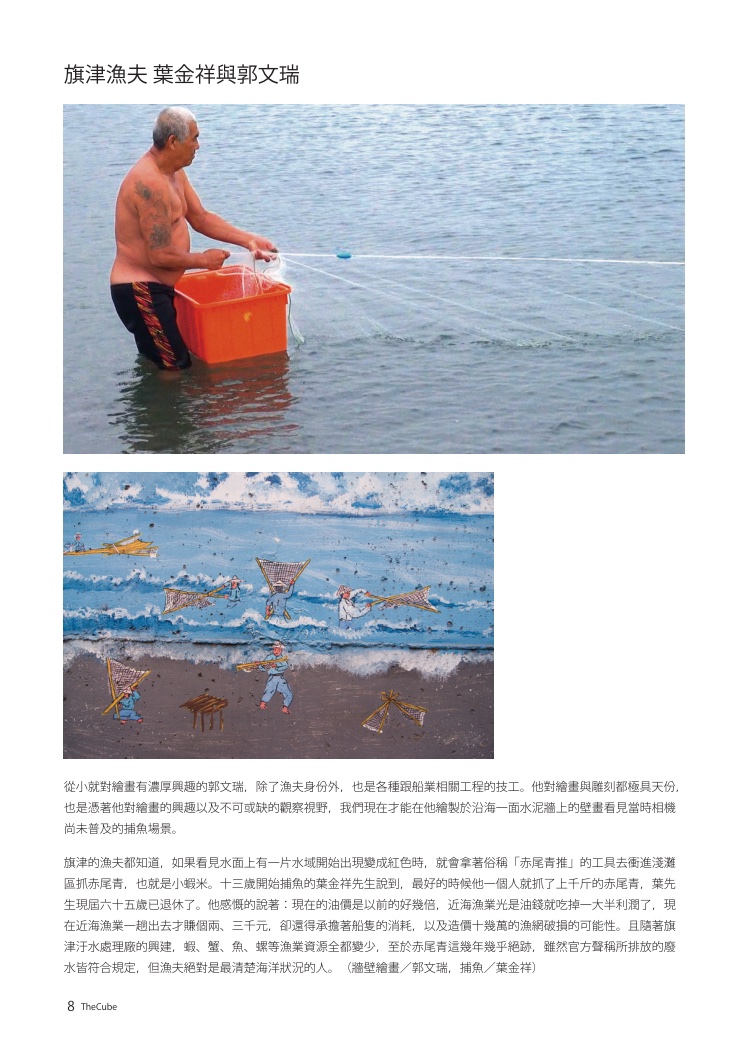
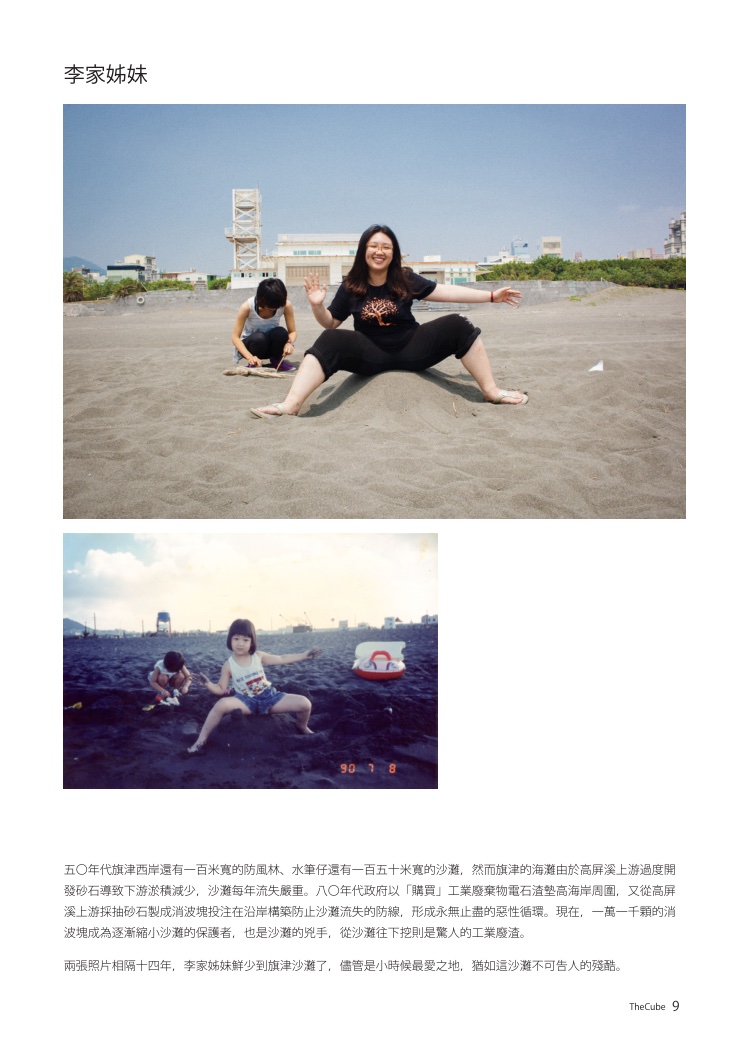
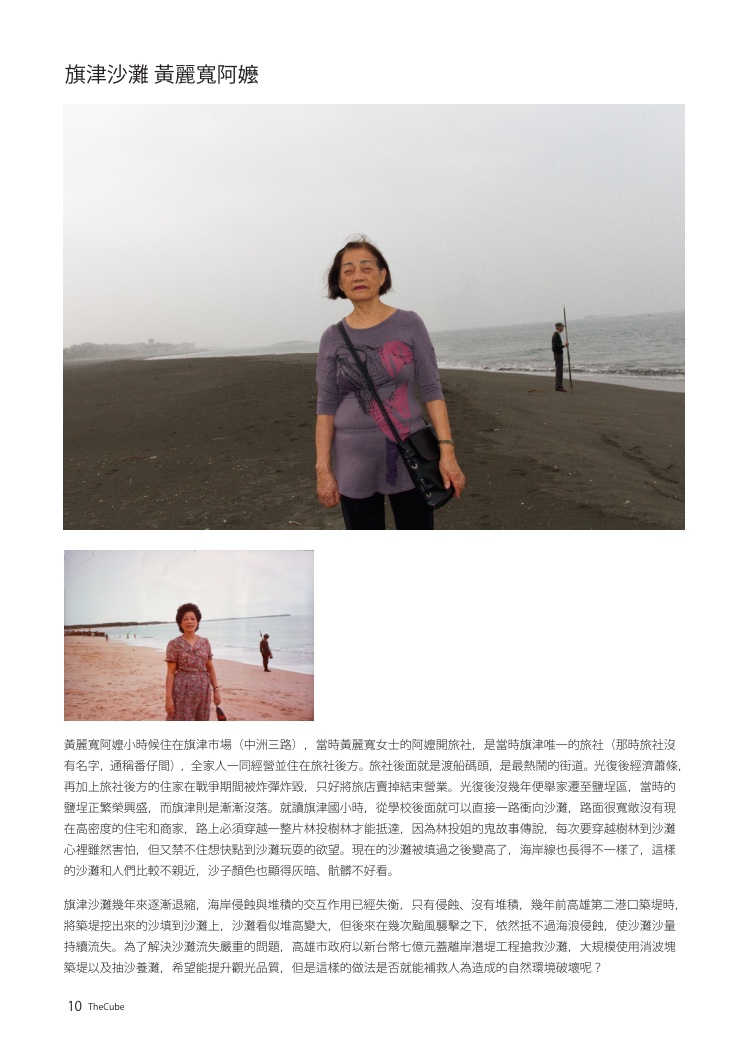
位於高雄的旗津,從清朝為捕烏魚而來建時寮屋的移民,歷經了不同文化政體的現代化,是南臺灣第一個西化開港的島嶼,有著南臺灣第一所公校、第一支打敗日本少棒的本土少棒隊,第一個興建西方教堂與西醫醫院,以及戰後興盛的拆船業與兩千年後興起的遊艇設計製造工業。之後,高雄的市中心從旗津移往鹽埕,構成了戰後高雄最繁榮的洋貨零售與美式酒吧中心。然而,歷史的厚度在急速的經濟發展過程中溶解,旗津在人們心中僅為海鮮夜市的觀光沙灘,例如甫獲國際宜居城市獎的高雄市多項成就之一的「旗津海岸線保護工程」,實則是生態災難的後續,八〇年代政府花錢「買」了大量的工業遺留的電石渣作為墊高逐漸流失的海灘基底,在上頭建立起可供旅遊的海灘與現在獲獎的保護工程。而鹽埕,則如風華已過的婦人,在駁二文創帶來的青年觀光人潮景象後一棟棟繁華歷史建物被陸續拆除。
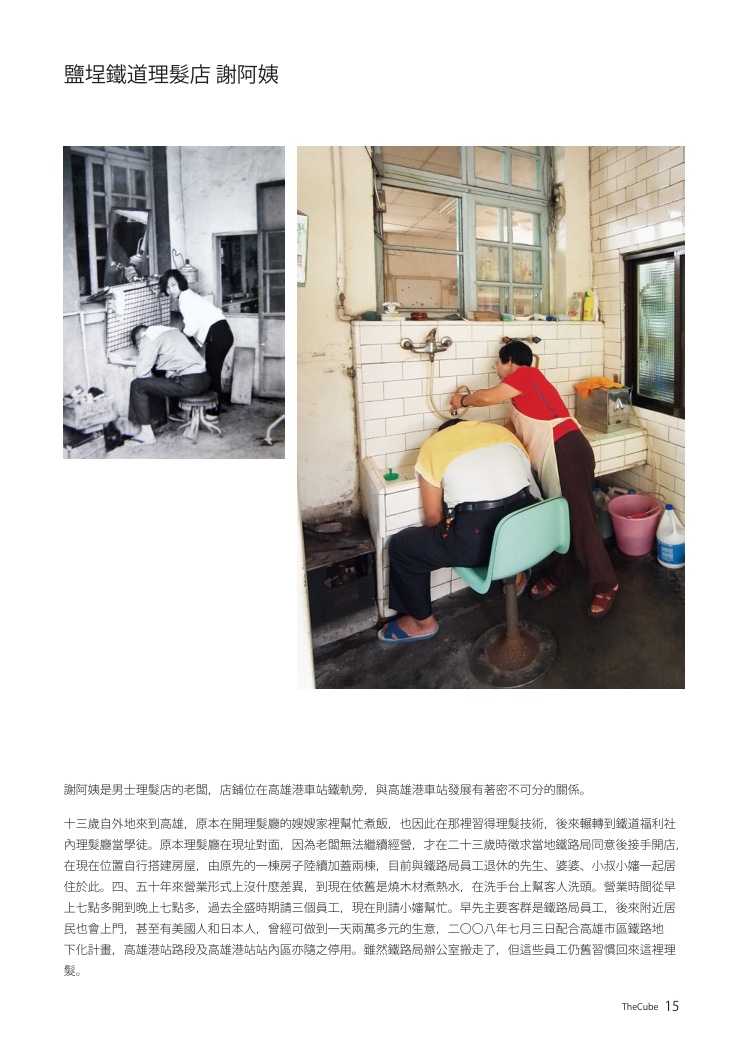
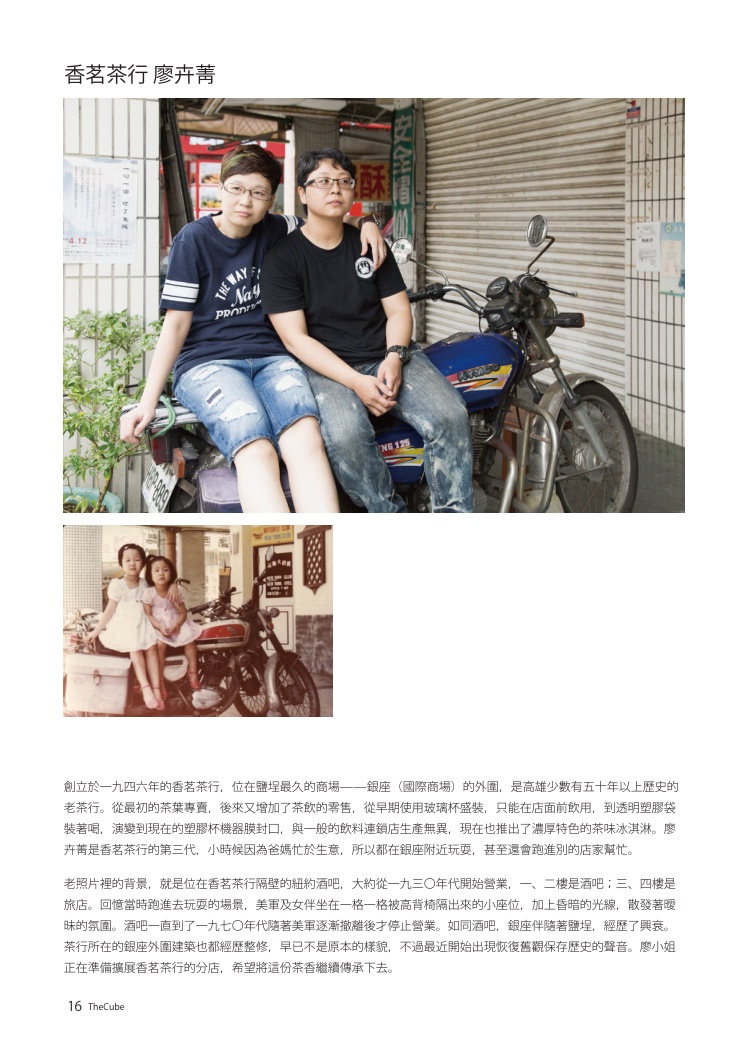
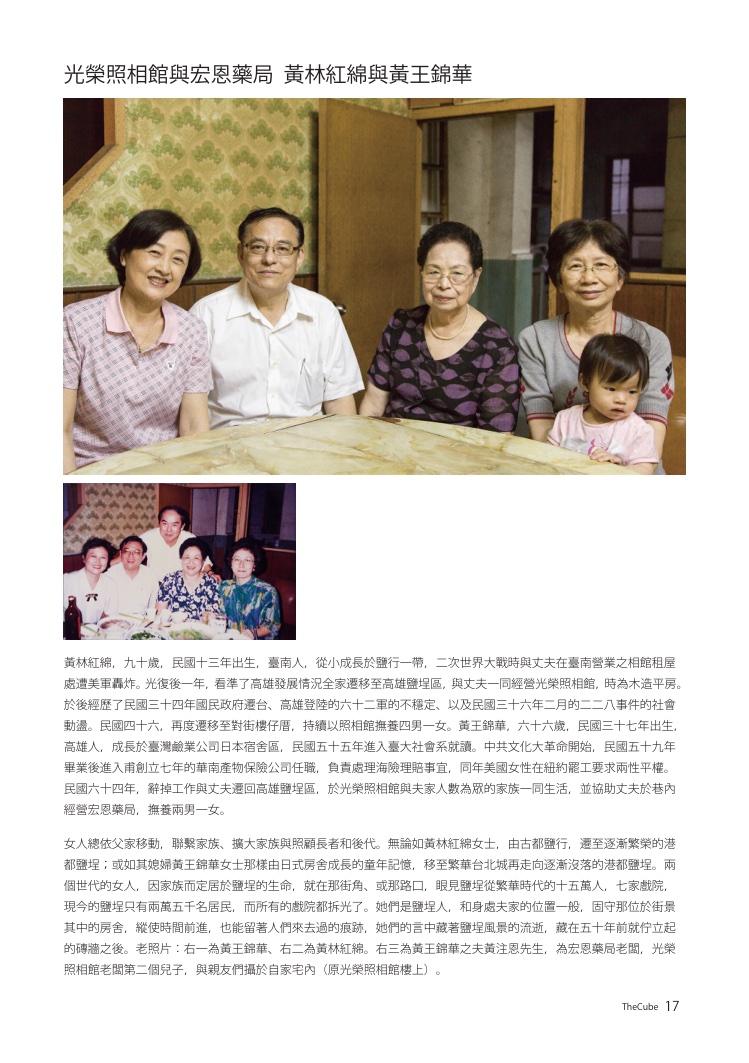
地景愛遷既是社會也是生態的。Memo 是備忘錄,也是記憶;而scape 則是形貌之意。一般的田野計畫,乃為生命史與地方史之記錄,單以社會學或人類學的觀點切入常陷入「凝固的歷史」的再現工作,使得藝術品最終只是泛黃歷史的整理;而與地方或社區的藝術工作又常常限於「社區型」的表達,將藝術能動性限於社區內參與。《 Memo-scape》從工作坊與田野訪談開始,找出能代表社區歷史的老照片,繼之重演凝固的歷史,團隊開始尋找人與景相遇之初,以及現在的人與景的變化,透過尋人尋景,尋人,即以重新聯繫歷史中震盪分離的人情聚合,尋景,即橋接(bridge) 歷史與當下之景,透過雙重故事的「復刻」,創造連結 (articulate)人羣情感與空間記憶的機制。人羣與歷史的田野就是創作過程,作品則是眾人的歷史與當代記億。
《 Memo-scape》乃是重繪諸眾公共歷史(publichistories)的實驗行動。(文/黃孫權)
黃孫權
現任高師大跨領域藝術研究所教授,研究專長包含建築與空間理論、文化與媒體、社會運動與跨領域藝術,香港嶺南大學(2005) 和中國美院(2013)客座,前《破報》總編輯。1997號召組織臺灣第一場反仕紳化都市運動「反對市府推土機」,會參與臺灣與香港多項社會與媒體改革運動。近年開始從事策展與藝術創作,在高雄成立「搗蛋藝術基地」,作品會參加深圳香港城市/建築雙城雙年展,《我們家在康樂裏/城市光柵》(2007)、《日常生活的一天》(2013),北京中央美術學院美術館雙年展《烏托邦出櫃》(2014),以及個展《無地之愛——在田野與社會性空間的藝術》(2014)。策劃過《資藏巖 GAPP》(2003-4)、《覹空間》(2012)、高美館的《個展一望向彼方亞洲新娘之歌》(2010)、高雄市勞工博物館的《跨國候鳥在臺灣》移工展(2011)、《生日說書人暨在地歷史攝影展》(2011)、《無地之愛——在田野與社會性空間的藝術》(2014)等。著有《綠色推士機》,譯有《自己幹文化一英國九零年代的派對與革命》。
團隊 Islands
為高師大黃孫權教授於 2011年底組成,關注田野、空間與藝術生產,因應基地條件組織不同的底藝術家參與。擅以科技技術聆聽/記錄底層生活,改造現存社會條件或幹擾主流意見,並陳藝術家與民眾的張力辯證關係,讓政治正確在對抗的作品中出現而非藝術家單方面的正當性宣稱。其作品〈複島〉,創造了自動敘事機器 (auto-narrationmachine)與利用開源碼製作的AR軟件進行旗津的空間歷史探究,會獲國藝會、文化部、高雄市文化局補助,於高雄多處進行展出。
複島團隊成員:李學佳、蔡佳嬴、甘志雨、顏信昌、郭書瑋、張雅涵、汪祖諒、董孟涵、江怡璇、林芸竹、吳修銘、張淑玲、苗又文、李宇哲、陳羿樺
English
--- The Memo-scape exhibition is set in Kaohsiung City's historic Cijin District.Mullet fishermen were the district's earliestmodern residents, occupying work sheds along the shoreline here during fishing season in the 18th century. Thepolitical and economic changes that buffeted Taiwan through the following centuries gradually introduced to thedistrict an eclectic and dynamic mix of cultural and commercial influences. After the mid-1800s, Cijin's commercialharbor, Taiwan's first modern international port, bustled with foreign merchant ships. As southern Taiwan's windowon the world, Cijin boasts a history replete with Taiwan "firsts", including Taiwan's first public school, Taiwan's firstprimary school baseball team to beat Japan's primary school baseball, Taiwan's oldest Christian church, and Taiwan'soldest Western hospital. Cjin emerged from the Second World War as the focal point of the nation's highly lucrativeship-breaking industry. In the waning years of the 20th century, Cijin again secured global recognition as a center ofyacht design and manufacturing. Also, as the center of Kaohsiung shifted toward the Yancheng District, Yancheng's commercial quarter became a popular youth-oriented destination for imported retail-goods shopping and pubnightlife. Nevertheless, rapid economic change in the district has taken a heavy toll on the district's historic heritage.In the minds of many, Cijin remains firmly associated with its locally famous seafood night market. Furthermore, Cijin's Shoreline Protection Project, one of the items recognized in Kaohsiung City's 2012 International Livable Community(LivCom) Award, is in actuality an overdue response to the steady loss of natural shoreline in the area. The surfaceof the massive coastal earthworks built by the government during the 1980s using carbide slag was retrofittedfor double duty as a coastal tourism destination. Also, Yancheng has already lost much of its youth business tothe trendy new Pier-2 Cultural-Creative District. With visitor numbers dwindling, heritage buildings dating back toYancheng's glory days of trade and industry are one by one being bulldozed to make way for new development.Social and ecological factors contribute to the reshaping of landscapes."Memo" abbreviates the English wordmemorandum as well as the word memory, while "scape" infers an extensive view or perspective. The goal ofmost feldwork is to record life and local histories. However, reliance on a purely sociological or anthropologicalperspective often devolves into recapitulations of "'static history" that relegate artwork to the depiction of a distant,faded past. However, local and community art programs often suffer from being unable to achieve expressionbeyond their local context, thus confining the impact to the small circle of program participants.Memo-scape usesworkshops and feldwork to find historical photographs best suited to represent static history. Our team sought thepoint in time when modern history's path first intersected with a specific geographic location and then traced thechanges in both contemporary Culture and that location up to the present time. Our work targeted both peopleand locations. People help to reinstate long-severed emotional bonds, while locations bridge historical scenes withtheir current appearance. The replication achieved through this dual narrative creates mechanisms that articulatecollective afhnities and spatial memories. Communities and history thus feed the process that creates our sharedexperiences and collective memories. Therefore, Memo-scape is a practical initiative designed to recast publichistories.(HUANG Sunquan)
HUANG Sunquan
Assistant Professor of Graduate Institute of Interdisciplinary Art, National Kaohsiung Normal University . He is editor-in-chief of Pots Weekly, a activist engaging social movement deeply. Dr. Huang has begun engaging in curatorshipand artistic creation, such as participating in Shenzhen & Hong Kong Bi-City Biennale of Urbanism\Architecture,,"A Day"(2013), The 2nd CAFAM Biennale : The Invisible Hand: Curating as Gesture "Coming Out! Utopias"(2014) andsolo exhibition "U-topophilia-Art in Field and Societal Space" (2014).Curatorial projects include "Treasure Hill GAPP(Global Artivist Participation Plan)" in 2003 and 2004, "Lulu Shur-tzy Hou Solo Exhibition—Look toward the otherside-Song of Asian Foreign Brides in Taiwan" in Kaohsiung Museum of Arts in 2010 and a migrant workers exhibitionat Kaohsiung Labor Museum in 2011-2012. He is an artivist across architecture, media, social movements, and arts.
Islands
was founded in late 2011 under the tutelage of Professor Sun-quan Huang with a focus on field, spatial andartistic productions created by artists with a particular affinity / relationship to a specific project site. The group usescurrent technology to listen to and record the rhythms of life within society's lower echelons, develops programs toimprove current social conditions / give new voice to mainstream opinion, and highlights the dialectical tensionsbetween artists and the public in order to elucidate mainstream political mores as a balance to artists' unilateraltruth claims.
Islands' creative effort used a specially developed auto-narration machine and open-source-based ARsoftware to explore the spatial history of Cijin.Work on this project has received generous support from the NationalCulture and Arts Foundation, Ministry of Culture, and Kaohsiung City Bureau of Cultural Affairs and results havebeen featured in exhibitions held at venues throughout Kaohsiung City.
Islands members:
LI Hsueh-chia, TSAI Chia-ying, KAN Chih-yu, YEN Hsin-chang, KUO Shu-wei, CHANG Ya-han, WANGTsu-liang, TUNG Meng-han, CHIANG Yi-hsuan, LIN Yun-jhu, wu Siou-ming, CHANG Shu-ling, MIAO Yo-wen, LEE Yu-
本體論維度 / Ontological Dimensions