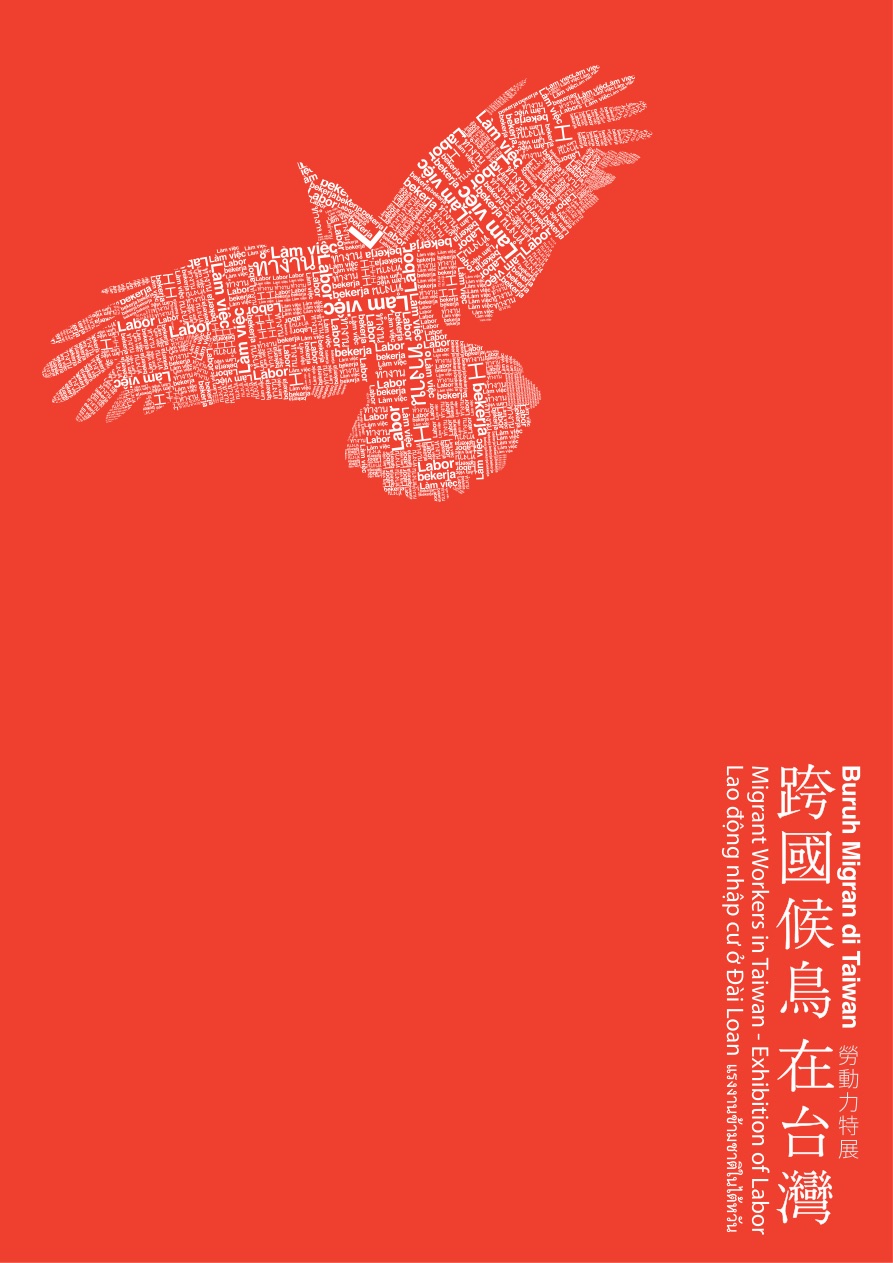
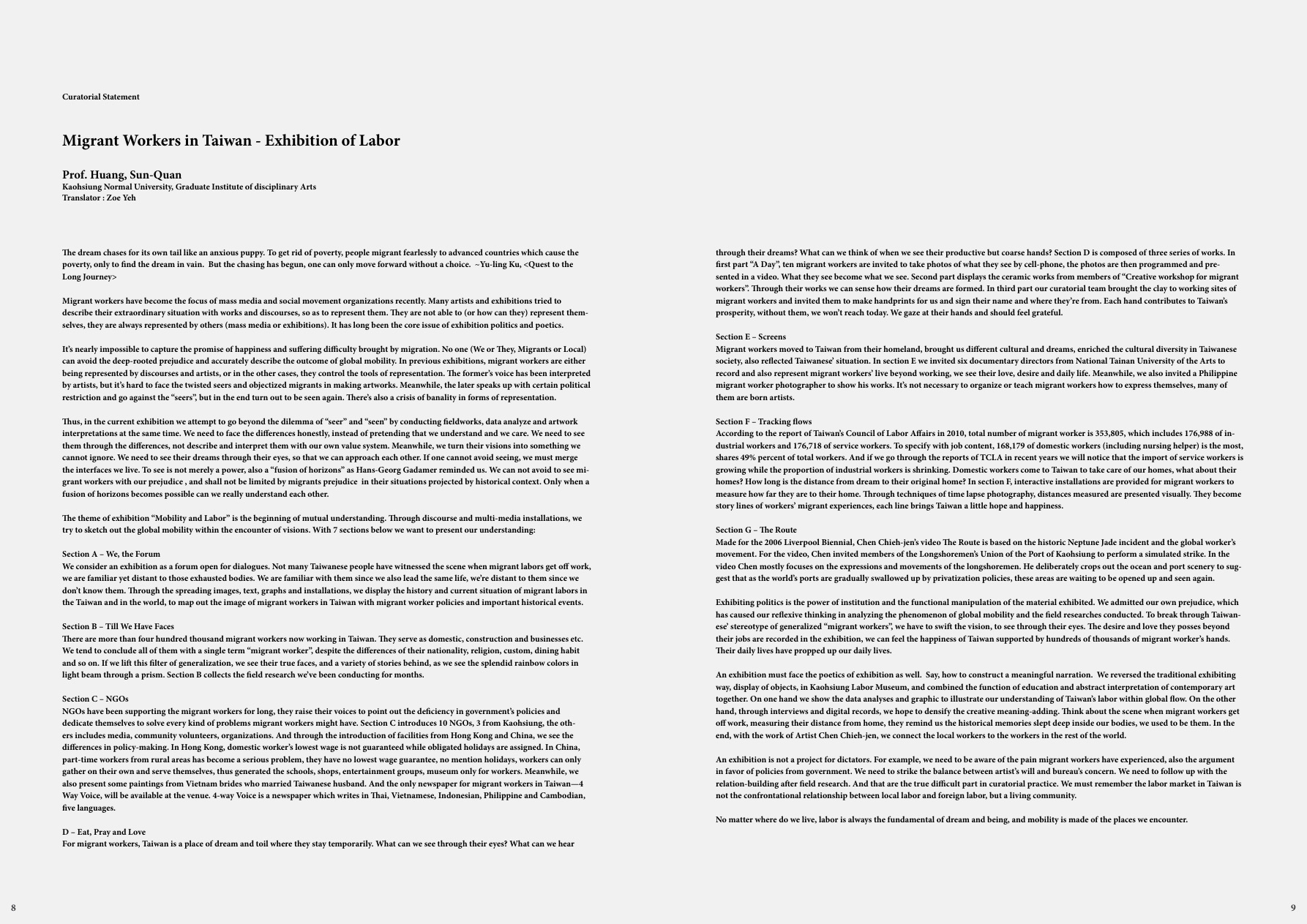
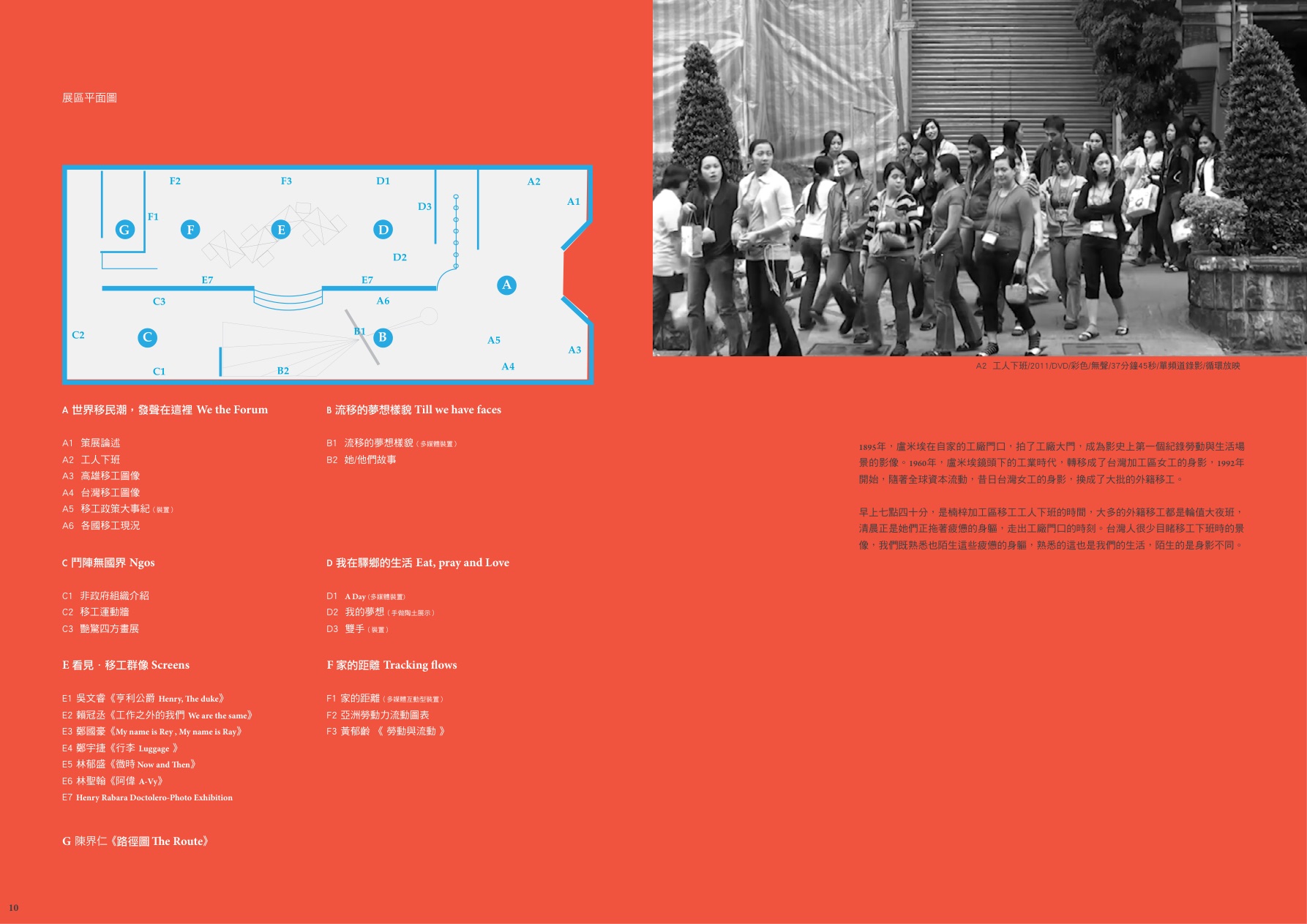
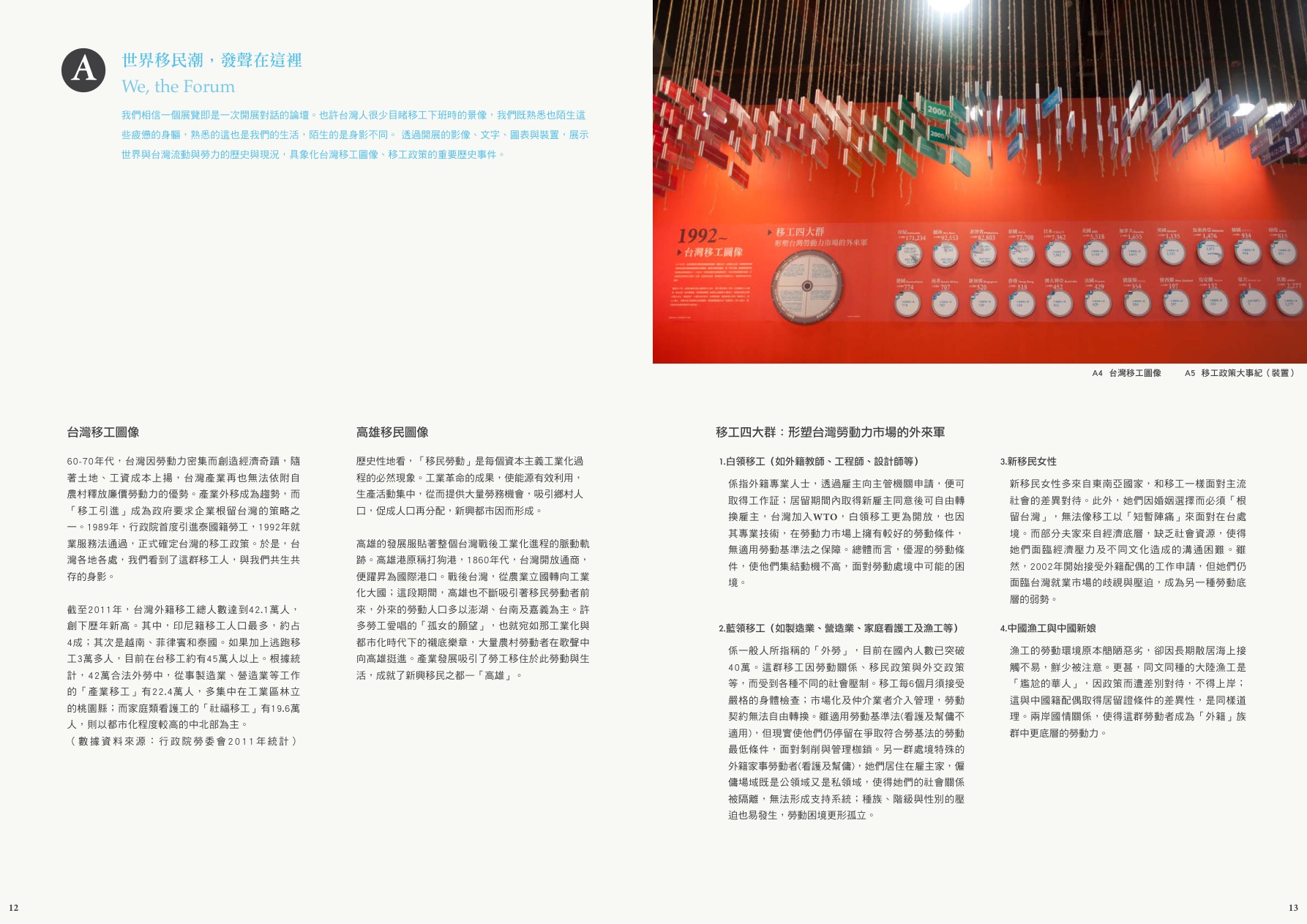
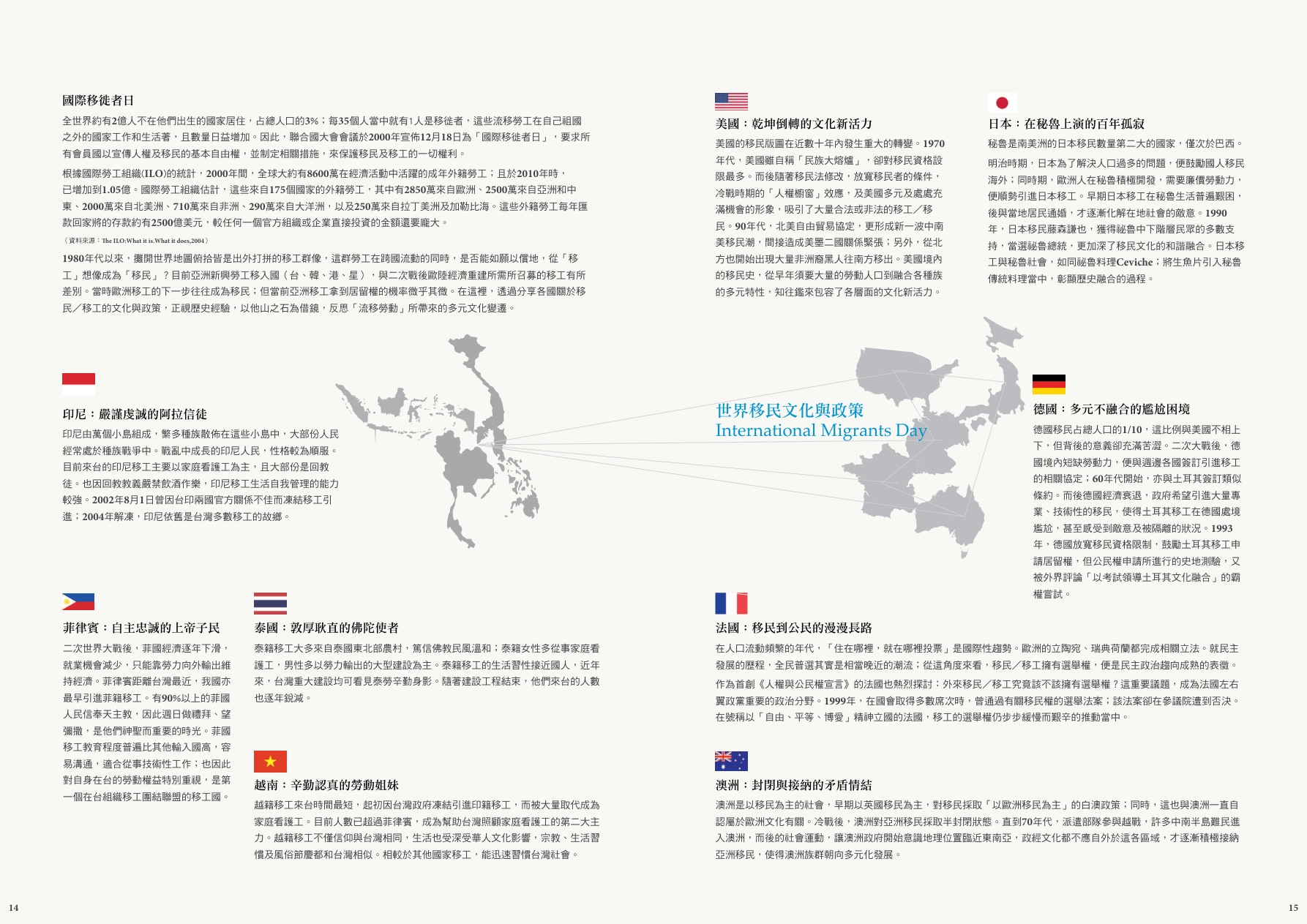
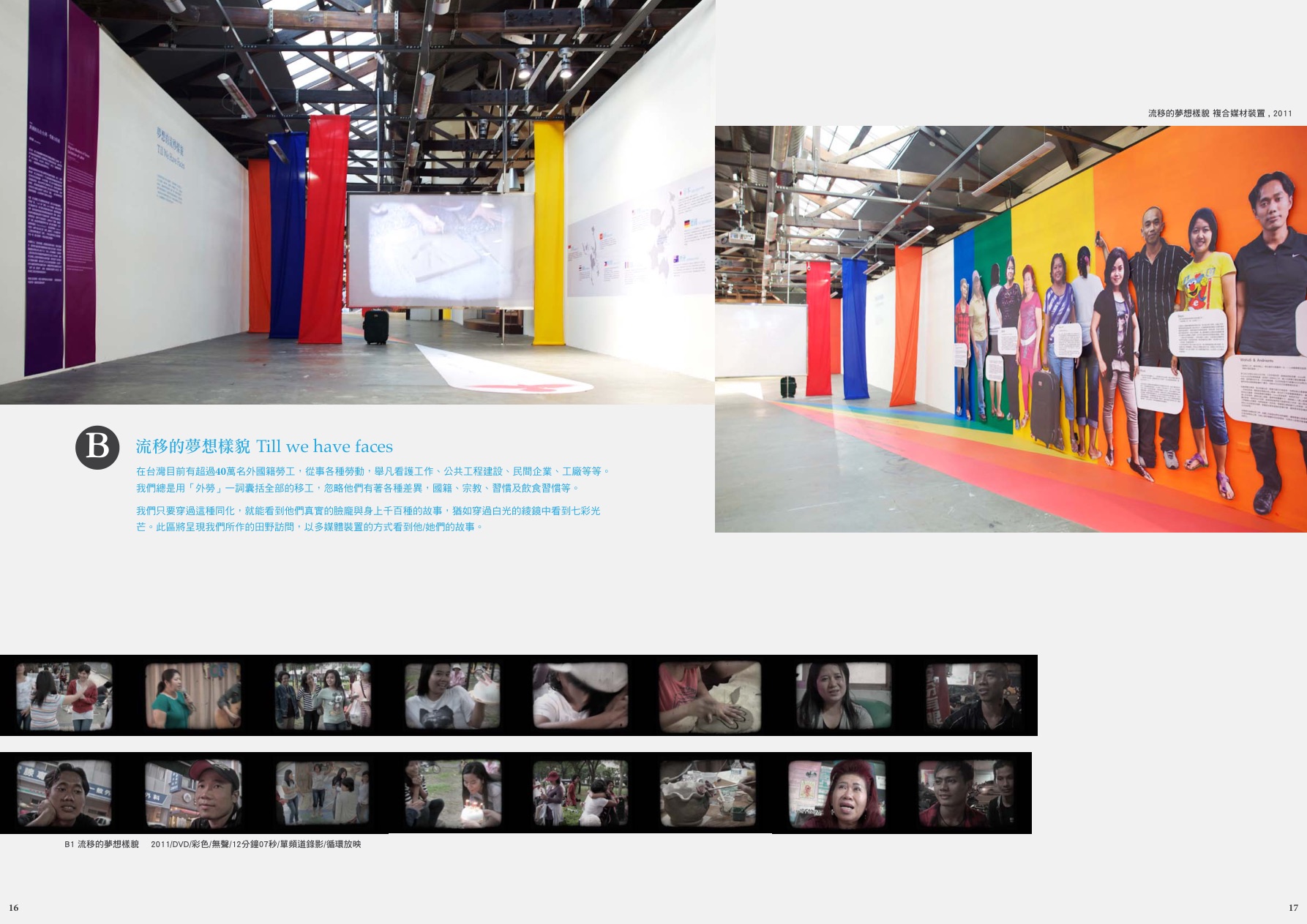
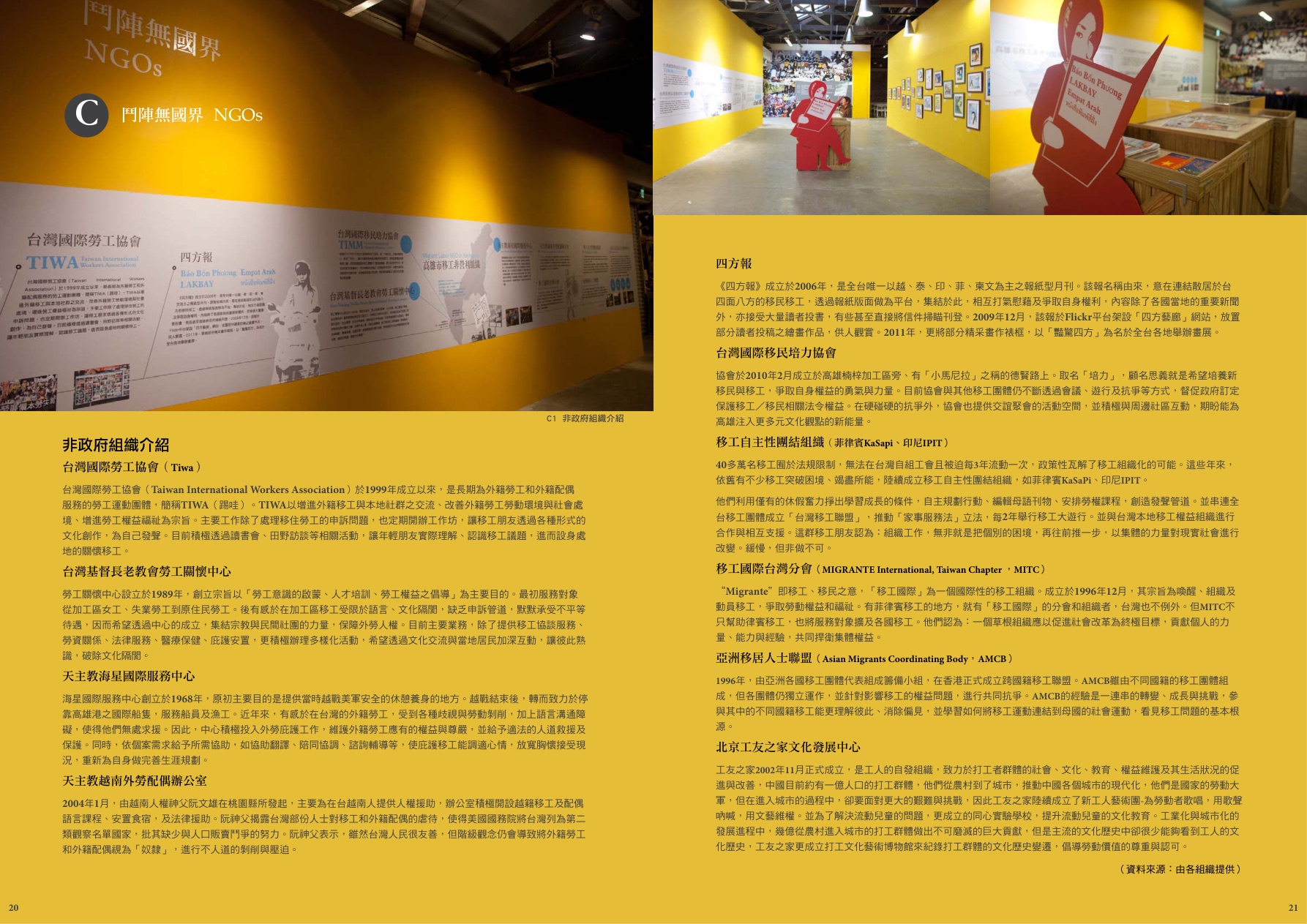
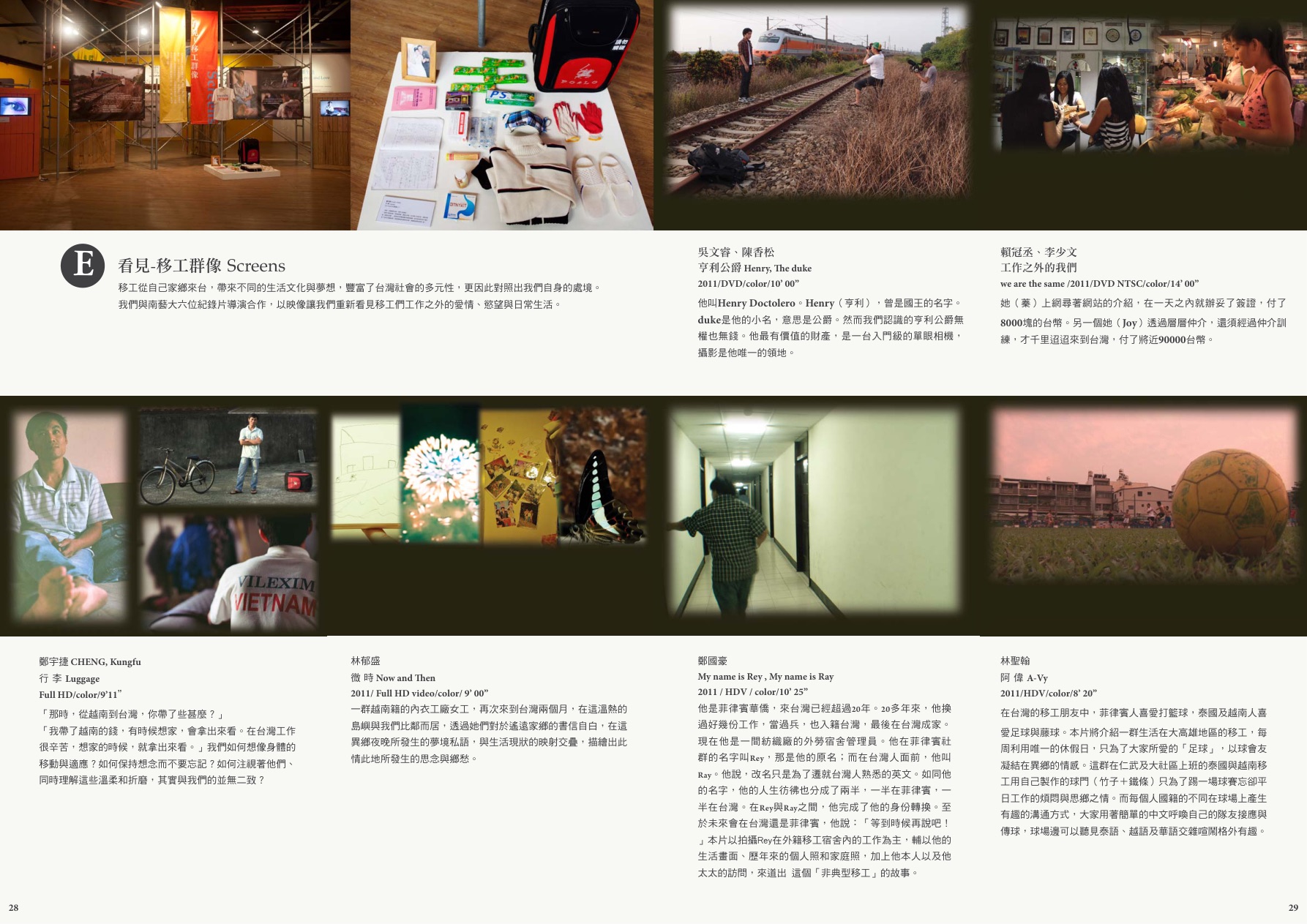
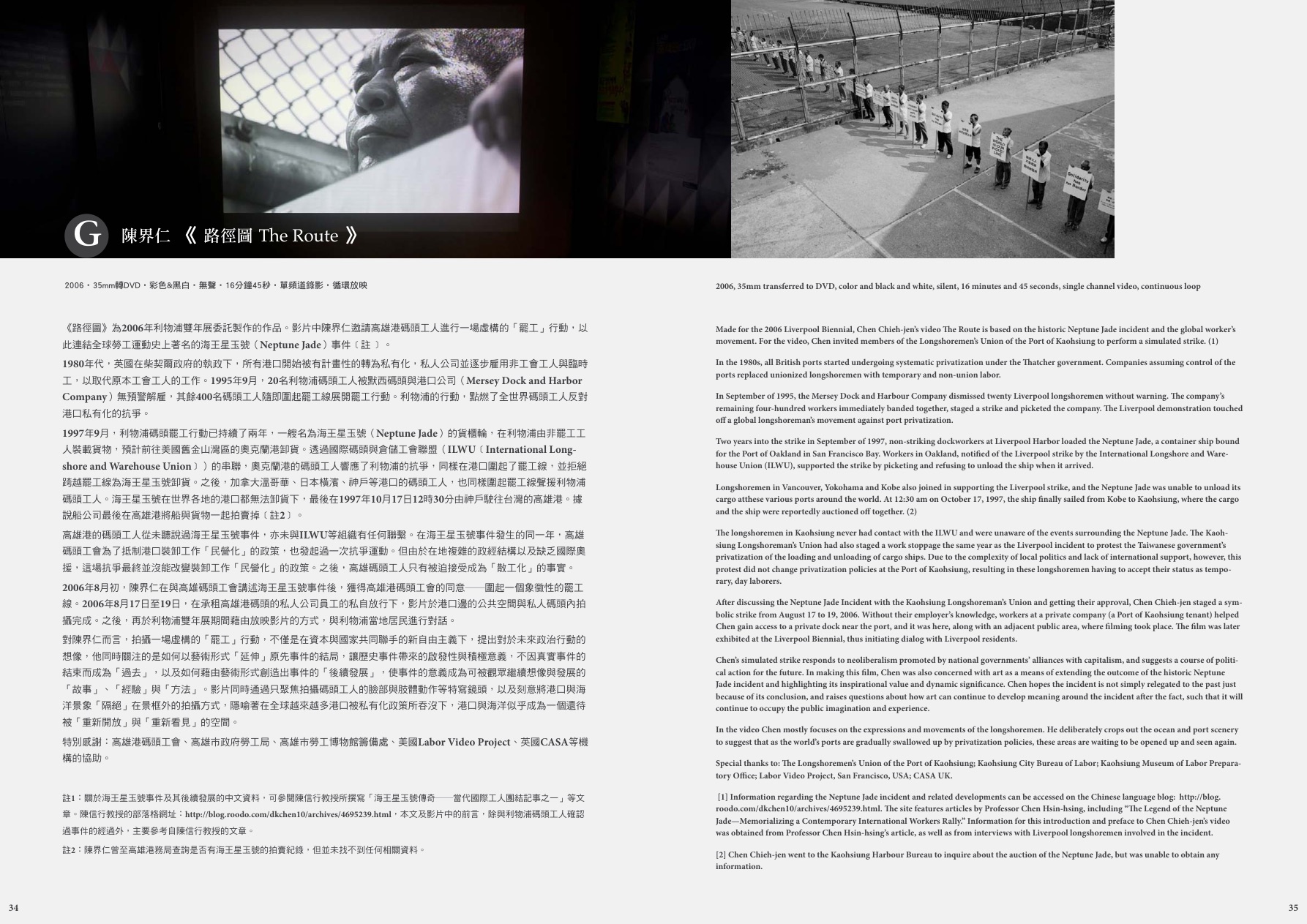
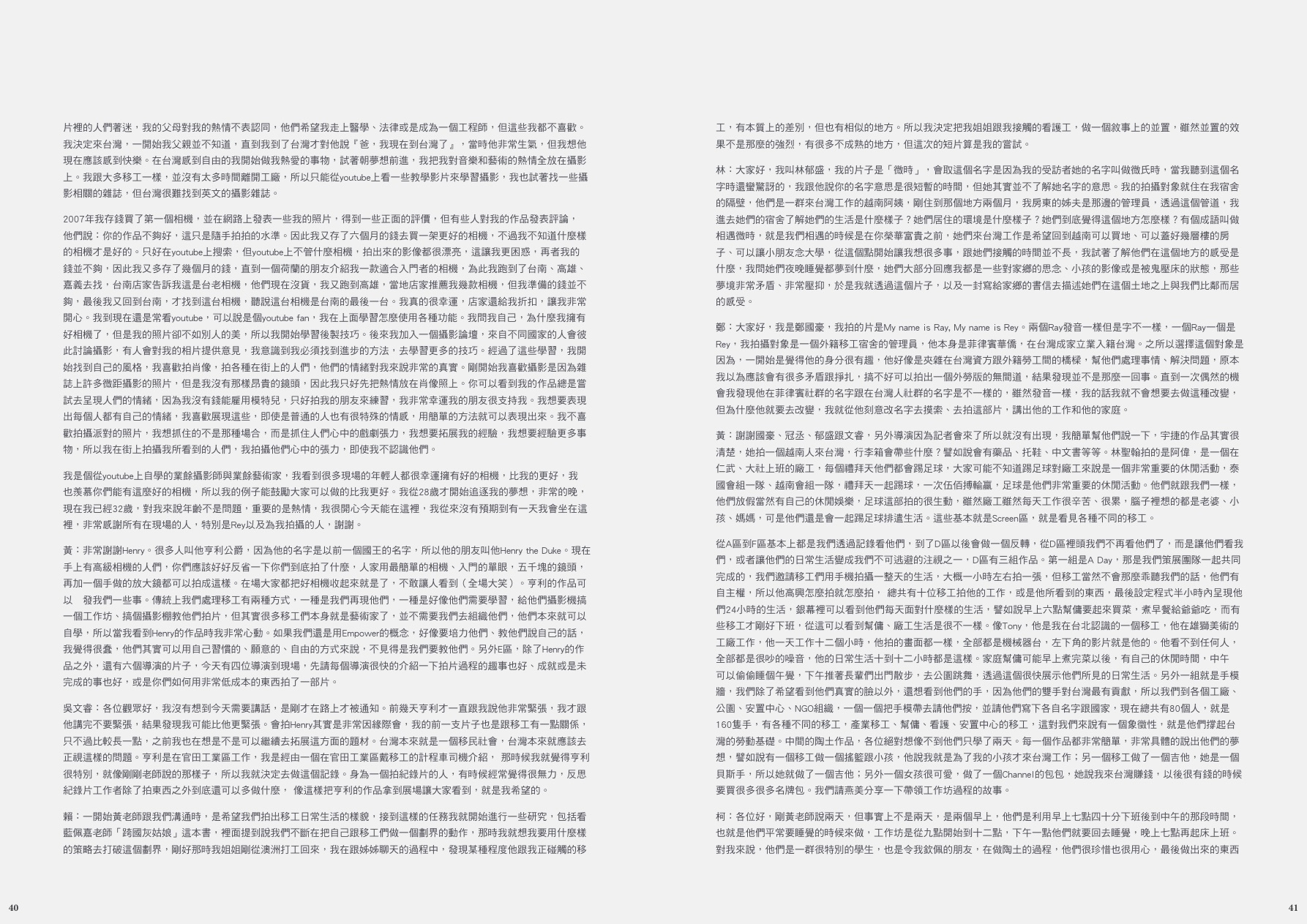
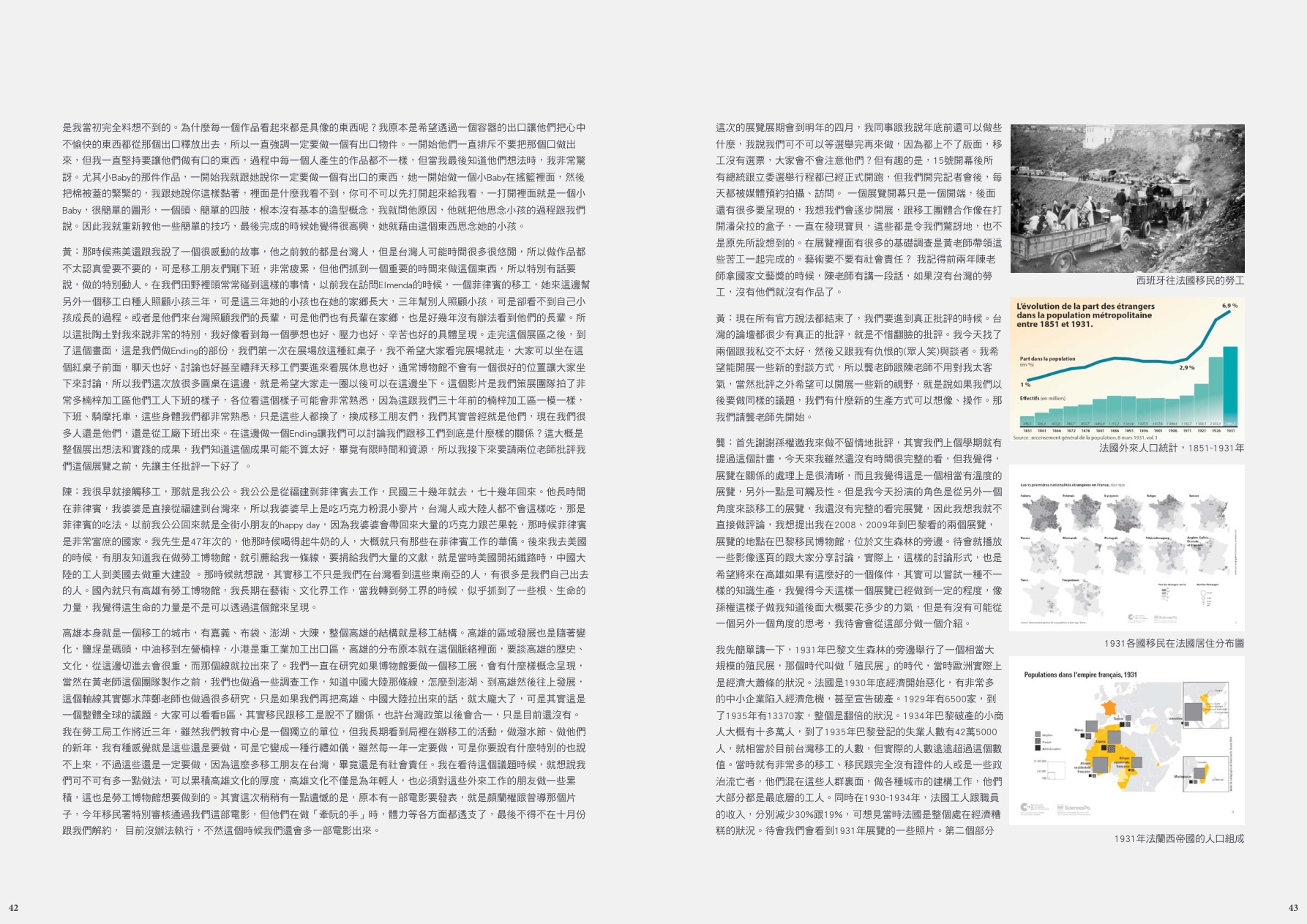
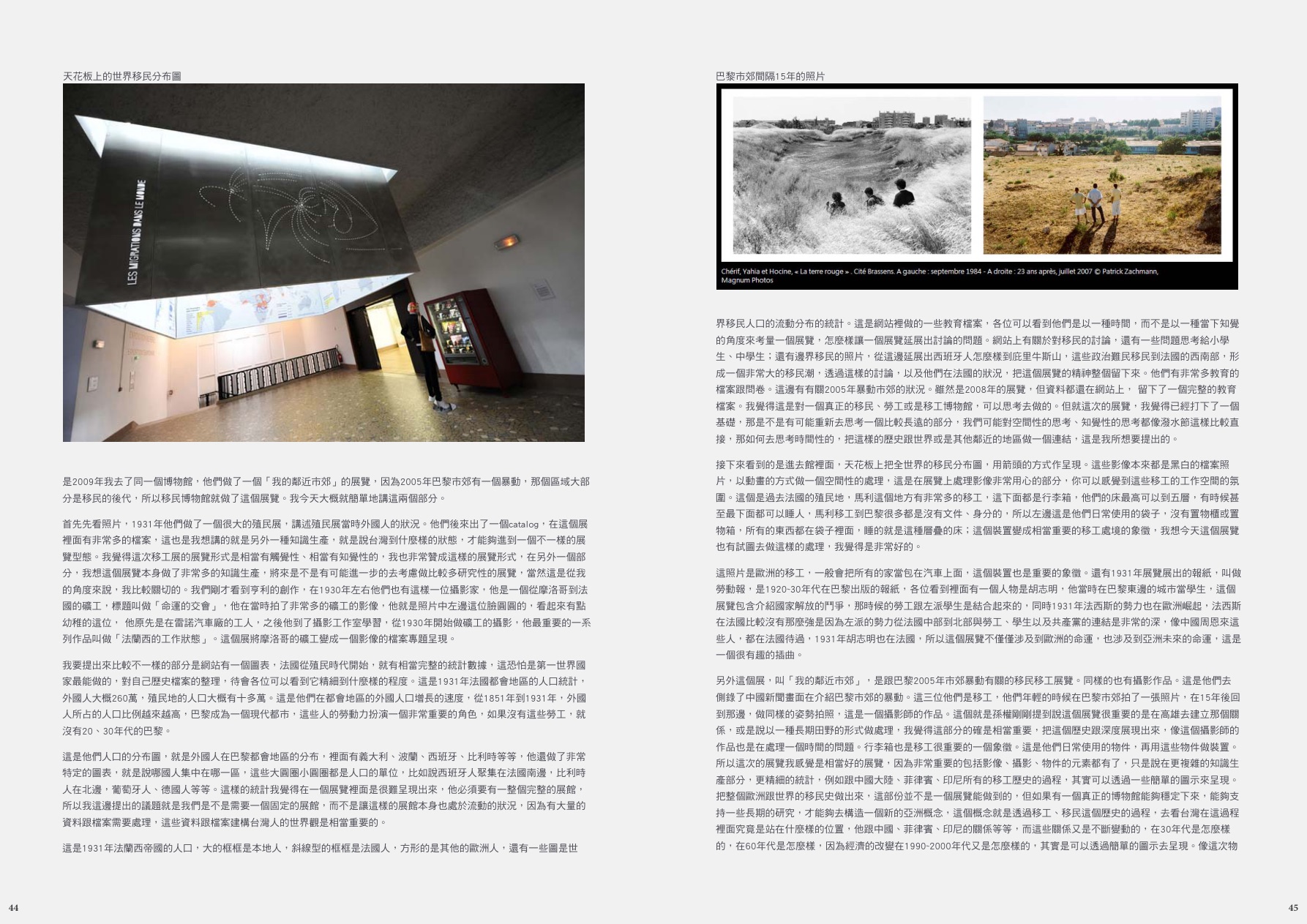
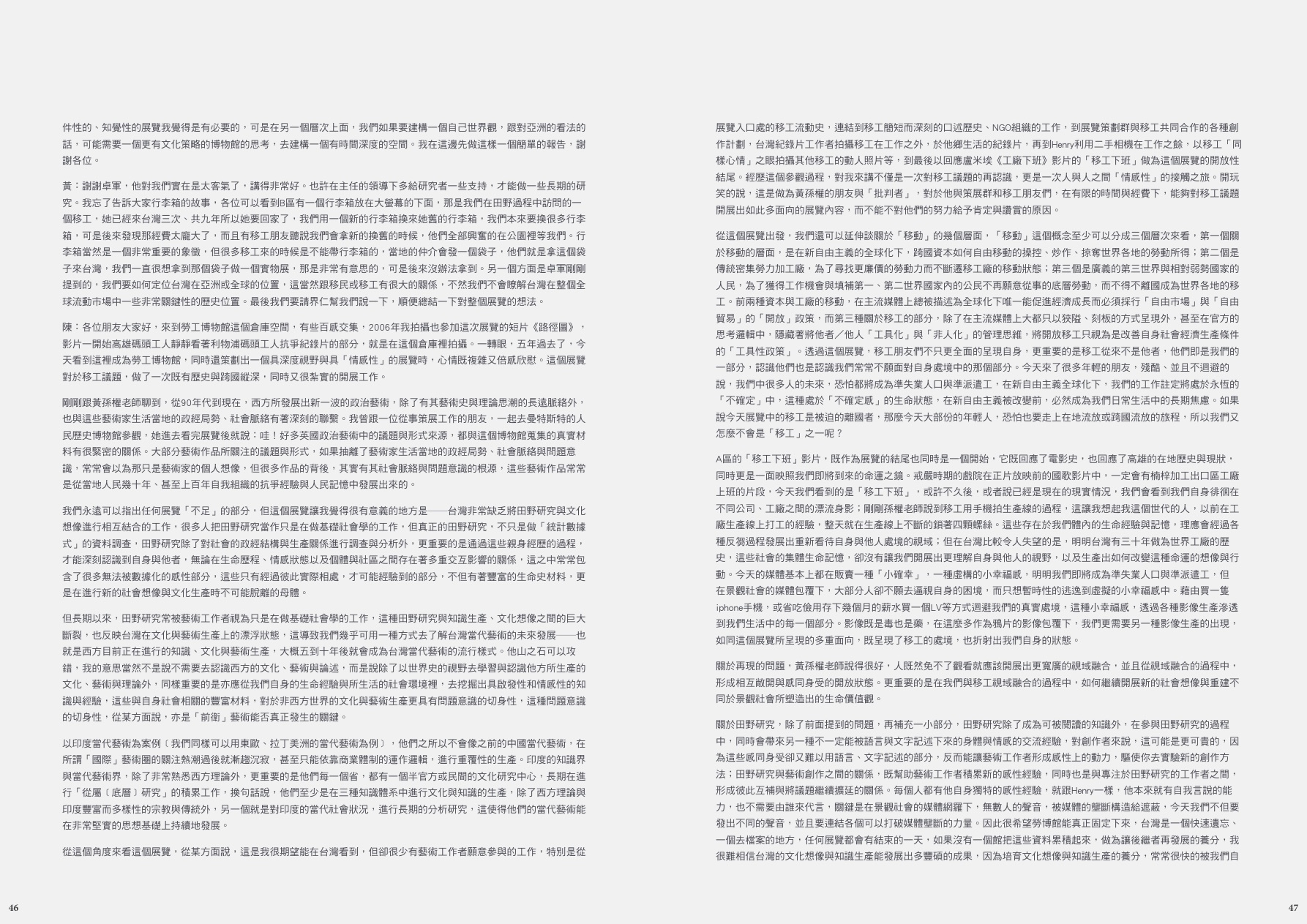
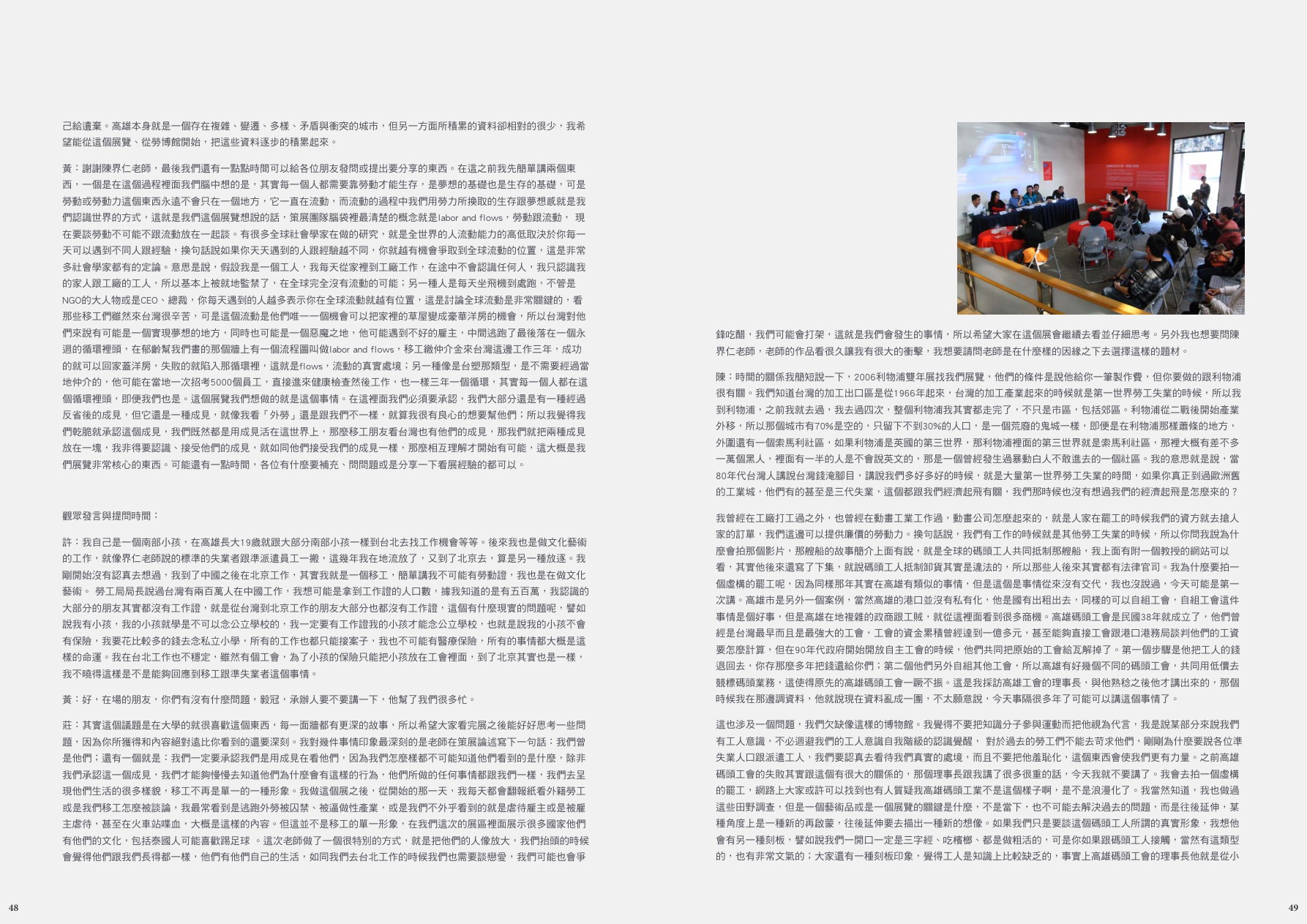
黃孫權(時任高雄師範大學跨領域藝術研究所專任助理教授)為高雄市立勞工博物館策劃之首度大型移工主體特展。展覽分 A–G 七區,從世界移民潮、流移夢想、NGO 串連、驛鄉日常、移工群像、家的距離,到陳界仁《路徑圖》(2006)連結本地碼頭工人與全球工人運動。
策展團隊放棄以「外勞」議題正當性挽救藝術正當性的常見路線,先把創作慾望擱置,靠長期田野訪查、資料分析與藝術轉化,跨過「看 (seer)/被看 (seen)」的兩難。借高達美「視域融合」(fusion of horizons) 概念,把成見坦白攤出來,讓在地觀眾與移工的視野互相穿過。
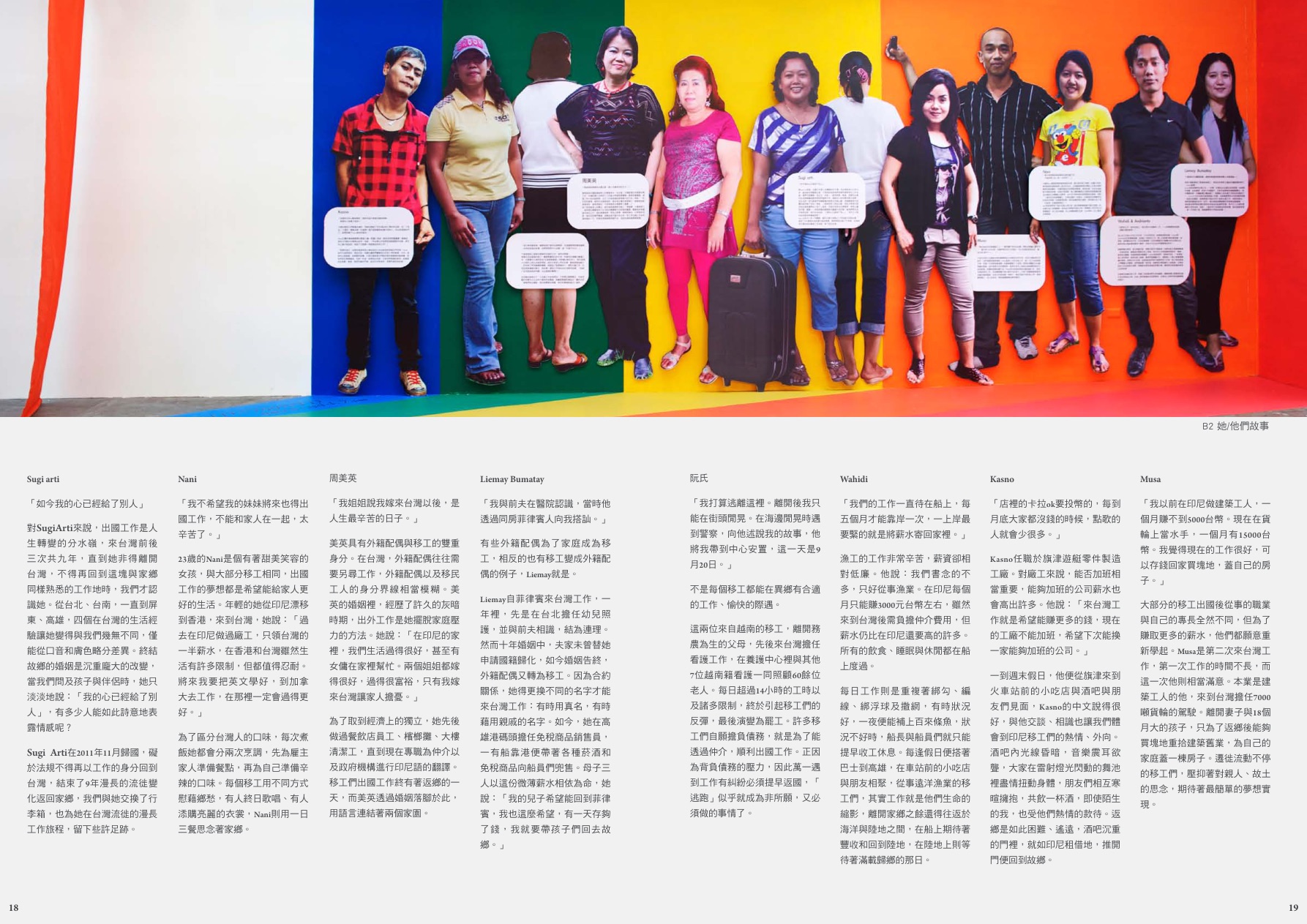
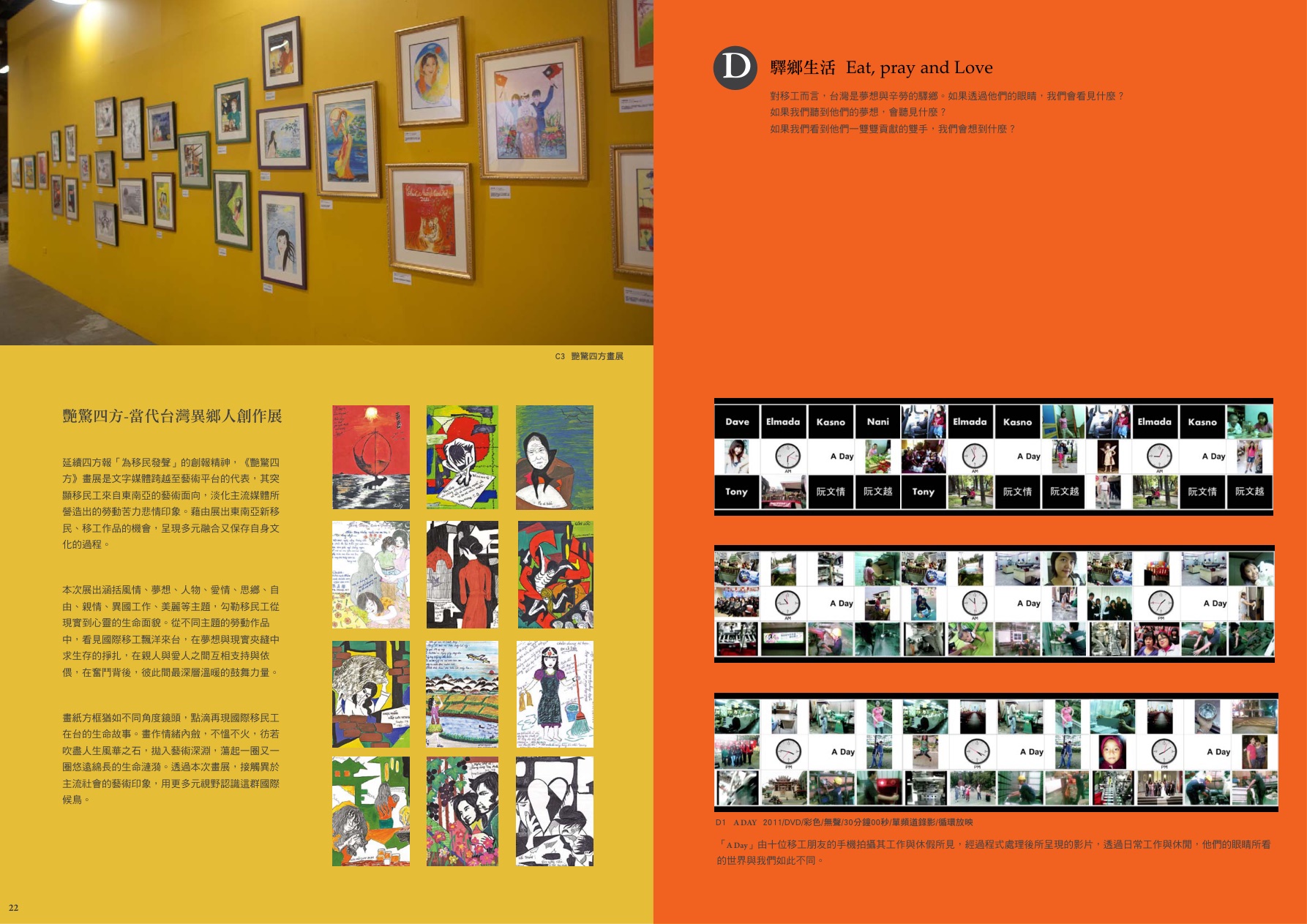
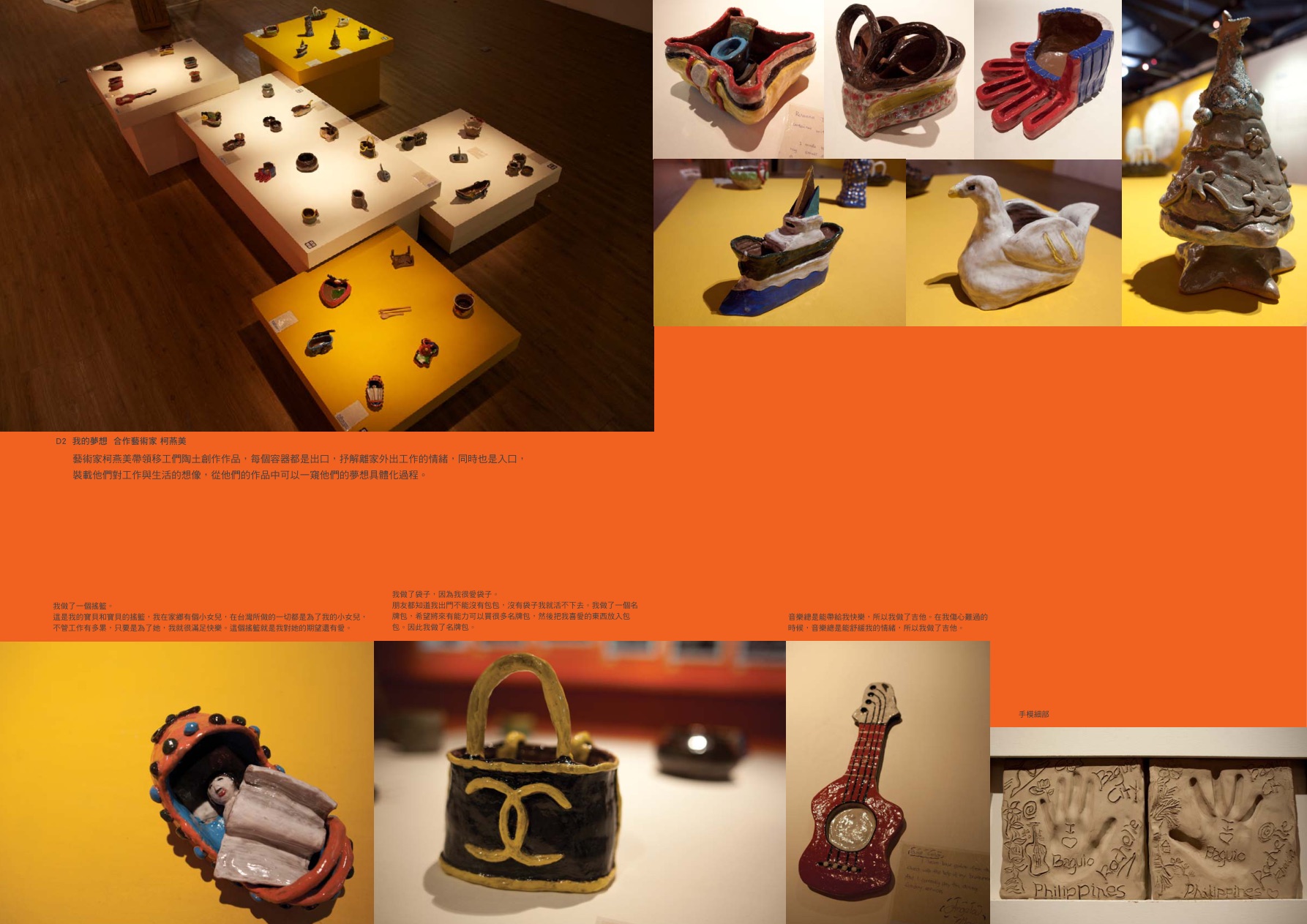
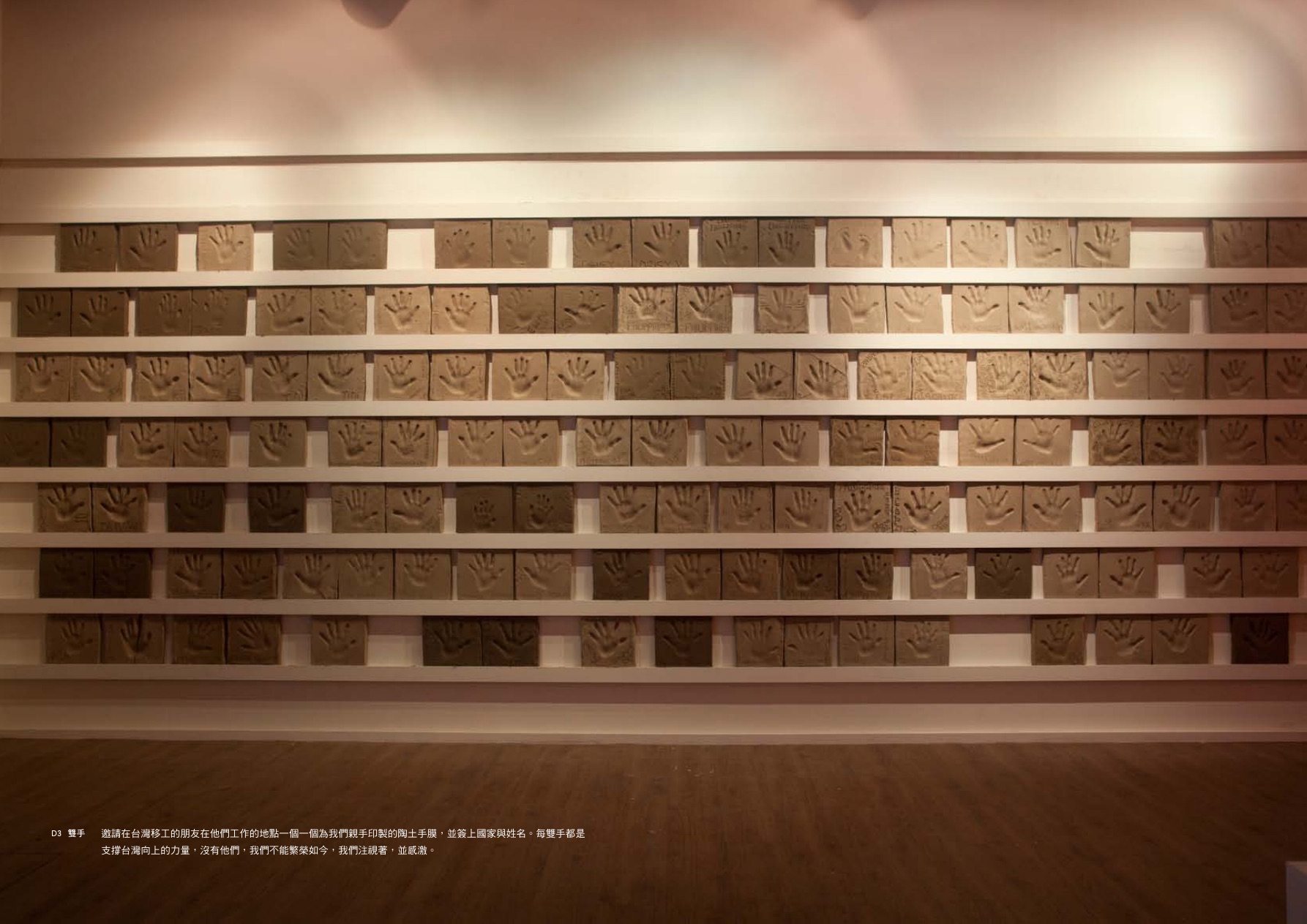
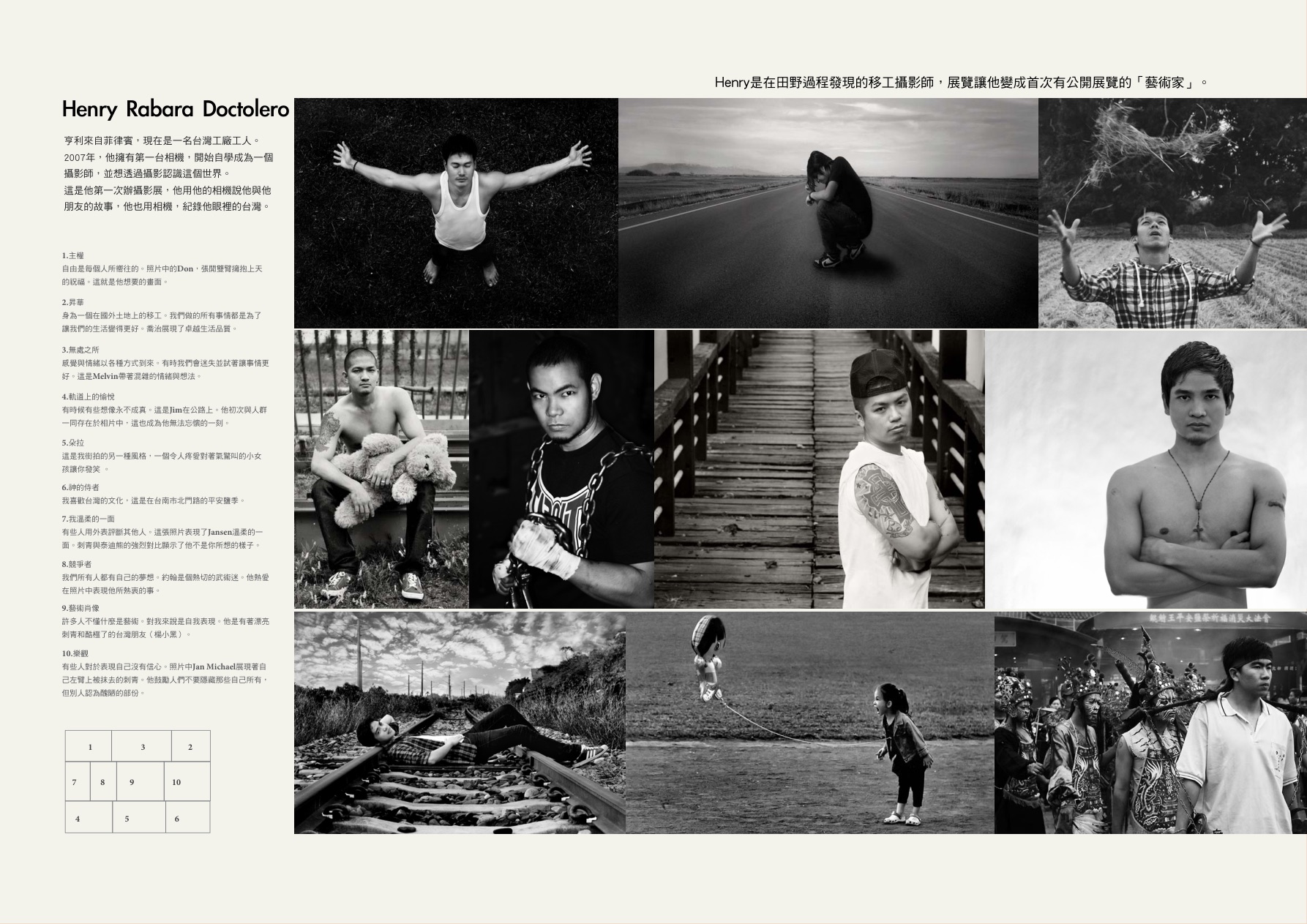
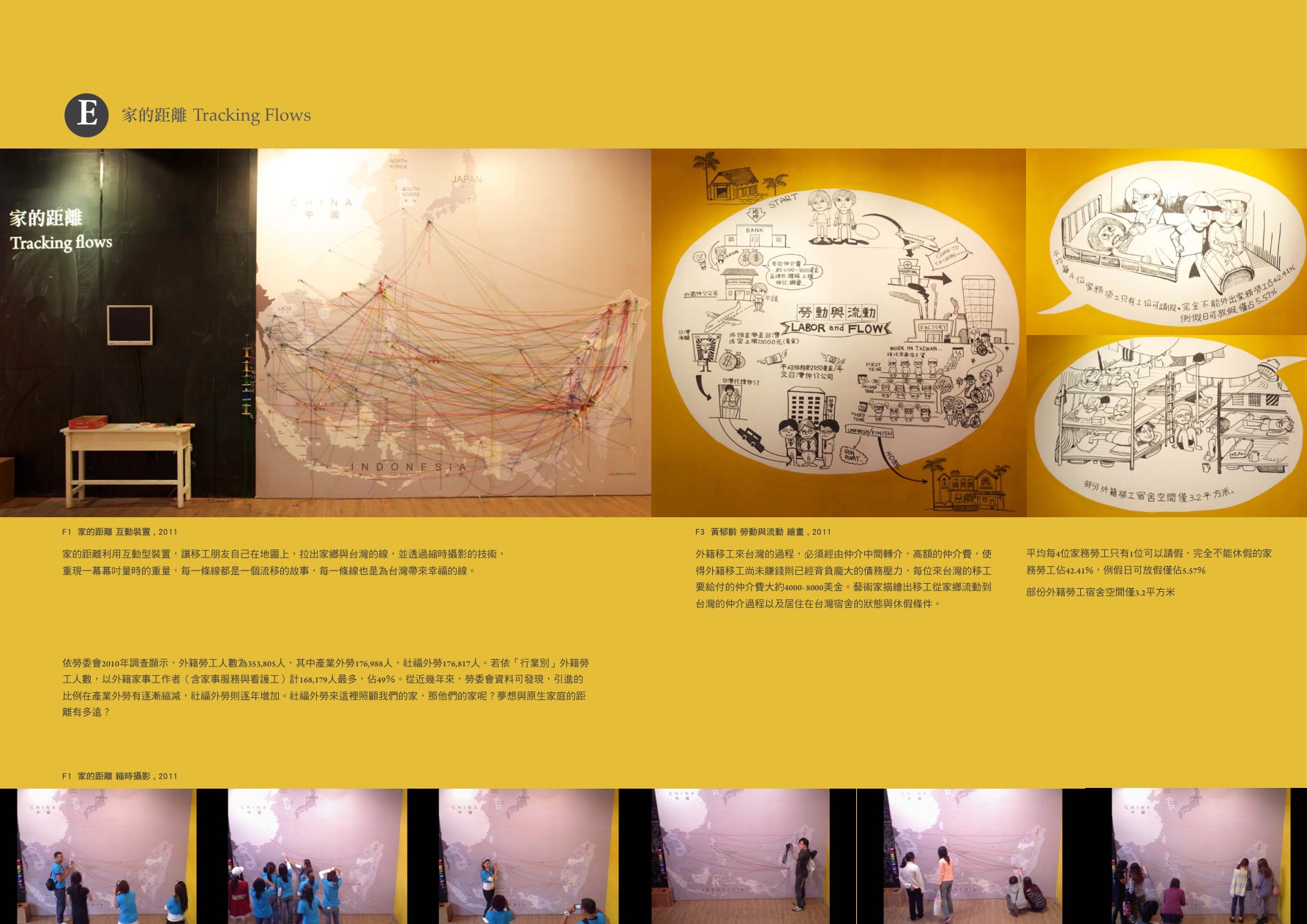
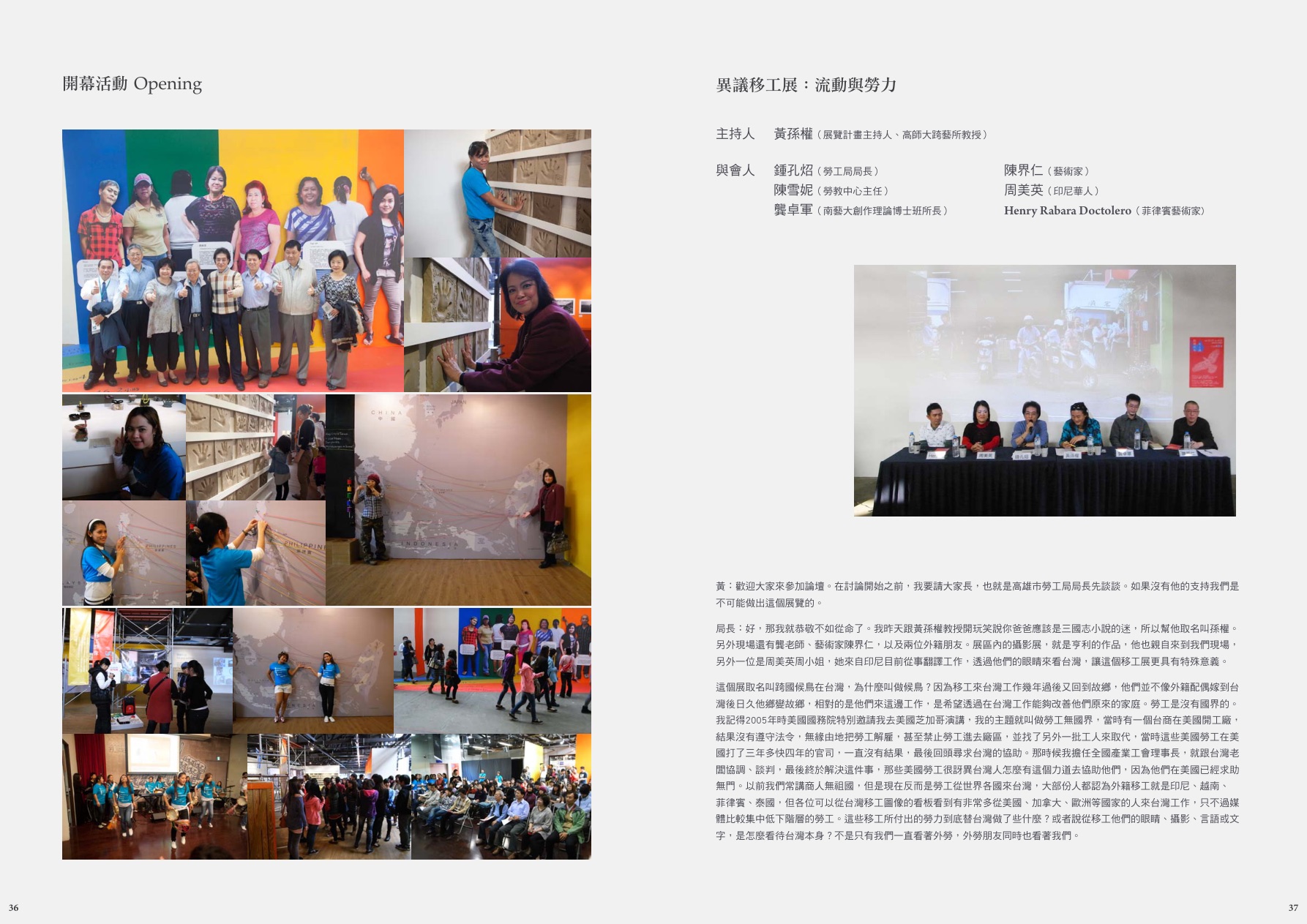
展覽形式打破勞博館以往的實物具象路線,把博物館的告知教育功能與當代藝術的抽象轉化結合:一面用資料、圖表論述全球流動下的台灣勞動市場;一面用田野採訪、移工自拍、移工陶土工作坊(《我的夢想》)、雙手手印牆、移工夢想距離測量裝置(《家的距離》),鋪出再生產日常的厚度。
Curated by Huang Sun-Quan (then Assistant Professor at the Graduate Institute of Interdisciplinary Arts, National Kaohsiung Normal University), this was the Kaohsiung Museum of Labor's first major exhibition centered on migrant workers as primary subjects. Across seven sections (A–G) the show traced global migration waves, mobile dreams, NGO networks, everyday domestic life, migrant portraits, the distance to home, and Chen Chieh-jen's The Route (2006), which linked Kaohsiung longshoremen to global worker movements.
The curatorial team set aside artistic desire and form, working through months of fieldwork, data analysis, and slow art-translation to step past the seer / seen dilemma. Drawing on Hans-Georg Gadamer's notion of a fusion of horizons, the show admitted its own prejudice and asked Taiwanese visitors and migrant workers to let their visions cross.
The exhibition broke with the museum's prior object-display tradition, combining museological pedagogy with contemporary-art abstraction. On one side: data and infographics on Taiwan's labor market within global flow. On the other: field interviews, migrant-shot photographs, ceramic workshops (My Dreams), a wall of hand-prints, and a string-installation measuring the distance from each migrant's bed to home (Tracking Flows).